Subscribe for all my updates and don't miss a thing! Sign me up!
American buying a car for Jamaican citizen
by Renee
(New Orleans, LA)
QUESTION:
I want to buy a car for my fiance (Jamaica citizen).
Can I buy one and title it in his name?
Must I pay in cash or can I make purchase using Credit (not credit card)?
ANSWER: June-05-2009 by Wellesley Gayle
Hi Renee,
I am not in a position to say yes or no to the first question. Regarding the second one though, you should be able to pay using credit, but I am not sure how it will work in your situation- considering that you are in the states.
There may be a different procedure or requirement if you are getting the credit here, versus the states, since you are living there.
In either case, I would suggest you contact one of the Car Dealers here to get and idea.
They should be able to speak to you confidently on both issues.
All the best.
Stay in touch Renee.
Related Pages:
Jamaican Car Rentals.
Jamaican Products and Services
Laws of Jamaica
Our User Forums
Our Blog Page.
The Alamander Plant
by Fleming
(Canada)
Question:
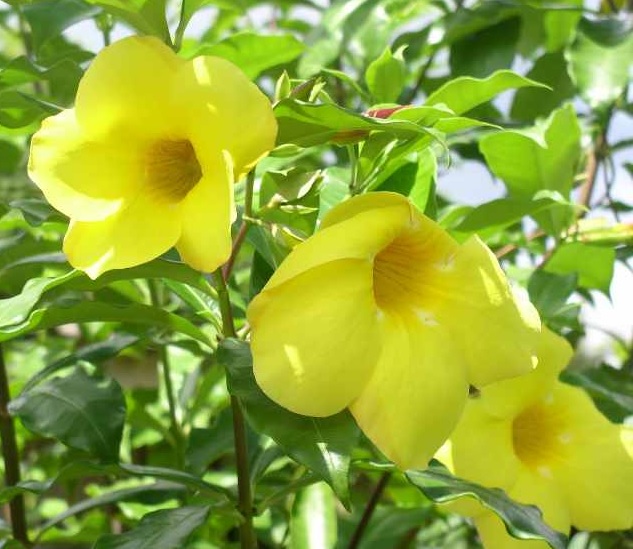
what does it look like? Is it indigenous to Jamaica? Thanks
Answer: by Wellesley Gayle
Hi,
I did a little research for you.
It doesn't appear as if it is indigenous to Jamaica specifically.
It is native to the general South and Central America region. Above is a picture of it.
I also found this information on Wikipedia you might find useful...
The Allamanda (Alamander), also known as Yellow Bell, Golden Trumpet or Buttercup Flower, is a genus of tropical shrubs or vines belonging to the dogbane family (Apocynaceae).
Their year-round production of large, bright flowers have made the Allamanda popular ornamental.
A woody, evergreen shrub with vigorous growth, Allamanda may reach a free-standing height of 2 metres or more.
The leathery leaves are lancelike, pointed, and may either be opposite or in whorls of three or four.
The yellow, trumpet-shaped flowers are 5-7.5 centimeters in diameter; cultivated forms tend towards larger blooms which may also be white, purple, pink or orange in colour.
Their scent may be described as delicate and fruity.
In the wild, Allamanda grow along riverbanks and other open, sunny areas with adequate rainfall and perpetually moist substrate.
The plants do not tolerate shade, salty or alkaline soils; they are highly sensitive to frost. Allamanda are otherwise undemanding and with appropriate conditions will grow rapidly, from 1-3 metres annually.
The seed capsules are oval and prickly; cultivated forms rarely produce seeds, but Allamanda are easily propagated from cuttings. Discarded cuttings are quick to take root.
Allamanda have become naturalized throughout the tropics; they may be seen in roadside ditches, abandoned yards and dumps. As a controlling measure, cutting is ineffective with Allamanda and will lead to vigorous coppicing.
Owing to its fast growth, Allamanda has been introduced widely where it is used as a ground cover or for hedges and screens. In some areas Allamanda are an invasive species, notably Allamanda cathartica in Queensland, Australia.
The leaves, roots and flowers may be used in the preparation of a powerful cathartic (hence the name); the milky sap is also known to possess antibacterial and possibly anticancer properties.
The genus name Allamanda derives from Dr. Frederich Allamanda (1735-1803), a Swiss botanist of the late 18th century.
Here is a picture of it my friend!
Hope that helps.
Read more on Jamaican Flowers here
source: Wikipedia.
Regards,
Wellesley
Shaggy's Wife
by Shiesta Brooks
(Jamaica)
Question
Who is Shaggy's Wife?
Answer by Wellesley Gayle, January 4, 2008.
Hi Shiesta,
Interesting question.
I am now aware that Shaggy is married at all. I've asked around and none of friends thinks so.
In fact, I also found an interview the STAR did with him recently that seem to confirm my view.
Here is the article
You can find a brief bio of him here as well.
https://www.my-island-jamaica.com/shaggy.html
Jamaican Identity
by Zandi
(South Africa)
Jamaican Identity
Question:
Do Jamaicans consider themselves African or do they connect with Africa?
Answer: Feb-19-2009 by Wellesley Gayle
Hi Zandi,
Good question!
If you know anything about the history of Jamaica, you'll see that we have a very wide cross section of peoples here.
However, having said that, and although many of us have cross parents, still a very high percentage (I heard over 90%) are black.
Depending on who you talk to you might get a very different response. Most Jamaican would probably say they are not African- understandably, but do connect to Africa. I certainly do!
That does not even include the Rastafari movement, who are well known for their Pan African ideas.
I hope that helped.
Salary of a Jamaican MidWife
by KC
(jamaica)
QUESTION:
What is the basic salary of a registered midwife in Jamaica?
ANSWER: June-30-2009 by Wellesley Gayle
Hi KC,
Although I would guess that the salary would be in line with the other nurses, I am thinking that it will also vary according to location, training and years of experience.
Also, those in the private sector probably earn significantly more that those in the hospitals here.
In a Jamaica Gleaner newspaper report in 2006, Shelly Ann Thompson, indicated that "the basic salary of level one nurse is $465,078 ($38,756.5 monthly) up to $552,832 ($46,069.33 monthly) per annum".
I am however confident that those figures are probably up by at least 15-20% now. You may want to check with the ministry of health for more information though. (Do the USD conversion if necessary)
I hope that helps.
Stay in touch.
Related Pages:
Facts and Country Information
Jamaican Government Q&A
The Jamaican Culture
Visitor and Travel Related Q & A
Our Blog Page.
AND EVEN MORE...Search Here
References:
http://www.jamaica-gleaner.com/gleaner/20060528/lead/lead9.html
http://answers.yahoo.com
http://www.ehow.com
How to Sue Someone in Jamaica
by Carlton Wright
(Spanish Town, St Catherine, Jamaica)
QUESTION:
What are the requirements to sue someone who borrowed an item from you and claims that he lost it and does not intend to re-compensate you?
ANSWER: June-30-2009 by Wellesley Gayle
Hi Carlton,
Thanks for your question,
I would however, strongly suggest you speak to a a lawyer.
I am not an expert in that field so it would not be prudent to advise you on this matter.
To browse and get a quick feel of the Jamaican laws, please click here.
I hope that helps.
Stay in touch.
Related Pages:
Jamaican Government Q&A
Facts and Country Information
The Jamaican Culture
Visitor and Travel Related Q & A
Our Blog Page.
AND EVEN MORE...Search Here
how to find his father in jamaica
by Shaeda
(Yonkers, NY)
QUESTION:
Hello,
After 25 years I have reconnected to my first love.
We plan on meeting this June (2009). It will be a total of 26 years I have not seen him.
In talking with him, he has shared his desire to find his father.
He has a name but no information regarding his whereabouts. I was wondering if you have any resources to guide me in the right direction.
Thank you.
ANSWER: May-04-2009 by Wellesley Gayle
Hi Shaeda,
Congratulations on finding your love. I can only imagine the joy!
I've been asked similar questions quite a few times. Here is one of my responses.
https://www.my-island-jamaica.com/contacting-family-in-jamaica.html.
I hope it helps.
Related Pages:
Jamaican Travel Stories
Pictures from Jamaica
Facts about Jamaica
Our Jamaica Blog.
can children listen to the song called 'rankin shack'
by D'Andrea
(Jamaica)
QUESTION:
Can children listen to the song called 'rankin shack'?
ANSWER: May-18-2009 by Wellesley Gayle
Hi D'Andrea,
If what I am thinking is what you are asking, then it is actually called 'Rompin Shop'. And Absolutely not, this is not children material.
Stay in touch D'Andrea.
Related Pages:
Free Dancehall Music
Reggae Music
Bruckins Folk Dance
Jamaican Folk Tales
Traditional Jamaican Dances
Our Jamaica Blog
Click here to read or post comments
How to promote songs in Jamaica
by Niyex
(Lagos, Nigeria)
Question:
Hello there,
I am Niyex from West Africa Nigeria
I would like to inquire if you can help us with this.
I have a friend here in Nigeria and he sings Raga and he sounds more like a Jamaican.
I want to believe that we have the hottest tracks right now that can change the Jamaican music scene by storm and might just need your help to do that..Please help.
All we need is some concert that can help promote the tracks over there...you will love it if you here it..
..my email address is simplyafrica@yahoo.com
Best regards
Answer: by W. Gayle, Oct-31-2008
Hi Niyex,
Thanks for stopping by and for your inquiry.
I am recommending you visit ReggaeFusion.com, they seem to have some tools over there that might be helpful to you.
They also have a list of local producers.
In addition, I will also leave this post up for other Jamaicans to comment or post suggestions to you.
Keep in touch.
Animals in Jamaica's ecosystems
by Samantha
(Jamaica)
QUESTION:.
How important are animals to Jamaica's ecosystems?
ANSWER: June-16-2009 by Wellesley Gayle
Hi Samantha,
Very important, thanks for asking.
As you may have already know, an ecosystem is defined as all of the factors that allow a healthy environment to function; the complex relationships among an area's resources, habitats and residents.
An ecosystem may include people, wildlife, fish, trees, water and several other living and non-living elements.
When we refer to animals then, it is not just mammals, but the entire animal kingdom.
In the very broadest of scope, outside of the food chain relationship- meaning we need their meat for food, we do need them for many other things.
For example, cows gives us milk, and donkeys and horses provides us transportation. Some insects help us with food too; like honey from the bees; Earthworms are great for plants as well.
Animals also provides great companionship to us, especially to kids and older folks.
Of course, they need us to take care of them too, especially in illness.
In terms of the wider environment, animals and insects who eat carrion keep the environment cleaner, bees and butterflies pollinate flowers and trees, snakes keep fast breeding rodents under control and trees provide shelter and food while bats both pollinate some plants and control insect populations.
Get the gist?
Also, If you remember the photosynthesis cycle from Biology class, you'll realize that animals provides carbon dioxide (their waste) to plants, which is one of the main ingredient plants use to make food for us to eat.
It all goes on and on in a very simple but complex and coordinated way. Therefore, the destruction of an single species can have a significant effect ultimately on any ecosystem.
Hope that helps.
Stay in touch Samantha.
Related Pages:
Jamaica's Plants and Animals
Our Animal Farm Trip
General Q&A about Jamaica
The Jamaican Boa
The City of Black River Jamaica
Our Jamaica Blog
And even more...Search Here
References:
https://www.my-island-jamaica.com/animals_in_jamaica.html
http://wiki.answers.com/Q/What_are_the_importance_of_animals_in_nature
http://www.biology-online.org/biology-forum/about15394.html
http://www.scribd.com/doc/5552122/Plants-And-Animals-In-The-Ecosystem
http://nikitanain.instablogs.com/entry/importance-of-animals-in-our-eco-system/
http://en.wikipedia.org/wiki/Photosynthesis
http://in.answers.yahoo.com
do you know any body with the surname aden?
by Bernadette
( U.S A)
Question
My grate-grandfather came from Jamaica ,and i just want to know if you know any with the surname Aden.
i am try to find where my family got its name.
BERNADETTE
Answer by Wellesley Gayle, December 25, 2008
Hi Bernadette,
Sorry, no luck. I can't recall anyone with that name. I also checked our local phone directory and didn't find any name.
I did a search at Google and found some interesting results though.
I am also leaving an invitation to anyone who might know any Aden in Jamaica to comment here (below) as well, so stay in touch.
All the best Bernadette.
-Wellesley
The Cost of Weed in Jamaica
by Spike
(Oxford)
Question:
I was just wondering, how much is weed in Jamaica?
Answer: 9/30/2008, by Wellesley Gayle
Hi Spike,
I honestly don't know the answer partner, but I know enough to know that the price fluctuates, depending on the season and the demand. The 'breed' or quality can also make a big difference.
I heard prices upwards of $5000 Jamaican per pound, but again that depends on what is happening here.
Just a few days ago, I saw where the authorities confiscated a large shipment.
It will be really really interesting to see the other comments this question gets.
Regards,
Wellesley
P.S. There is a forum going on right now about legalizing marijuana in Jamaica, you can follow it over here
The Black River Ecosystem
by Anonymous
Question:
What is the biological and economic importance of this system?
Answer: Oct-06-2008 by Wellesley Gayle
Hi There,
"The Black River was for years believed to be the longest river in Jamaica until recent research reveals that this position is held by the Rio Minho which is 92.8 km long. It was originally called Rio Caobana (Mahogany River) by the Spaniards.
The mangroves that grow close to the banks of the river are a haven for over 100 species of birds, crabs, fishes, frogs, crocodiles and other wildlife." JNHT
It has a complex ecosystem that provides a "habitat for endemic, endangered and threatened species, including Crocodylus acutus (American crocodile) (Vulnerable } IUCN Red List of Threatened Species and CITES Appendix I species) and Dendrocygna arborea (West Indian whistling duck) (Vulnerable } IUCN Red List of Threatened Species ); nurseries to marine shrimp and fish species and genetic reserves for flowering plants." Wiley Interscience Journal, December 2006, Article By SHAKIRA AZAN and DALE WEBBER
CLICK HERE and access the entire article for more.
For information on the Black River Safari tour click here.
DJ Mavado's Music?
by Ann
(Missouri,US)
QUESTION:
We just returned from a trip to Jamaica.
While we were there, we heard one particular song played all the time wherever we went. It really was popular and we tried to purchase a CD in the airport before we left.
They were playing it in one of the shops. They said it was by Mavado, but am not sure.
It was a song that really got you wanting to dance! Do you have any suggestions on what it may be? It wasn't really a rap song, just more Jamaican, with words that you could sing. Any help or suggestions?
ANSWER: July-05-2009 by Wellesley Gayle
Hi Ann,
I wonder if it is 'So Blessed'? or "So Special"? Not sure.
I found two myspace pages for him though. You may want to try them. One is http://www.myspace.com/realmavado and the other is http://www.myspace.com/movadogangstaforlife
You should get a popup playlist with some of his popular songs, from where you can listen them.
I hope that helps.
Stay in touch.
Related Pages:
Reggae Music
Bob Marley
Jamaican Rumba
The Jamaican Culture
Our Blog Page.
AND EVEN MORE...Search Here
Trying To Find My Father
by Walston Brown
(St. Elizabeth, Jamaica)
QUESTION:
I would like to find my father Wesley Brown.
He was living in St Catherine, Willow Dean.
He is about 72 year old now. The information I got about him is that he use to work for Francis White as a bus driver. She lived in #9 land air close, Constant Spring and the supervisor was miss Maurice at the clothing and texture factory in Old Harbour road in 1970 or 1972 .
My name is Walston Brown and my number is 1-876-478-1933 or 1-876-292-3194, may god bless you thanks a lot.
ANSWER: May-17-2009 by Wellesley Gayle
Hi Walston Brown,
Try this link.
I have attempted to help quite a few persons this way.
I also understand that the Susan Show on CVM (local TV) might also help you, so you might want to try them.
Their contact is:
The Susan Show, c/o Simber Productions,Unit # 6, Ballater Commercial Complex, 19-21 Ballater Avenue, Kingston 10, Jamaica,
Their number is (876) 968-1166.
source: http://www.thesusanshow.com/
All the best. Stay in touch Walston.
Related Pages:
Our Blog Page.
User Forums
Current Events and News
Animals Jamaica Has
by Obrian Lewis
(Manchester,Jamaica)
Question:
Do you have pictures of animals in Jamaica and where they are found?
Answer:10/10/08 by Wellesley Gayle
Hi Obrian,
I attempted to answer one such question a few days ago. Please take a look at this page for more:
https://www.my-island-jamaica.com/jamaican-animals.html.
Thanks for the question.
Regards
Jamaican Animals
by Becky Cabello
(O'fallon,Missouri, United States)
Question:
What type of animals does Jamaica have? Dogs? Frogs? Lizards?
Answer: 9/30/2008 by Wellesley Gayle
Yes Becky, we have dogs, frogs and lizards, and lots of them too!
Here is a list of some of the notable species of Jamaican Animals.
- Jamaican Iguana
- Crocodiles
- Mongoose
- Coney or Jamaican Huita
- More than 200 species of birds, 25 of which are endemic and
- 21 sub species which are found nowhere else.
- Over 100 different types of butterflies including
- The endangered Swallowtail Butterfly
- 2 Endemic parrots The Yellow-billed and the Black-billed parrot
- Seaturtles ( Leatherback, Loggerhead, Green Turtle and Hawksbill) &
- Manatees, plus
- Over a dozen different kinds of frogs and
- 25 species of Harmless Bats!
- and many more.
Please visit my animals in Jamaica page for more.
can you give me some info on the Jamaican octupi?
Jamaican Octupus
QUESTION:
Can you give me some information on the Jamaican Octupi? Many thanks.
Answer: March-03-2009 by Wellesley Gayle
Hi there!
I am not aware of a 'Jamaican' Octopi (plural for Octupus).
Here, however, is some general information on wikipeida that should give you some insight into the animal.
The octopus with plural forms: octopuses, octopi, or octopodes, is a cephalopod of the order Octopoda that inhabits many diverse regions of the ocean, especially coral reefs.
The term may also refer to only those creatures in the genus Octopus. In the larger sense, there are around 300 recognized octopus species, which is over one-third of the total number of known cephalopod species.
An octopus has eight flexible arms, which trail behind it as it swims.
Most octopuses have no internal or external skeleton, allowing them to squeeze through tight places. An octopus has a hard beak, with its mouth at the center point of the arms.
Octopuses are highly intelligent, probably the most intelligent invertebrates. They are known to build "forts" and "traps" in the wild, and for rearranging tanks and burying other animals alive in domestication. For this reason, they are quite notorious among aquarium operators.
For defense against predators, they hide, flee quickly, expel ink, or use color-changing camouflage. Octopuses are bilaterally symmetrical, like other cephalopods, with two eyes and four pairs of arms.
For more information on this interesting water animal, visit the wikipeida page for more.
Jamaican Coat of Arms debate
by Tsahai Thomas
(St. Catherine, Jamaica)
Question:
I have a debate doing and the moot is be it resolved that the Tainos on the Jamaican coat of arms is of no value.
My teammates and i are supposed to propose (agree with) this. I just wanted to know your views. What value are the Tainos on our coat of arms today?
Answer: by W.Gayle 10/17/2008
Hi Tsahai,
Very interesting indeed. I always loved debates!
I would take a least two approaches in my presentation, and develop on them:
- the value of maintaining a strong heritage and
- the significant contributions made my the tainos.
We learn that their contribution is not as documented as we would have liked, but there is enough for us to appreciate, even with the 'jerk' method of cooking.
Jamaican Jerk now is sought after by people from all parts of the globe.
In regards to the our heritage, it would only be fitting for our coat of arms to show/indicate where we are coming from as a people, and the image of the tainos would be perfect.
As Marcus Garvey rightly said, A people without the knowledge of their history, origin and culture, is like a tree without roots.
Putting the arawaks on the coats of arms may be one of the surest way to keep our history with us.
And after all, the tainos are more Jamaican than us - they were here way before us, a mere display of the image on the coat of arms is only a small way to show that respect :-)
Click here to read or post comments
Swindled by a car dealership
by Carment
(Texas, USA)
QUESTION:.
Hi, my friend bought a car from a dealership in Jamaica that turned out to be a lemon.
He has put a lot of money in keeping the car on the road since it is his source of income.
He talked to the dealership about returning the car or getting a replacement.
The dealership will allow him to return the car but will not refund his down payment until they sell the car.
He has had problems from day 1 with the car: they installed the wrong battery, they included the wrong lug nuts and spare tire with the car, and the car needed the o2 sensor replaced even before it was sold.
My friend is young and this is his first car purchase.
He has said there is no one in Jamaica who can help him.
Please let me know if there is an agency who can help him either get another car or his money back (without waiting for the car to be sold) from this dealership.
Thanks so much in advance for reading this long question.
I appreciate your and the readers responses.
God Bless!!
ANSWER: September-29-2009 by Wellesley Gayle
Hi Carment,
I don't mind the length of the question, but this sounds very suspicious, honestly. I can't accept that 'there is no one in Jamaica who can help'.
I suggest he gets himself a lawyer.
Stay in touch and watch the comments.
Related Pages:
History and Culture Q & A
Visitor Related Q & A
Govermental Q & A
Facts about Jamaica
Our Jamaica Blog
And even more...Search Here
Can I transplant the alamander plant?
by Lee
(Apollo Beach, FL., USA)
QUESTION:
I have a beautiful Alamander bush in my yard.
I am moving, can I transplant it or propagate it? If so how.
ANSWER: May-11-2009 by Wellesley Gayle
Hi Lee,
Sorry partner, I don't know a lot about that plant. That said, I did some research sometime ago for someone on it and you might well find the information useful. Here is the page.
I hope that helps. I am also hoping that others who know much more about the plant might add their comment here as well.
Stay in touch Lee.
Related Pages:
Jamaican Travel Stories
Our Jamaica Blog.
Share this Page
Search the Site
Our Forums.
distance between Santa Cruz and Black River
by Kim
(portmore, jamaica)
QUESTION:
How far is black river from Santa Cruz (in Jamaica)?
ANSWER: April-21-2009 by Wellesley Gayle
Hi Kim,
I've used that road many times, but never really thought about, nor inquired about the distance.
The distance is actually 16.29 kilometers or 10.12 miles. I used an online tool at globefeed.com to help me.
Please note that this distance is straight line distance (may be called as flying or air distance) between the two locations calculated, based on their latitudes and longitudes.
This distance may be very much different from the actual travel distance.
Related Pages:
Health and Jamaican Travel.
Jamaican Travel Stories
Pictures from Jamaica
Getting Around Jamaica
Where is Jamaica.
Jamaican Flowers
by Audrey
(Toronto, Canada)
Jamaican Flowers
Question:
Hi,
I wanted to know what the name is for a flower.
It is the picture that is called 'jamaica 26' on the Jamaican flowers page.
It is pink and spread like a fan.
It has a brown stub at the bottom and its gorgeous.
Anwser: Feb-03-2009 by Wellesley Gayle
Hi Audrey,
I am told it is called the shaving bush flower (Pseudobombax ellipticum).
Stay in touch.
Regards,
New! Get My Latest Book👇🏿
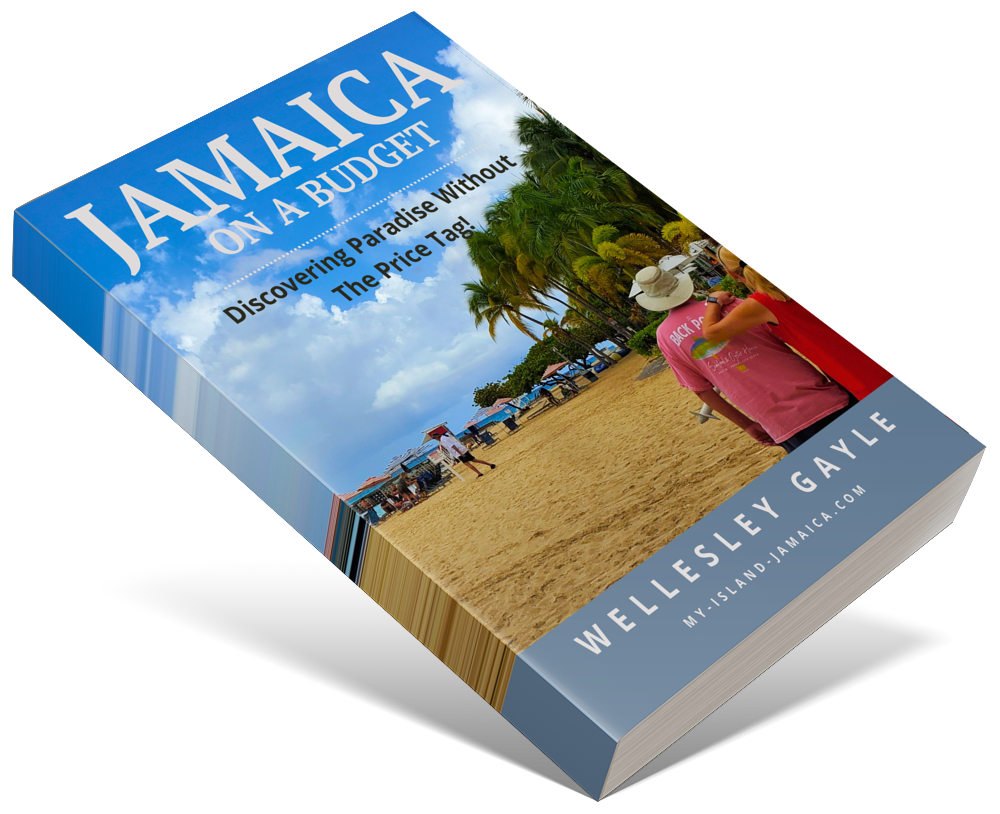 |
You asked, I've answered! You no longer need to save for months or years, to enjoy paradise! I spilled the beans! sharing my top tips on finding cozy accommodations and secret gems, only the way a native could! Click Here to pick it up on my e-store and start saving now! |
See The Best Of Jamaica - In Videos!
 |
My channel reaches over 140,000 subscribers worldwide and has leveraged over 11 million views, sharing, what I call 'The Real Jamaica'. Subscribe today and join our family of viewers. |

Read More ...
New! Experience The REAL Jamaica!
Book Your Private Tour here and experience Jamaica the way we (locals) do!
P.S. Didn't find what you were looking for?
Still need help?
Click Here to try our dependable and effective Site Search tool. It works!
Or, simply click here and here, to browse my library of over 500 questions and answers! Chances are someone already asked (and got an answer to) your question.






NEW!
Join the growing list of well-thinking, Jamaica-Loving folks in our vibrant Private Community
👇🏿

Featured Video!

Travelling To Jamaica?
Read this BEFORE you go
👇🏿
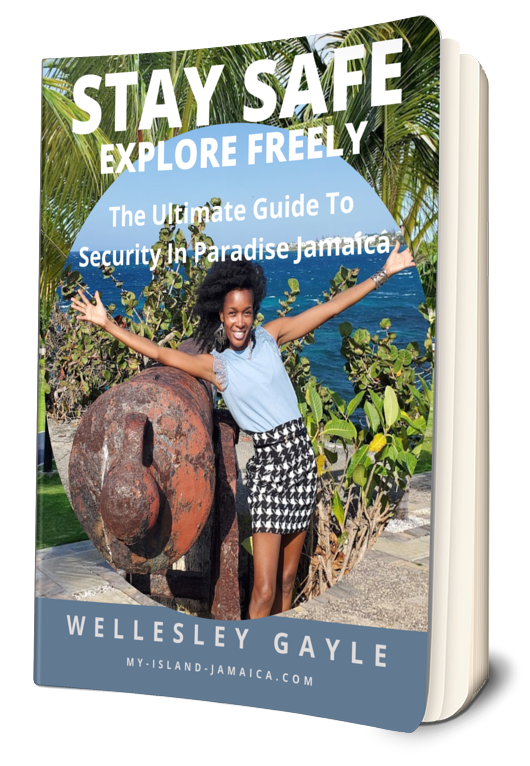
New Here?
I recommend you START HERE to enjoy the best of this website!
New! For Authentic Jamaican products, from my very own hands, visit my Etsy store here.
Recent Articles


-
How To Apply For An H2B Visa In Jamaica?
Apr 25, 24 02:07 PM
 For many Jamaican locals and H2B visa is the key to their dreams. Ready to take on that journey? This is how to apply for an H2B visa in Jamaica.
 -
Medical Scholarships in Jamaica
Apr 23, 24 04:21 PM
 Pursuing a career in medicine is a noble aspiration, however it is quite expensive. These medical scholarships in Jamaica helps to ease the financial burden.
 -
Why Do People Like Jamaica So Much?
Apr 23, 24 03:00 PM
 Jamaica is one of the top vacation destinations in the Caribbean, which may have you wondering, why do people like Jamaica so much?
 -
How To Become A Realtor In Jamaica?
Apr 20, 24 12:09 PM
Are you eyeing the real estate business but not sure how to become a realtor in Jamaica? This is all you need to know to get started. -
Jamaican Oats Porridge Recipe! Simple and Delicious
Apr 19, 24 01:49 PM
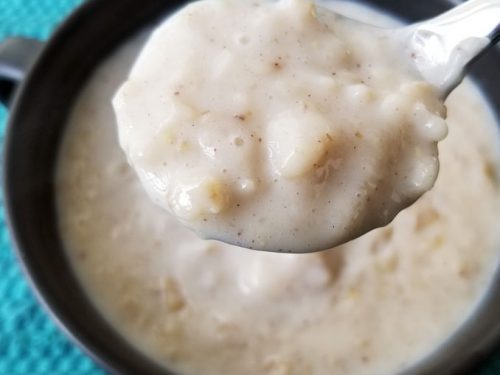
 Yes! Oats porridge, the breakfast of champions! This simple dish is a go-to for most of us. Don’t you want to give the Jamaican Oats Porridge recipe a try?


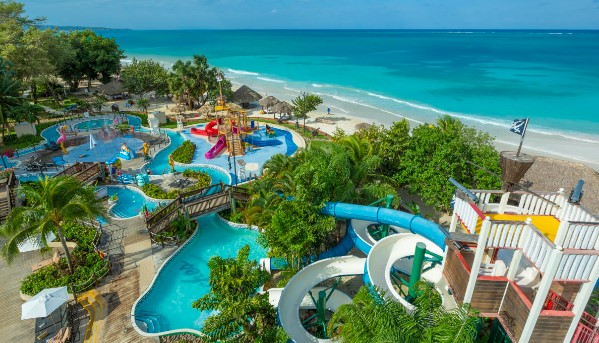

About The Author

A patriotic Jamaican who adores its culture, Wellesley has been using this medium to share what he calls 'the uniqueness of Jamaica with the world' since April 2007.
To date, he serves over 9,300 unique readers / viewers per day (and over 1.1millon page views monthly)
His efforts have earned this site featured positions in local publications, including the Jamaica Gleaner's Hospitality Jamaica, Carlong Publishers, as well as recognition from numerous prestigious international agencies and universities. Read more about him here.
He invites you to subscribe to this site to stay updated on all the latest and check out his unique Jamaican products on his e-store.
If you are on social media, here are the links to follow his latest posts:
You are also invited to join his exclusive JAMHearts community where like-minded Jamaican enthusiasts discuss all things Jamaican.
Didn't Find What You Are Seeking?
Do a quick site search here: