Subscribe for all my updates and don't miss a thing! Sign me up!
Jamaican Coins
Old And New
Sharing Is Caring! Share this awesome content with your friends now.

New! See the real Jamaica in VIDEOS!
Click Here and see why over 140,000 fans are raving about my YouTube Channel!
 |
 |
The Jamaican coins currently in circulation are minted in denominations of 1c, 10c and 25c, as well as $1, $5, $10 and $20.
New! How much do you love Jamaica?
Join our growing list of well-thinking Jamaica-loving folks who are demonstrating what a friendly, helpful and fun Jamaican community looks like. Click Here to learn more.
And, if you ever need a trustworthy and knowledgeable local guide, consider booking a private tour with us!
Note: On February 15, 2018, the three 'small coins' (1 cent, 10 cents, 25 cents) were demonetized, read more here.
The ones currently in circulation can be seen here, in my hand.
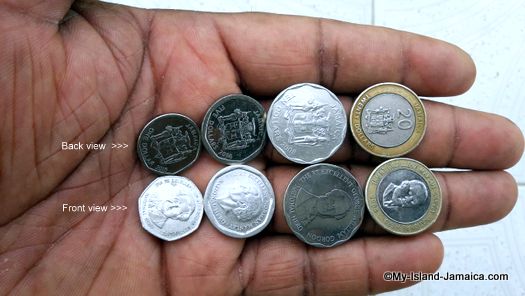
Most of them, by the way, features our National Heroes. The earliest money in Jamaica however, were Spanish copper coins called maravedíes.
In later years, as the island became increasingly important to the British Empire, various other silver coins showed up, including Spanish pesos and reales, and the British pounds, shillings and pence.
Click Here to see pictures of coins
The Spanish coins were the most common, in denominations ranging from ½ real (or 1/16 dollar) to 1 dollar (peso). The exchange rate between peso and shilling was set at 1 peso = 4 shillings.
In 1834 silver coins of threepence and three ha'penny (1½ pence) were introduced, valued at ½ real and ¼ real. The three ha'penny came to be called "quartile" or "quatties."
The quattie in particular was used in church collections due to a feeling by the black population that copper coins wereinappropriate for that purpose. Hence, they came to be called "Christian quatties".
In 1839 an act was passed by Parliament declaring that as of December 31, 1840, only British coinage would be legal tender in Jamaica, demonitizing all of the Spanish coins, with the exception of the gold doubloon which was valued at 3/4/- (three pounds four shillings).
Coins in use were thus the farthing, ha'penny, penny, penny ha'penny, threepence, sixpence, shilling, florin (2 shillings), half crown (2/6), and crown (5/-).
Following emancipation in
1838, when the freed slaves became wage earners, there was a greater
need for ready cash, especially for values smaller than penny ha'penny.
The copper and bronze coins of the British Imperial coinage were still
unpopular among the Negro population who refused to use them, so an
acceptable metal had to be found for coins of these denominations. Cupro-nickel, which was just gaining popularity as a metal for coinage was to provide the answer.
By
the Order in Council and Proclamation of 11 November 1869, and by local
laws, the penny and half-penny made of cupro-nickel were authorized to
be struck for use in Jamaica.
They weighed the same as the English coins
of similar value, but had the Jamaican coat of arms on the reverse. As the British silver coins were accepted, there was no need for higher denominations of Jamaican coinage.
Listen to this now!
The pennies and half-pennies, minted in 1869, constitute the first truly Jamaican coins.
In 1880, the range of denominations was extended when a farthing was introduced. In 1937, when the worn coins were being replaced, the metal content was changed to nickel-brass.
By this time, old fears and distrust had disappeared and there were no problems associated with this change. The farthing, first issued in 1880 was issued for the last time in 1952.
Alterations in the designs of these first Jamaican coins were made when British sovereigns changed, the sizes were reduced in 1937 and an up-dated version of the coat of arms was used in 1964 following independence in 1962.
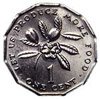
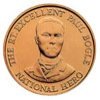
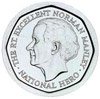
Since independence, quite a number of denomination of Jamaican coins came into circulation. Below are pictures of the most current in circulation including the commemorative "Bob Marley coin" issued in 2006.
 |
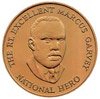 |
| Jamaiacn 1 Cent Coin | Jamaican 25 Cent Coin |
 |
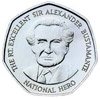 |
| Jamaican 10 Cents Coin | Jamaican 1 Dollar Coin |
 |
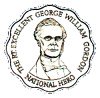 |
| Jamaican 5 Dollar Coin | Jamaican 10 Dollar Coin |
|
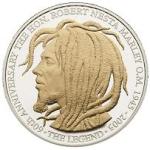 |
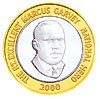
| Jamaican 20 Dollar Coin | Bob Marley Commemorative Coin |
By the way, if you are looking to get souvenirs Jamaican coins, take a look at the Bank of Jamaica's souvenir coin department.
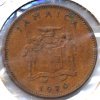
Here too are some older versions
 |
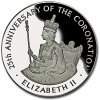 |
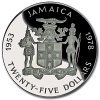
| Jamaican 1978 25 Dollars - Back (Souvenir) | Jamaican 1978 25 Dollars - Front(Souvenir) |
 |
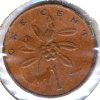 |
| Jamaican 1970 1 Cent- Back | Jamaican 1970 1 Cent- Front |
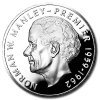 |
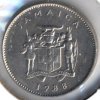 |
| Jamaican 1973 5 dollars - Front (Souvenir) | Jamaican 1988 10 Cents - Back |
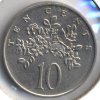 |
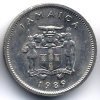 |
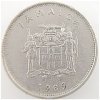
| Jamaican 1988 10 Cents- Front | Jamaican 1989 5 cents- Back |
 |
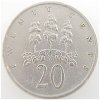 |
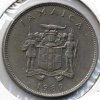
| Jamaican 1989 20 Cents- Back | Jamaican 1989 20 Cents- Front |
 |
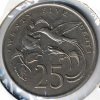 |
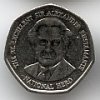
| Jamaican 1989 25 Cents- Back | Jamaican 1989 25 Cents- Front |
 |
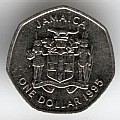 |
| Jamaican 1995 1 Dollar- Front | Jamaican 1989 1 Dollar- Back |
 |
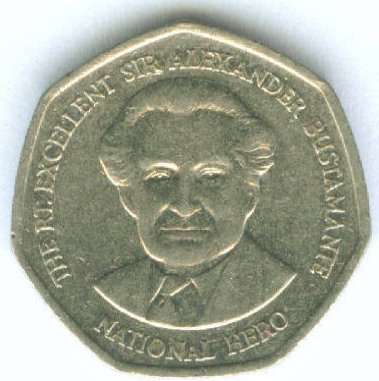 |
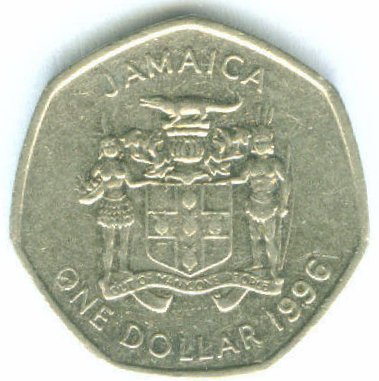
| Jamaican 1996 1 Dollar- Back | Jamaican 1996 1 Dollar- Front |
 |
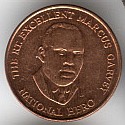 |
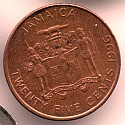
| Jamaican 1996 25 Cents-Back | Jamaican 1996 25 Cents-Front |
References:
http://news.bbc.co.uk/2/hi/entertainment/5285368.stm
http://en.wikipedia.org/wiki/Jamaican_pound
http://www.boj.org.jm/currency_history.php
First Posted: 02 26 2010
Source: Bank of Jamaica
Pages Related To Jamaican Coins
And please, don't miss these related pages! Quite informative too.
- The Jamaican Currency
- A Brief History of Jamaica
- National Heroes of Jamaica
- The Real Jamaica
- Jamaican Food
Go to Profile of Jamaica from Jamaican Coins
Return to Homepage from Jamaica Coins
New! Get My Latest Book👇🏿
 |
You asked, I've answered! You no longer need to save for months or years, to enjoy paradise! I spilled the beans! sharing my top tips on finding cozy accommodations and secret gems, only the way a native could! Click Here to pick it up on my e-store and start saving now! |
See The Best Of Jamaica - In Videos!
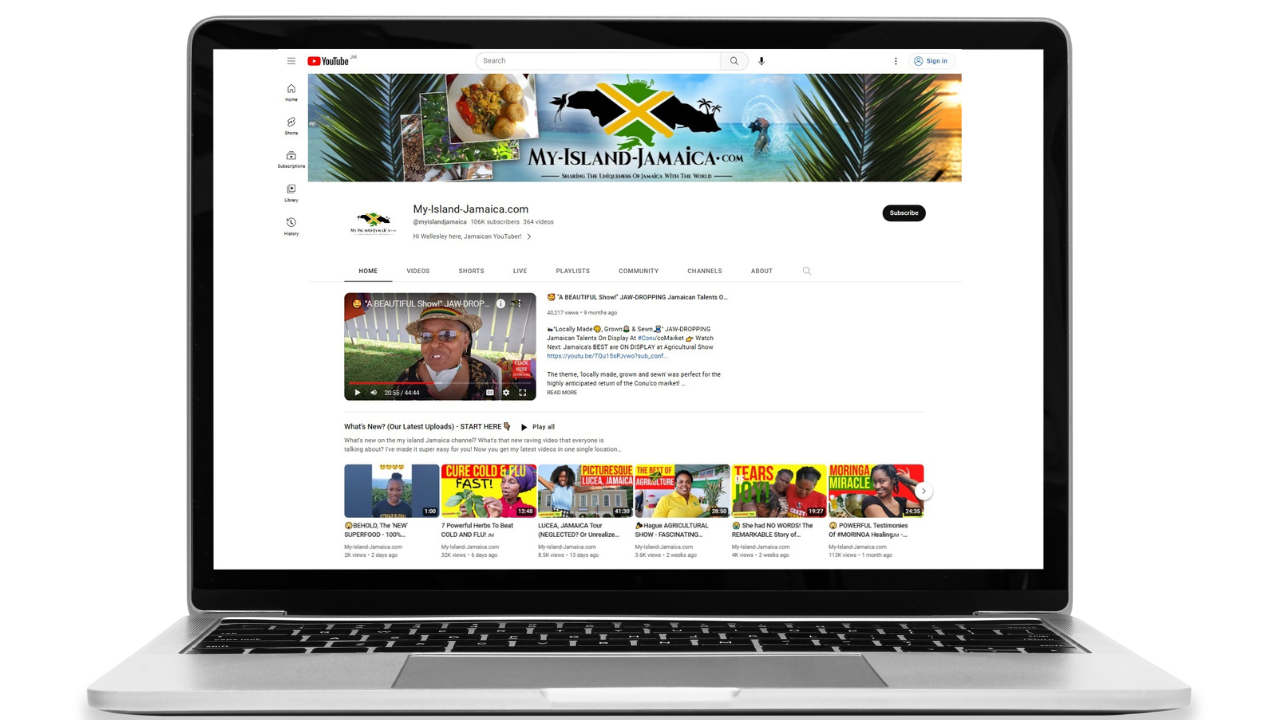 |
My channel reaches over 140,000 subscribers worldwide and has leveraged over 11 million views, sharing, what I call 'The Real Jamaica'. Subscribe today and join our family of viewers. |

Read More ...
New! Experience The REAL Jamaica!
Book Your Private Tour here and experience Jamaica the way we (locals) do!
P.S. Didn't find what you were looking for?
Still need help?
Click Here to try our dependable and effective Site Search tool. It works!
Or, simply click here and here, to browse my library of over 500 questions and answers! Chances are someone already asked (and got an answer to) your question.






NEW!
Join the growing list of well-thinking, Jamaica-Loving folks in our vibrant Private Community
👇🏿

Featured Video!

Travelling To Jamaica?
Read this BEFORE you go
👇🏿
New Here?
I recommend you START HERE to enjoy the best of this website!
New! For Authentic Jamaican products, from my very own hands, visit my Etsy store here.
Recent Articles


-
How To Apply For An H2B Visa In Jamaica?
Apr 25, 24 02:07 PM
 For many Jamaican locals and H2B visa is the key to their dreams. Ready to take on that journey? This is how to apply for an H2B visa in Jamaica.
 -
Medical Scholarships in Jamaica
Apr 23, 24 04:21 PM
 Pursuing a career in medicine is a noble aspiration, however it is quite expensive. These medical scholarships in Jamaica helps to ease the financial burden.
 -
Why Do People Like Jamaica So Much?
Apr 23, 24 03:00 PM
 Jamaica is one of the top vacation destinations in the Caribbean, which may have you wondering, why do people like Jamaica so much?
 -
How To Become A Realtor In Jamaica?
Apr 20, 24 12:09 PM
Are you eyeing the real estate business but not sure how to become a realtor in Jamaica? This is all you need to know to get started. -
Jamaican Oats Porridge Recipe! Simple and Delicious
Apr 19, 24 01:49 PM
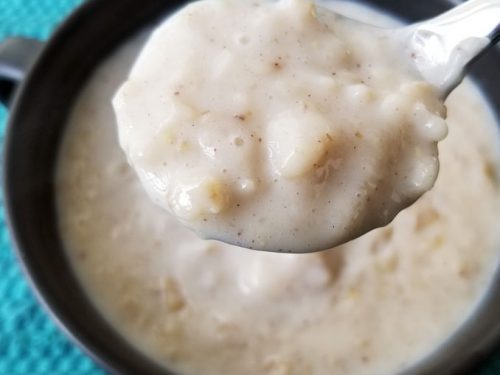
 Yes! Oats porridge, the breakfast of champions! This simple dish is a go-to for most of us. Don’t you want to give the Jamaican Oats Porridge recipe a try?

)

About The Author

A patriotic Jamaican who adores its culture, Wellesley has been using this medium to share what he calls 'the uniqueness of Jamaica with the world' since April 2007.
To date, he serves over 9,300 unique readers / viewers per day (and over 1.1millon page views monthly)
His efforts have earned this site featured positions in local publications, including the Jamaica Gleaner's Hospitality Jamaica, Carlong Publishers, as well as recognition from numerous prestigious international agencies and universities. Read more about him here.
He invites you to subscribe to this site to stay updated on all the latest and check out his unique Jamaican products on his e-store.
If you are on social media, here are the links to follow his latest posts:
You are also invited to join his exclusive JAMHearts community where like-minded Jamaican enthusiasts discuss all things Jamaican.
Didn't Find What You Are Seeking?
Do a quick site search here:
New! Comments
Have your say about what you just read! Leave me a comment in the box below.