Subscribe for all my updates and don't miss a thing! Sign me up!
How to Store Jamaican Roots Tonics Safely Should They Go in the Fridge?
Sharing Is Caring! Share this awesome content with your friends now.


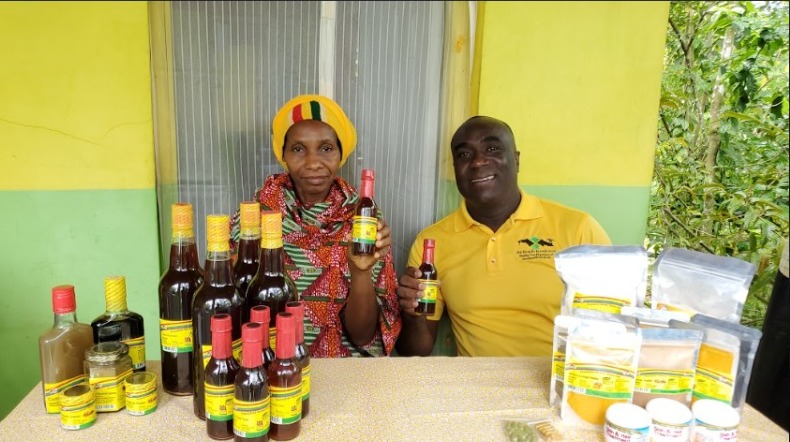 how to store jamaican roots tonics safely
So, you've got yourself a bottle of Jamaican roots. Now comes a question I've heard quite a few times:
Should I put this in the fridge, or can I leave it on the shelf?
It's a good question because, here in Jamaica, you may see roots stored in several different ways.
One person might have a bottle sitting in the refrigerator. Someone else may have homemade roots tucked away in a cool corner of the house. And traditionally, some Jamaican roots makers deliberately allowed their tonic to “cure” for weeks before drinking it.
So who's right?
Well, before I tell you how to store Jamaican roots tonics safely, there's something very important to understand:
Not every bottle of Jamaican roots is the same.
A commercially manufactured and sealed roots drink is very different from a fresh homemade herbal decoction. And both may be different again from a roots tonic that has been deliberately fermented or preserved with alcohol.
That's why my first answer to “fridge or shelf?” is:
What kind of roots do you have?
Let's work through it.
New! Take a piece of Jamaica with you💃!
Savour the memories! Now you can get your authentic Jamaican souvenir items, as well as traditional Jamaican herbs, spices and housewares on our popular e-store. Click Here to learn more.
And, if you ever need a trustworthy and knowledgeable local guide, consider booking a private tour with us!
First, What Exactly Are We Storing?
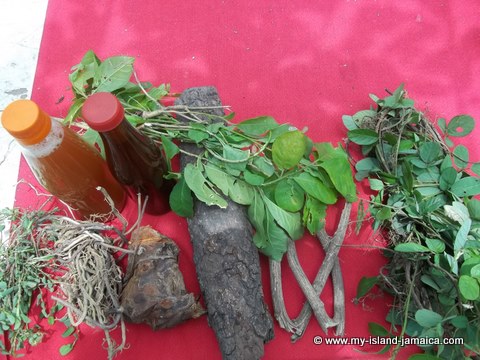
If you read my article on Root Tonics In Jamaica, you'll know that what we Jamaicans simply call “roots” can contain quite a collection of plants.
Researchers studying traditional Jamaican root tonics found anywhere from three to 26 plant species in individual preparations, with an average of more than 13. Chainy root, sarsaparilla, strong back, nerve wist, ramoon, medina and ginger were among the plants commonly identified.
And although we call the drink “roots,” the mixture can include roots, bark, vines, leaves and other plant material.
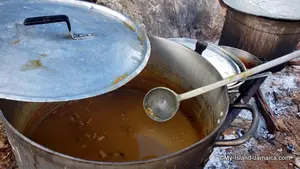
Traditionally, these ingredients are boiled into a concentrated herbal drink—a decoction.
But what happens after that boiling is where things become interesting.
- Some roots are consumed fairly fresh.
- Some are sweetened.
- Some are bottled and allowed to cure.
- Some contain wine or rum.
- And modern commercially bottled roots may be processed and packaged very differently from anything made at home.
So we shouldn't treat all of them alike.
How to Store Jamaican Roots Tonics Safely When They're Homemade
Let's start with the one I'd be most cautious about:
Fresh homemade roots.
Suppose somebody gathers their ingredients, washes and chops them, boils everything in water, strains the liquid and gives you a bottle.
- There's no commercial processing.
- No validated preservation method.
- No label telling you that it's shelf-stable.
In that situation, I would treat the drink as a fresh prepared beverage rather than assuming it can safely sit at room temperature.
Once it has cooled sufficiently, refrigerate it promptly in a clean, tightly covered container.
Food-safety guidance recommends keeping refrigerated foods at 40°F (4°C) or below. Prepared foods that require refrigeration generally shouldn't remain at room temperature for more than two hours - and in temperatures above 90°F (32°C), that drops to one hour.
Here in Jamaica, that hotter-weather rule is worth remembering!
Leaving an unpreserved homemade herbal drink sitting on the counter all day simply because “roots don't spoil” isn't something I would recommend.
So How Long Does Homemade Roots Last in the Fridge?

This is where I want to resist giving you a nice, neat number that sounds authoritative but isn't. There isn't one scientifically established refrigerator shelf life that applies to all Jamaican root tonics.
Think about the differences.
- One bottle might contain only boiled herbs and water.
- Another may contain molasses.
- Another may contain honey.
- Another may contain rum.
- Another may have been deliberately fermented.
Those differences can affect microbial growth and stability.
So rather than saying, “Homemade roots is good for exactly 7 days” or “It lasts a month,” I'd rather give you a safer advice, and it is this:
Make manageable quantities, refrigerate fresh homemade roots promptly, keep it covered and use it reasonably soon rather than trying to store an untested homemade preparation for weeks.
If someone is producing roots commercially or wants to establish a dependable shelf life, that's a different matter. Proper shelf-life testing and food-safety controls are much better than guessing.
What About Commercially Bottled Jamaican Roots?
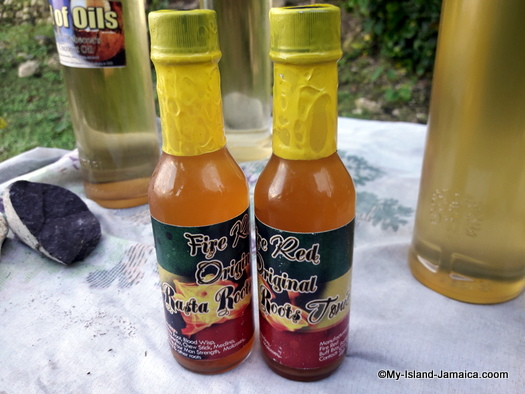
Now we're dealing with something different.
If you purchase a commercially manufactured, unopened roots tonic, don't automatically put it in the refrigerator and don't automatically leave it on the shelf either.
Read the label. That's your best guide.
A manufacturer may have processed and packaged the drink specifically to remain shelf-stable while unopened.
If the label says Store in a cool, dry place, then follow that instruction.
If it says Keep refrigerated, then refrigerate it. And pay particular attention to wording such as:
Refrigerate after opening.
Once you break that seal, the storage requirements may change.
So when it comes to a professionally bottled roots tonic please follow the manufacturer's storage instructions rather than Jamaican folklore - or this article! The manufacturer should know how that particular product was formulated and processed.
What If the Bottle Has No Label or Storage Instructions?
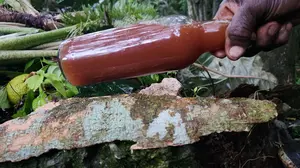
Now I'd become more cautious. Maybe somebody handed you a recycled rum bottle filled with dark homemade roots and told you:
“That can stay good for months!” Perhaps it can.
But...
- what exactly is in it?
- How was the bottle cleaned?
- How was the drink prepared?
- Was it fermented?
- How much alcohol does it contain?
- Was it bottled hot or cold?
- Has its acidity been measured?
- How long has it already been sitting there?
If we don't know those things, we can't confidently determine its shelf stability simply by looking at the colour of the liquid.
My preference would be to refrigerate an unknown homemade roots tonic rather than assume it is shelf-stable.
And if you don't know how old it is or how it has been handled, sometimes the safest choice is simply not to drink it.
But Weren't Jamaican Roots Traditionally Left Outside?
Yes! And this is where our Jamaican tradition becomes fascinating.
Research into traditional roots preparation has documented that after the herbs were boiled and the liquid cooled, some makers bottled the tonic and placed it in a cool location for a month or longer to “cure.”
Even more interestingly, I have friends who sometimes bury it in the earth!
And Why?
Basically is to keep them cool and slow fermentation - including reducing the chance of pressure building until a glass bottle burst. The Rootsman, as we call them, also add ingredients such as burnt sugar, molasses, honey, wine or rum as preservatives.
This tells us something important about the history of roots and it is that fermentation wasn't necessarily an accident.
In some preparations, it was part of the process.
But—and this is a big but—the fact that something has traditionally been done does not automatically give us a scientifically validated storage time or guarantee that every homemade version prepared that way is safe.
That's an important distinction.
Fermented Roots Is a Different Conversation
If you're intentionally making a fermented roots drink, you're no longer simply storing freshly boiled herbal tea. You're managing fermentation.
- Microorganisms are changing the product.
- Gas may be produced.
- Alcohol may be produced.
- Acidity may change.
And the safety of a fermented product depends on considerably more than just saying: “Mi grandfather used to leave it there so.”
I have tremendous respect for traditional Jamaican knowledge. In fact, that's one of the reasons I enjoy documenting these herbs and practices.
But respecting tradition doesn't mean we shouldn't also understand modern food safety.
If you're deliberately fermenting roots for sale or long-term storage, proper knowledge of fermentation, sanitation, pH, packaging and product stability becomes important.
Does Rum Automatically Preserve Jamaican Roots?
Here's another assumption I'd be careful with. Someone may say:
“It has rum in it, so it can't spoil.”
Well, not necessarily.
Whether alcohol adequately preserves a beverage depends partly on the final alcohol concentration, not simply on whether somebody poured a little rum into the bottle.
The same goes for sugar.
Honey, molasses and sugar can affect preservation under certain conditions, but adding a spoonful of something sweet doesn't magically sterilize a herbal drink.
So unless you're working with a tested recipe and know the relevant concentrations, don't assume that adding rum, wine, honey or molasses makes homemade roots indefinitely shelf-stable.
Use Clean Bottles -This Matters More Than You May Think
Let's say you've just made a beautiful batch of roots. You boil it properly. Then you pour it into a dirty bottle.
We've got a problem!
Anything that touches the finished drink can potentially introduce microorganisms.
- Start with thoroughly cleaned bottles, caps, funnels, strainers and utensils.
- Wash your hands.
- Don't drink directly from the bottle if you're planning to keep it for an extended period and share it with others. Pour your serving into a clean cup instead.
- And keep the container properly closed.
These little practices may not feel as interesting as discussing chainy root and strong back, but they're an important part of how to store Jamaican roots tonics safely.
Glass or Plastic Bottle?
If you have the choice for homemade roots, I like clean food-grade glass containers. The fact is that glass doesn't readily absorb odours or flavours, it's easy to clean thoroughly, and you can see what's happening inside.
But don't reuse just any old bottle without properly cleaning it first. And if a drink is actively fermenting, sealed glass requires special caution because fermentation can produce gas and pressure.
Remember what I mentioned earlier about traditional roots makers burying bottles partly to keep them cool and slow fermentation?
A bottle under pressure can be dangerous.
If a container is unexpectedly swollen, bulging, leaking or under obvious pressure, don't casually open it close to your face.
Can I Freeze Jamaican Roots?
For a fresh, non-carbonated homemade herbal decoction that you aren't going to use soon, freezing small portions may be an option.
Leave adequate expansion room in the container- liquid expands when frozen -and use freezer-safe containers.
But again, commercially manufactured products should be handled according to their label.
And I wouldn't freeze an actively fermenting or carbonated product in a sealed glass bottle.
How Can You Tell If Jamaican Roots Has Gone Bad?
This is another area where we need some common sense - and a little caution.
Obvious warning signs can include:
- Unexpected mould
- An unusual or rotten smell
- Sliminess
- Leakage
- A swollen container
- Unexpected fizzing or pressure in something that wasn't intended to ferment
- A dramatic unexplained change in appearance
If you see something suspicious, don't taste it just to “check.”
When in doubt, throw it out.
But there's something else you should know. Food doesn't always have to smell terrible or look mouldy to contain harmful microorganisms.
Don't Keep Opening the Bottle All Day
Here's another simple tip.
Every time you open a bottle, pour from it, drink directly from it or put something inside it, you create another opportunity for contamination.
If you've made a larger quantity of roots, consider dividing it into several smaller clean bottles.
Then you can keep one bottle in use while the others remain sealed in the refrigerator.
That also means you aren't repeatedly warming and cooling the entire batch every time you want a drink.
What About a Power Cut?
Another very Jamaican reality!
If the electricity goes, keep the refrigerator door closed as much as possible.
According to FDA guidance, an unopened refrigerator can generally keep food cold for about four hours during a power outage.
Once you're dealing with a homemade product that requires refrigeration and you don't know how long it has been warm, don't gamble with it.
Roots ingredients may cost money, but they're cheaper than getting sick.
A Simple Fridge-or-Shelf Guide
Here's the easiest way I can summarize it.
- Fresh homemade roots with no validated preservation method?
Refrigerate it. - Commercial roots, unopened?
Follow the manufacturer's label. - Commercial roots after opening?
Follow the manufacturer's after-opening instructions—often this may mean refrigeration.| - Homemade roots containing a little rum, honey or molasses?
Don't automatically assume those ingredients make it shelf-stable. - Deliberately fermented roots?
Treat fermentation as a controlled process requiring appropriate knowledge rather than simply leaving a bottle somewhere and hoping for the best. - Don't know how the roots was made or how long it has been sitting around?
Be cautious.
That's really the heart of how to store Jamaican roots tonics safely.
Want to Learn More About Jamaican Roots?
If you've reached this page because someone gave you a bottle and you're now wondering what on earth might be inside it, I've got you covered!
Read my related article, “Root Tonics In Jamaica: What Makes Them So Special?”
There I take you deeper into this fascinating Jamaican tradition -the roots, barks and herbs commonly used, how traditional roots is prepared, why Jamaicans drink it and what researchers have discovered about what's actually inside those mysterious dark bottles.
And be sure to browse the Related Articles below for more of my articles on Jamaican herbs, traditional foods, culture and everyday life here.
You might like these
Plants in Jamaica - 5 Marvels To Discover About The Flora Of Jamaica
Plants in Jamaica - Learn more about the beautiful and exciting flora of Jamaica
Beautiful Jamaican Caper - The Lovely Flower, The 'Perfect' Plant!
The beautiful Jamaican caper flower; the 'perfect' plant.
Jamaican Thyme - Its Uses & Health Benefits
The many uses and benefits of Jamaican thyme


References & Works Cited For How To Store Jamaican Roots Tonics Safely
- Mitchell, Sylvia A. “The Jamaican Root Tonics: A Botanical Reference.” Focus on Alternative and Complementary Therapies, vol. 16, no. 4, 2011, pp. 271–280. Wiley Online Library. DOI: 10.1111/j.2042-7166.2011.01124.x. Accessed 30 Sept. 2026.
- Vandebroek, Ina, et al. “Root Tonics and Resilience: Building Strength, Health, and Heritage in Jamaica.” Frontiers in Sustainable Food Systems, vol. 5, 2021, article 640171. Frontiers. DOI: 10.3389/fsufs.2021.640171. Accessed 30 Sept. 2026.
- U.S. Food and Drug Administration. “Refrigerator Thermometers—Cold Facts about Food Safety.” FDA, U.S. Department of Health and Human Services. Accessed 30 Sept. 2026.
- U.S. Food and Drug Administration. “Are You Storing Food Safely?” FDA, U.S. Department of Health and Human Services. Accessed 30 Sept. 2026.
- U.S. Department of Agriculture, Food Safety and Inspection Service. “How Do I Handle Leftovers Safely?” USDA FSIS. Updated 20 Dec. 2024. Accessed 30 Sept. 2026.
New! Get My Latest Book👇🏿
 |
You asked, I've answered! You no longer need to save for months or years, to enjoy paradise! I spilled the beans! sharing my top tips on finding cozy accommodations and secret gems, only the way a native could! Click Here to pick it up on my e-store and start saving now! |
See The Best Of Jamaica - In Videos!
 |
My channel reaches over 140,000 subscribers worldwide and has leveraged over 11 million views, sharing, what I call 'The Real Jamaica'. Subscribe today and join our family of viewers. |

Read More ...
New! Experience The REAL Jamaica!
Book Your Private Tour here and experience Jamaica the way we (locals) do!
P.S. Didn't find what you were looking for?
Still need help?
Click Here to try our dependable and effective Site Search tool. It works!
Or, simply click here and here, to browse my library of over 500 questions and answers! Chances are someone already asked (and got an answer to) your question.






Featured Video!

Travelling To Jamaica?
Read this BEFORE you go
👇🏿

New Here?
I recommend you START HERE to enjoy the best of this website!
New! For Authentic Jamaican products, from my very own hands, visit my Etsy store here.
Recent Articles


-
How to Store Jamaican Roots Tonics Safely: Fridge or Shelf?
Sep 30, 26 09:35 PM
 How to Store Jamaican Roots Tonics Safely depends on how they're prepared. Learn when to refrigerate roots, how to store them and signs they may have spoiled.
 -
Quiet Towns Near Tourist Hubs - Where to Stay in Jamaica
Sep 30, 26 11:47 AM
 The quiet towns near tourist hubs offer a peaceful way to experience Jamaica. Discover places to stay near the island's popular tourist areas without the crowds.
 -
How Jamaican Addresses Work - Why Some Have No Street Number
Sep 29, 26 09:55 PM
 How Jamaican Addresses Work can puzzle visitors. Learn why some have no street number and how districts, communities and P.O. addresses identify location
 -
Fixing Salty Jamaican Soup: Simple Tricks That Really Work
Sep 29, 26 08:40 PM
 Fixing Salty Jamaican Soup is easier than you think. Discover simple tricks that reduce excess salt while keeping that delicious Jamaican flavour.
 -
Root Tonics In Jamaica: What Makes Them So Special?
Sep 29, 26 04:04 PM
What makes Jamaican roots so special? Discover the herbs, traditions and fascinating story behind root tonics in Jamaica and their enduring popularity.




About The Author

A patriotic Jamaican who adores its culture, Wellesley has been using this medium to share what he calls 'the uniqueness of Jamaica with the world' since April 2007.
To date, he serves over 9,300 unique readers / viewers per day (and over 1.1millon page views monthly)
His efforts have earned this site featured positions in local publications, including the Jamaica Gleaner's Hospitality Jamaica, Carlong Publishers, as well as recognition from numerous prestigious international agencies and universities. Read more about him here.
He invites you to explore his books and subscribe to this site to stay updated on all the latest here on site.
You are also welcome to check out his unique Jamaican products on his e-store.
If you are on social media, here are the links to follow his latest posts:
You are also invited to join his exclusive JAMHearts community where like-minded Jamaican enthusiasts discuss all things Jamaican.
Didn't Find What You Are Seeking?
Do a quick site search here: