Subscribe for all my updates and don't miss a thing! Sign me up!
Root Tonics In Jamaica: What Makes Them So Special?
Sharing Is Caring! Share this awesome content with your friends now.


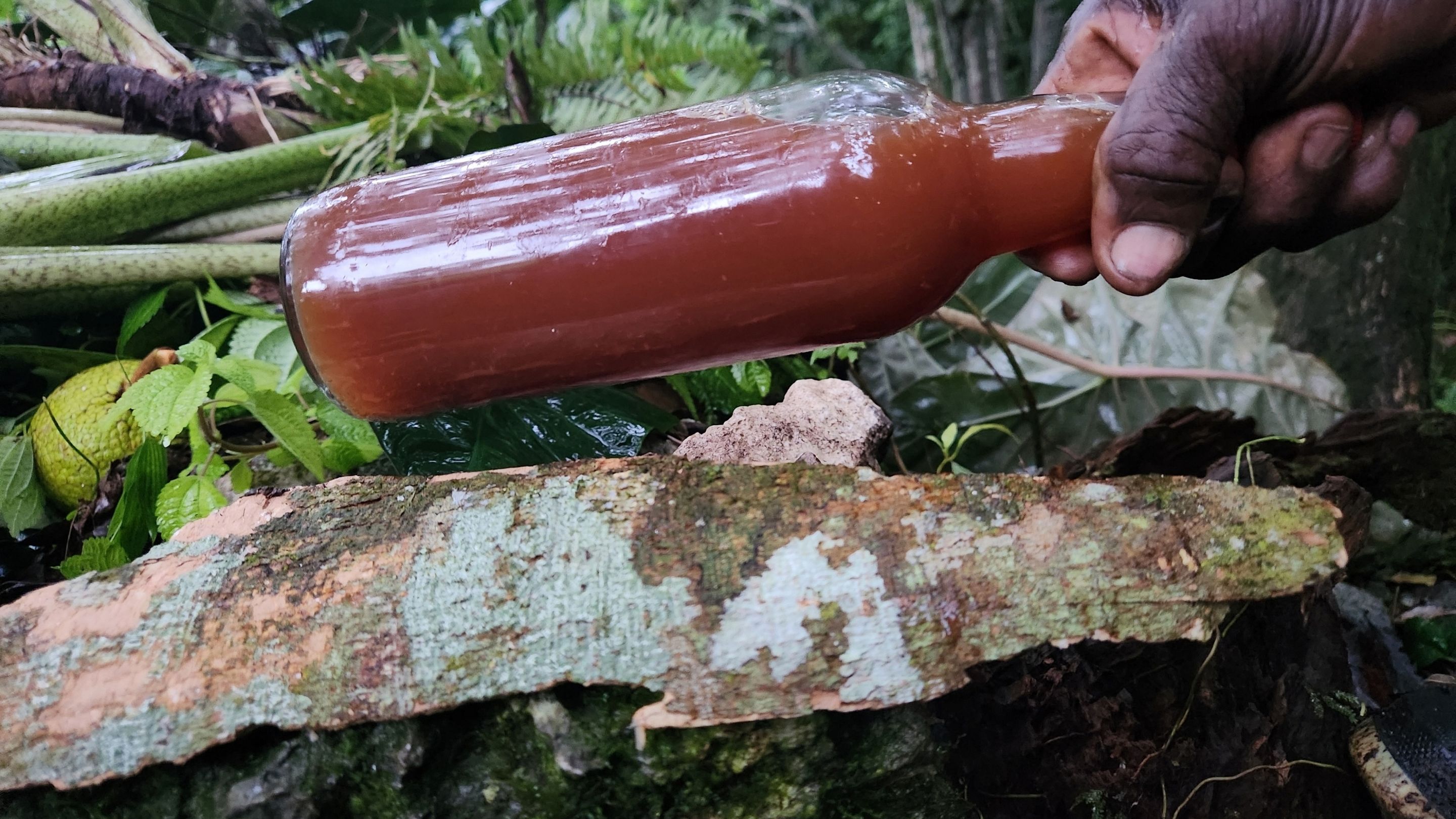 Root Tonics In Jamaica
If you've ever visited one of our food markets here, you'll likely see a man (rastaman usually) with bottle filled with a dark brown liquid walking around and shouting “rootsman, rootsman.”
And if you ask him who made it what's inside, don't be surprised if the answer takes a while!
Chainy root. Sarsaparilla. Strong back. Medina. Ramoon. Nerve wist. Ginger!
And depending on who made the bottle, perhaps another half-dozen - or even a dozen - plants that you've never heard of!
Here in Jamaica, root tonics are much more than another herbal drink. They're part of our folk-medicine tradition, passed down from one generation to another, particularly in our rural communities.
But what exactly is Jamaican roots? What's really inside the bottle? Why have Jamaicans been drinking it for generations? And is there any science behind the tradition?
I decided to dig a little deeper, and what I found was fascinating.
New! Take a piece of Jamaica with you💃!
Savour the memories! Now you can get your authentic Jamaican souvenir items, as well as traditional Jamaican herbs, spices and housewares on our popular e-store. Click Here to learn more.
And, if you ever need a trustworthy and knowledgeable local guide, consider booking a private tour with us!
First, What Exactly Is a Jamaican Root Tonic?
The name can be slightly misleading because Jamaican roots aren't necessarily made from roots alone. A traditional root tonic is generally a concentrated herbal preparation made by boiling a mixture of plant material - which may include roots, bark, vines (what we sometimes call “wiss” here in Jamaica), stems and leaves.
The ingredients vary considerably from one roots man to another.
In fact, that's part of the beauty of the tradition. There isn't one single Jamaican roots recipe.
A man in Portland might prepare his differently from someone in St. Thomas, Manchester or here in St. James.
And quite often, the exact recipe is something of a family secret.
Researchers who interviewed Jamaican root-tonic makers found that knowledge was commonly passed down through parents, grandparents, elders, herbalists and other traditional practitioners. In other words, much of what goes into that bottle represents knowledge handed from one generation to another.
Did You Know? One Roots Bottle Can Contain More Than 20 Plants!
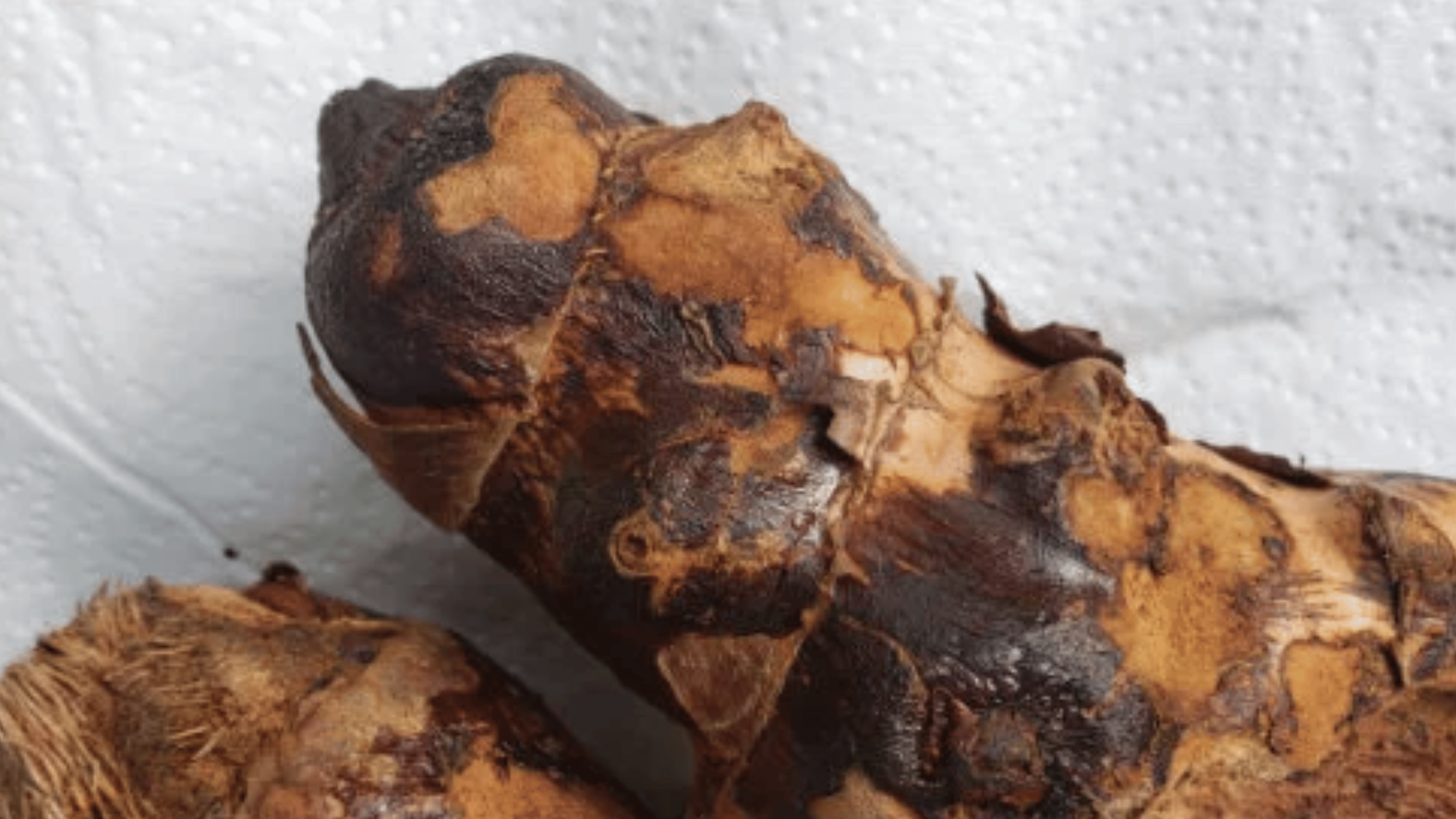
Now this surprised even me - honestly!
A University of the West Indies study (referenced below) examined 38 Jamaican root tonics to see what was actually being used in them.
The researchers found between 3 and 26 different plants in a single tonic, with an average of 13.3 plants per preparation.
Think about that for a moment.
That little bottle of roots somebody hands you could represent more than a dozen different plants gathered from across the Jamaican countryside.
And one ingredient stood above all the others.
Chainy root was found in every single one of the 38 tonics studied! (Chainy Roots on my estore here)
Sarsaparilla (here) appeared in approximately 95% of them, while plants going under the familiar Jamaican name strong back appeared at a similarly high rate. Other commonly identified ingredients included nerve wist, ramoon, medina and ginger.
So while recipes differ, there does appear to be something of a Jamaican roots “family.”
What's Commonly Found in Root Tonics In Jamaica?
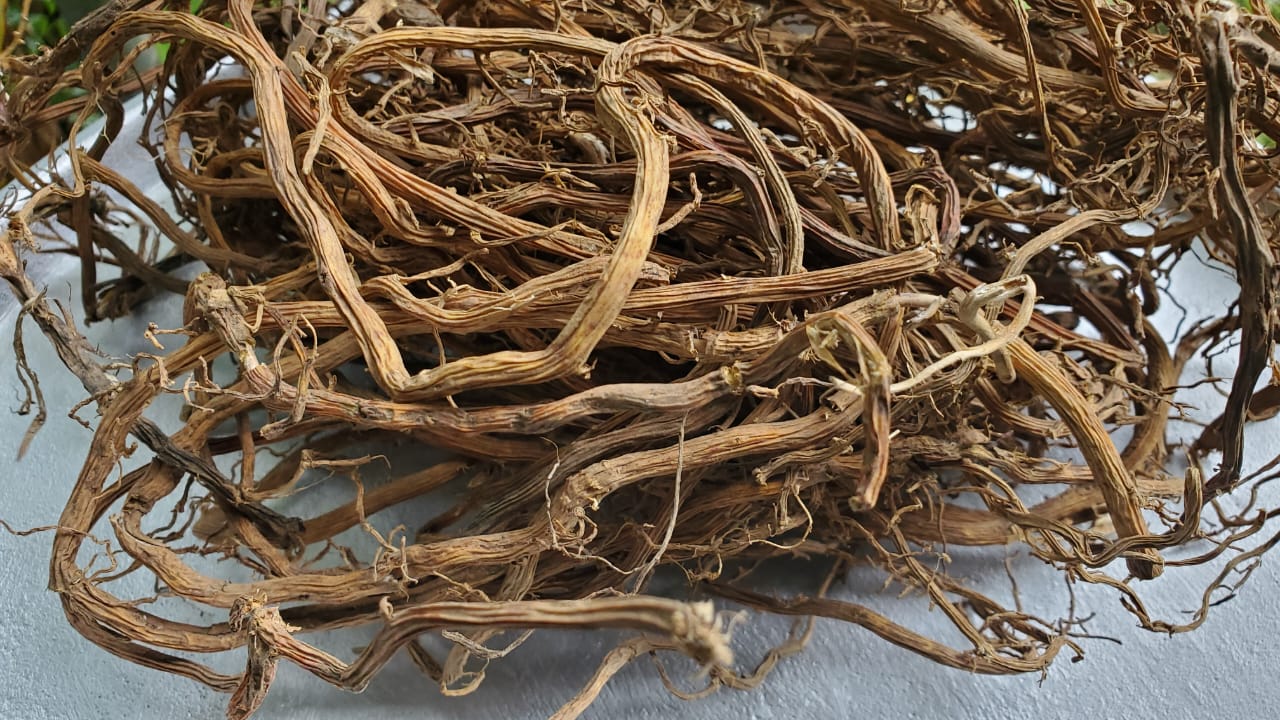 Root Tonic In Jamaica | Sarsaparilla
If you've ever watched a traditional roots man preparing his mixture, some of these names will probably sound familiar.
- Chainy Root
Chainy root is perhaps the star of Jamaican root tonics. Researchers have identified it as one of the defining ingredients in our roots tradition. Traditionally, it has been associated with building strength and vitality. The fact that it appeared in 100% of the root tonics in that UWI study tells you just how important it is. - Sarsaparilla
Another heavyweight is sarsaparilla. Here in Jamaica, sarsaparilla has a long history as both a drink and a traditional herb. In the UWI study, it appeared in 36 of the 38 tonics examined. - Strong Back
You couldn't very well have a conversation about Jamaican roots without somebody mentioning strong back. Interestingly, “strong back” isn't always one particular plant. Researchers have found that the name may be applied to several different plants here in Jamaica.
That alone tells us something important about folk medicine: common names can vary from community to community, which is one reason proper plant identification matters. - Medina
Medina is another name you'll hear frequently when Jamaicans talk about roots, particularly when the conversation turns to strength, stamina and sexual vitality. - Ramoon, Nerve Wist and Ginger
Ramoon and nerve wist were each found in more than half of the tonics examined in the UWI study, while ginger appeared in half. And those are only some of them. Researchers identified dozens of other plants across the different preparations.
So Why Do Jamaicans Drink Roots?
Now we're getting to the interesting part🤗.
Ask ten of us Jamaicans why people drink roots and you may very well get ten answers.
Traditionally, Jamaican root tonics have been taken to “build up” the body, restore strength, increase energy and stamina, “clean the blood,” settle the nerves and generally help a person feel stronger.
And yes - we have to talk about the one everybody knows!
Is Jamaican Roots Really an Aphrodisiac?
Roots has developed quite the reputation here in Jamaica as a man's drink, particularly for sexual stamina. There's no point pretending otherwise!
But what I found interesting is that when researchers actually spoke with Jamaicans involved in the tradition, sexual vitality was only one part of a much bigger story.
People also described roots as something taken for strength, energy, recovery from hard physical work, general wellbeing and what we Jamaicans often describe simply as “building up the body.”
In one ethnobotanical study involving 99 people across five Jamaican parishes, 85% of respondents said root tonics were consumed by everyone, rather than being something exclusively for men.
So perhaps we've been selling roots a little short by thinking of it only as an aphrodisiac.
How Is Traditional Jamaican Roots Made
This is where I gained even more appreciation for the old-time roots makers.
Proper traditional roots can take weeks or even months from collecting the plants to having the finished product.
Roots, bark, vines and other plant materials may first be gathered from forests, farms and other areas. Some of the wild ingredients require considerable walking and knowledge just to find them.
The material is then cleaned, chopped and naturally dried, sometimes for days or weeks.
Then comes the boiling. And we're not talking about putting on a pot for ten minutes.
Traditional producers, we call them 'roots man' may boil the mixture for several hours, often over a wood fire. Some do a second boil, adding fresh water to the plant material and combining the resulting liquid with the first batch.
After that, the roots is strained, cooled and bottled.
Some then leave it to “cure” for a month or longer.
Now here's a fascinating piece of Jamaican tradition: researchers were told that bottles were sometimes buried in the ground in years gone by to keep them cool and slow fermentation. And this I have first hand knowledge of! Sir Clive, my rastafarian friend in Camrose (I did a video with him about Ramoon here) told me it takes him months, because he buries it in the earth for a while!
Molasses, burnt sugar, honey, wine or rum may also be incorporated, depending on the recipe.
Now you understand why that bottle of roots looks a little different, doesn't it?
There's a lot of work!
Roots Is Also a Story About Jamaica
For me, this may be the most fascinating part!
Root tonic isn't simply about what a particular plant can or cannot do.
It's part of our cultural heritage.
Research conducted in communities across Jamaica found that knowledge about roots is frequently inherited from parents, grandparents, community elders and traditional herbal practitioners.
Researchers have also explored our strong African connections to the tradition, alongside possible Amerindian influences and the later blending of plants and knowledge from different cultures.
That's Jamaica right there.
Our culture is a mixture, and our relationship with plants reflects that history too.
Some of the earliest historical descriptions even mention fermented “cool drinks” made in Jamaica centuries ago using plant materials such as chewstick.
We may never be able to point to one person and say, “He invented Jamaican roots.” And perhaps that's the point.
Jamaican Roots belongs to generations.
Jamaican Roots and Modern Science
Now, whenever we're talking about traditional medicine, I think it's important that we keep the conversation balanced.
The fact that Jamaicans have used a plant for generations is valuable ethnobotanical knowledge, but traditional use doesn't automatically prove that every health claim made for it is medically established. Especially since we don't have a central point of reference - just yet.
Researchers have studied several plants commonly used in Jamaican folk medicine and identified very interesting bioactive compounds and potential pharmacological properties.
But there's still a great deal we don't know - particularly when numerous plants are combined into one preparation.
So I wouldn't tell anybody to throw away prescribed medication and start drinking roots instead. That needs education, guidance and balance.
In fact, that's not what this tradition should be about. For me, it's about appreciating traditional knowledge while allowing good science to help us understand it better.
Not Every Bottle of Roots Is the Same
I mentioned it earlier, but this is another important point.
Because recipes vary so widely, two bottles labelled “Jamaican roots” can contain completely different combinations and concentrations of plants. Some homemade roots may also ferment and develop alcohol.
That's why I would always want to know who made it and what's actually inside it.
This becomes especially important if you're taking prescription medication, have an existing medical condition, are pregnant, or are considering giving herbal preparations to children.
Herbs contain active chemical compounds too, and more isn't necessarily better.
Our Backyard Pharmacy Is Still Very Much Alive
One of the things I find remarkable about my Jamaica is just how close our traditional plant knowledge remains to everyday life.
A national ethnomedicinal survey involving 407 adults found that 72.6% of respondents who participated had self-medicated with herbs during the previous year.
Another analysis documented 107 medicinal plant species from 51 plant families being used by Jamaicans.
And where were people getting much of this herbal knowledge?
From home.
The researchers found that grandmothers and mothers were among the leading sources of information, and three-quarters of the medicinal plants used were obtained from people's own backyards. That tells me this isn't simply something we read about in history books.
The tradition is still alive, and I love it!
More Than a Bottle of “Strong Back”
So the next time you see somebody selling a bottle of roots here in Jamaica, perhaps you'll look at it a little differently.
Yes, there may be chainy root in there.There may be sarsaparilla, strong back, medina, ramoon, ginger and several other plants. But there's something else in that bottle too.
History.
Science still has important questions to answer about many of the health claims surrounding root tonics - and we should be careful not to turn tradition into medical fact before the evidence is there.
But there's no denying this:
Jamaican roots is one of the most fascinating expressions of our herbal and cultural heritage.
And perhaps that's what makes it so special.
By the way, if this journey into Jamaican roots has sparked your curiosity, there's more!
Just wait until you discover just how many plants we use traditionally here on the island. Take a look at my 101 Medicinal Herbs of Jamaica, where I explore many of the fascinating plants that have become part of our Jamaican herbal tradition.
And if you'd like to see some of these authentic Jamaican herbs for yourself, you can also visit our e-store, where many are available in several convenient formats. Love and thanks!
Works Cited
- Mitchell, Sylvia A. “The Jamaican Root Tonics: A Botanical Reference.” Focus on Alternative and Complementary Therapies, vol. 16, no. 4, 2011, pp. 271–280. Wiley Online Library, doi:10.1111/j.2042-7166.2011.01124.x. Accessed 29 Sept. 2026.
- Picking, Deborah, et al. “TRAMIL Ethnomedicinal Survey in Jamaica.” Journal of Ethnopharmacology, vol. 169, 2015, pp. 314–327. PubMed, PMID 25929450. Accessed 29 Sept. 2026.
- Picking, Deborah, et al. “The Prevalence of Herbal Medicine Home Use and Concomitant Use with Pharmaceutical Medicines in Jamaica.” Journal of Ethnopharmacology, vol. 137, no. 1, 2011, pp. 305–311. PubMed, doi:10.1016/j.jep.2011.05.025. Accessed 29 Sept. 2026.
- Vandebroek, Ina, et al. “Root Tonics and Resilience: Building Strength, Health, and Heritage in Jamaica.” Frontiers in Sustainable Food Systems, vol. 5, 2021, article 640171. Frontiers, doi:10.3389/fsufs.2021.640171. Accessed 29 Sept. 2026.
- Williams, L. A. D., et al. “Antiviral Activity of Jamaican Medicinal Plants and Isolated Bioactive Compounds.” Molecules, vol. 26, no. 3, 2021. PubMed Central. Accessed 29 Sept. 2026.
New! Get My Latest Book👇🏿
 |
You asked, I've answered! You no longer need to save for months or years, to enjoy paradise! I spilled the beans! sharing my top tips on finding cozy accommodations and secret gems, only the way a native could! Click Here to pick it up on my e-store and start saving now! |
See The Best Of Jamaica - In Videos!
 |
My channel reaches over 140,000 subscribers worldwide and has leveraged over 11 million views, sharing, what I call 'The Real Jamaica'. Subscribe today and join our family of viewers. |

Read More ...
New! Experience The REAL Jamaica!
Book Your Private Tour here and experience Jamaica the way we (locals) do!
P.S. Didn't find what you were looking for?
Still need help?
Click Here to try our dependable and effective Site Search tool. It works!
Or, simply click here and here, to browse my library of over 500 questions and answers! Chances are someone already asked (and got an answer to) your question.






Featured Video!

Travelling To Jamaica?
Read this BEFORE you go
👇🏿

New Here?
I recommend you START HERE to enjoy the best of this website!
New! For Authentic Jamaican products, from my very own hands, visit my Etsy store here.
Recent Articles


-
Root Tonics In Jamaica: What Makes Them So Special?
Sep 29, 26 04:04 PM
 What makes Jamaican roots so special? Discover the herbs, traditions and fascinating story behind root tonics in Jamaica and their enduring popularity.
 -
Jamaica Festival Songs - Popular (Winning) Songs Since 1966
Sep 08, 26 01:11 PM
 The Jamaica Festival Song Competition, also called the Popular Song Competition, and before 1990, known as the Independence Festival Song Competition,
 -
Is September a good month to visit Jamaica?
Sep 01, 26 12:55 PM
Is September a good month to visit Jamaica? || Answered by Kadian Clarke, Associate Writer Yes, it is! Certainly from my perspective, but there is a caveat. -
Easy Jamaican Cornmeal Blue Draws Recipe
Aug 18, 26 12:06 AM
 Follow this easy Jamaican Cornmeal Blue Draws recipe, using the most basic ingredients to make this delicious traditional sweet treat.
 -
10 Historical Jamaican Facts in the Month of September
Aug 17, 26 11:53 PM
by Deon Clarke | Associate Writer See Also: The History Of Jamaica From Taino To Independence. The month of September brings back so many memories with



About The Author

A patriotic Jamaican who adores its culture, Wellesley has been using this medium to share what he calls 'the uniqueness of Jamaica with the world' since April 2007.
To date, he serves over 9,300 unique readers / viewers per day (and over 1.1millon page views monthly)
His efforts have earned this site featured positions in local publications, including the Jamaica Gleaner's Hospitality Jamaica, Carlong Publishers, as well as recognition from numerous prestigious international agencies and universities. Read more about him here.
He invites you to explore his books and subscribe to this site to stay updated on all the latest here on site.
You are also welcome to check out his unique Jamaican products on his e-store.
If you are on social media, here are the links to follow his latest posts:
You are also invited to join his exclusive JAMHearts community where like-minded Jamaican enthusiasts discuss all things Jamaican.
Didn't Find What You Are Seeking?
Do a quick site search here: