Subscribe for all my updates and don't miss a thing! Sign me up!
Fixing Salty Jamaican Soup: Simple Tricks That Really Work
Sharing Is Caring! Share this awesome content with your friends now.


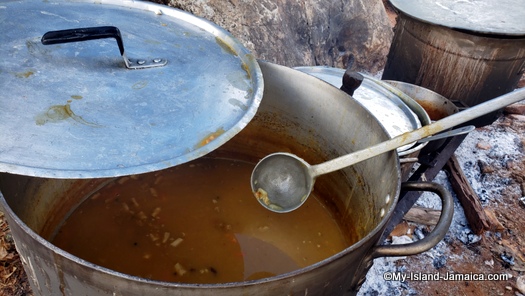
You dipped your spoon into your beautiful pot of Jamaican soup, took a taste, and immediately thought, “Oh no! This is way too salty!”😲
Trust me, it can happen quite easily.
You may have added a little too much salt. Perhaps the pigtail was saltier than expected. Maybe you added a packet of cock soup mix, not realizing how much sodium was already in it. Or perhaps you seasoned the pot perfectly, then added another ingredient that brought even more salt along with it.
Whatever happened, as a Jamaican born and bred, I say to you, wait... don't throw away the soup just yet!
The good news is that fixing salty Jamaican soup is usually possible, especially if you catch the problem before the pot is finished.
And no, the answer isn't simply throwing a potato into the pot and hoping it magically sucks up all the salt!
Let's talk about what actually works.
New! Take a piece of Jamaica with you💃!
Savour the memories! Now you can get your authentic Jamaican souvenir items, as well as traditional Jamaican herbs, spices and housewares on our popular e-store. Click Here to learn more.
And, if you ever need a trustworthy and knowledgeable local guide, consider booking a private tour with us!
First Things First: Stop Adding Anything Salty!
This sounds obvious, but it's worth saying.
The moment you realize your Jamaican soup is too salty, stop adding:
- Salt
- Seasoning cubes
- Powdered soup mixes
- Salted butter
- Soy sauce
- Additional salted meat
Remember that some ingredients continue releasing salt into the soup as they cook.
Salted pigtail is a perfect example.
Your soup may taste fine early on, but as the meat continues cooking, more salt can enter the broth.
So before adding that “little extra pinch,” give the pot some time and taste again.
Dilution Is Your Best Friend In Fixing Salty Jamaican Soup
If I had to choose the most dependable solution for fixing salty Jamaican soup, this would be it:
Dilute the salt.
Salt doesn't disappear because we add another ingredient. To genuinely make each spoonful less salty, we need to spread that salt through a larger amount of unsalted food or liquid.
The easiest approach is to add a little unsalted water.
But don't pour half a jug into your soup all at once!
Add perhaps half a cup, stir, allow the soup to simmer for a few minutes, then taste it again.
Still too salty?
Add a little more.
This works particularly well if you still have some cooking time remaining because the flavours can come back together as the soup continues simmering.
But What If Adding Water Makes My Soup Too Thin?
Now we're talking Jamaican soup, so I know somebody is already thinking:
“But I don't want any watery soup!”
Neither do I!
Instead of relying only on water, add more unsalted ingredients to increase the volume of the pot.
Depending on the type of soup you're making, you could add:
- Yellow yam
- Coco
- Dumplings
- Dasheen
- Irish potato
- Sweet potato
- Pumpkin
- Chocho
- Carrot
- Turnip
- Green banana
- More unsalted meat
- More peas or beans
You're essentially making a little more soup without adding any more salt. And that's the important part.
Add More Pumpkin
If it's the right kind of Jamaican soup, pumpkin can be a particularly useful rescue ingredient.
Cooked pumpkin breaks down naturally and helps restore some of the body that may have been lost after adding extra water.
It also contributes a mild natural sweetness, which can make an overly salty soup taste more balanced.
Just remember: the pumpkin isn't removing the salt.
You're increasing the amount of food in the pot and changing the overall balance of flavours. That's an important distinction.
What About the Famous Potato Trick?
Oh yes!
This is probably the first thing many of us have heard: “Put a potato in it. The potato will draw out the salt.”
But does it really?
Not quite in the magical way we sometimes describe it.
A potato placed in salty soup absorbs liquid - and because that liquid contains salt, the potato absorbs some salt too. But it doesn't selectively pull salt out while leaving the water behind.
In other words, the potato isn't a little salt magnet!
If you add potatoes and leave them in the soup, what you've really done is increase the amount of unsalted food relative to the salt already present.
That can certainly help.
But adding more yam, dumplings, pumpkin or other unsalted ingredients can work on the same basic principle.
🍽 Did You Know?
... Salt dissolves into the water in your soup.
🍽 Did You Know?
... Salt dissolves into the water in your soup.
That's why there isn't really an ingredient you can drop into the pot that somehow hunts down the salt and removes only that.
The most reliable approach is much simpler: Increase the unsalted portion of the soup.
Can Sugar Fix Salty Jamaican Soup?
Be careful with this one.
A tiny amount of sweetness can sometimes balance how salty something tastes, particularly if the dish already has naturally sweet ingredients.
But sugar doesn't remove sodium.
And Jamaican soup certainly shouldn't end up tasting like dessert because we're trying to correct another mistake!
If you decide to use sweetness for balance, pumpkin, sweet potato or carrot may fit the flavour of the soup much more naturally.
The real solution to excessive salt is still dilution.
Can I Remove Some Broth and Replace It?
Absolutely.
In fact, if the soup is extremely salty, this may be one of your best options.
Remove some of the salty broth and replace it with unsalted water or, even better, an unsalted homemade stock if you have one.
Then allow everything to simmer together again.
You may need to rebuild some flavour afterward with fresh scallion, thyme, pimento, garlic, pepper or other salt-free seasonings.
That's far better than trying to mask an overwhelmingly salty pot.
Another Trick: Make a Second Unsalted Batch
Now, suppose you've really gone overboard.
Perhaps somebody salted the soup…and then somebody else came along and salted it again!
Don't laugh. These things happen. 😄
If you have enough ingredients, make a smaller second batch with no salt at all, then combine the two.
This is especially useful for a large pot of soup that you don't want to waste.
You'll end up with more food, of course -but that's hardly the worst problem to have. If you are here in Jamaica, chances are you can find an extra mouth to feed.
Worst cast, just freeze some for another day.
Be Careful With Cock Soup Mix and Seasoning Cubes
This deserves its own section because it can be one of the easiest ways to accidentally oversalt Jamaican soup.
Commercial soup mixes, bouillon cubes and powdered seasonings can already contain substantial amounts of sodium.
So if you're using:
- Cock soup mix
- Chicken seasoning
- Bouillon cubes
- All-purpose seasoning
- Salted meat
…and then adding regular salt on top of all of that, the sodium can build up very quickly.
My suggestion?
Season gradually and taste as you go.
You can always add more salt near the end. Taking it back out is another story!
Salted Pigtail Can Sneak Up on You
Salted pigtail is delicious in soup, peas and many Jamaican dishes, but it needs a little preparation.
Before adding it to the pot, rinse it thoroughly.
Depending on how heavily cured it is, you may also want to soak it in water and discard the soaking water.
Another option is to boil the pigtail separately, discard that water, and then add the meat to your soup.
That can remove a significant amount of surface and curing salt before it ever reaches your soup pot.
The same principle applies to other heavily salted or cured meats.
Fixing Salty Jamaican Soup Without Losing the Flavour
This is really the balancing act. We don't just want the soup to become less salty.
We still want it to taste good!
After adding water or extra unsalted ingredients, taste the soup again and rebuild the flavours using ingredients that don't add much sodium.
Think: Scallion. Thyme. Garlic. Pimento. Ginger. Scotch bonnet. Pumpkin.
These can bring back aroma and depth without immediately returning you to the same problem.
And give the soup time.
Jamaican soup develops as it cooks. After making adjustments, allow it to simmer for a while before deciding that something else needs to be added.
Prevention Is Easier Than Fixing Salty Jamaican Soup
Perhaps the best trick of all is not having to rescue the pot in the first place.
A few simple habits can make a big difference:
- Taste before salting. If you've already added packaged seasoning or salted meat, taste the broth first.
- Salt gradually. Don't try to get the final taste at the beginning of cooking.
- Watch packaged seasonings. Check the sodium on the label, particularly if you're combining several products.
- Prepare salted meats separately. Soaking, rinsing or pre-boiling them gives you much more control.
- Remember the soup will reduce. As water evaporates, the same amount of salt becomes concentrated in less liquid. A soup that tastes perfectly salted early in cooking may taste much saltier later.
That last point is easy to forget.
Don't Throw Away That Pot!
So, if you've landed on this page because there's a pot of salty soup sitting on your stove right now, here's the short version:
Don't panic - and don't throw it away!
Start with a small amount of unsalted water. Add more unsalted ground provisions or vegetables if the pot can accommodate them.
If it's extremely salty, remove some broth and replace it. Then rebuild your flavour with fresh herbs and seasonings that don't contain added salt.
And don't depend on one lonely Irish potato to perform a miracle!
Fixing salty Jamaican soup really comes down to something very simple: reducing the concentration of salt while protecting all those wonderful flavours that make Jamaican soup Jamaican.
After all, whether it's red peas soup, chicken foot soup, mannish water, beef soup or another delicious Saturday pot bubbling away on the stove, there's usually far too much goodness in there to give up on it because of a little too much salt.
Save the pot!
Regards,
Wellesley
You might like these
Best Jamaican Jerk Chicken Recipe - Mouth Watering!
Here is a quick and easy, yet delectable Jamaican jerk chicken recipe.
Free Jamaican Recipes! Yes Traditional Jamaican Recipes totally free
Yep, completely free Jamaican recipes for you to use. Just go ahead and use them, you can thank me later :-)
Delicious Jamaican Banana Bread Recipe
You've tasted it? Or probably heard about it right? Well, here's the delectable Jamaican banana bread recipe, free of charge. Go for it - but remember you'll have to share it when complete. Just kidding :-) Enjoy.
References & Works Cited for Fixing Salty Jamaican Soup
- McGee, Harold. On Food and Cooking: The Science and Lore of the Kitchen. Rev. ed., Scribner, 2004.
- U.S. Food and Drug Administration. “Sodium in Your Diet.” FDA, U.S. Department of Health and Human Services, www.fda.gov/food/nutrition-education-resources-materials/sodium-your-diet. Accessed 29 Sept. 2026.
- Centers for Disease Control and Prevention. “About Sodium and Health.” CDC, U.S. Department of Health and Human Services, www.cdc.gov/salt/about/index.html. Accessed 29 Sept. 2026.
- U.S. Department of Agriculture. “FoodData Central.” USDA Agricultural Research Service, fdc.nal.usda.gov. Accessed 29 Sept. 2026.
New! Get My Latest Book👇🏿
 |
You asked, I've answered! You no longer need to save for months or years, to enjoy paradise! I spilled the beans! sharing my top tips on finding cozy accommodations and secret gems, only the way a native could! Click Here to pick it up on my e-store and start saving now! |
See The Best Of Jamaica - In Videos!
 |
My channel reaches over 140,000 subscribers worldwide and has leveraged over 11 million views, sharing, what I call 'The Real Jamaica'. Subscribe today and join our family of viewers. |

Read More ...
New! Experience The REAL Jamaica!
Book Your Private Tour here and experience Jamaica the way we (locals) do!
P.S. Didn't find what you were looking for?
Still need help?
Click Here to try our dependable and effective Site Search tool. It works!
Or, simply click here and here, to browse my library of over 500 questions and answers! Chances are someone already asked (and got an answer to) your question.






Featured Video!

Travelling To Jamaica?
Read this BEFORE you go
👇🏿

New Here?
I recommend you START HERE to enjoy the best of this website!
New! For Authentic Jamaican products, from my very own hands, visit my Etsy store here.
Recent Articles


-
Fixing Salty Jamaican Soup: Simple Tricks That Really Work
Sep 29, 26 08:40 PM
 Fixing Salty Jamaican Soup is easier than you think. Discover simple tricks that reduce excess salt while keeping that delicious Jamaican flavour.
 -
Root Tonics In Jamaica: What Makes Them So Special?
Sep 29, 26 04:04 PM
 What makes Jamaican roots so special? Discover the herbs, traditions and fascinating story behind root tonics in Jamaica and their enduring popularity.
 -
Jamaica Festival Songs - Popular (Winning) Songs Since 1966
Sep 08, 26 01:11 PM
 The Jamaica Festival Song Competition, also called the Popular Song Competition, and before 1990, known as the Independence Festival Song Competition,
 -
Is September a good month to visit Jamaica?
Sep 01, 26 12:55 PM
Is September a good month to visit Jamaica? || Answered by Kadian Clarke, Associate Writer Yes, it is! Certainly from my perspective, but there is a caveat. -
Easy Jamaican Cornmeal Blue Draws Recipe
Aug 18, 26 12:06 AM
 Follow this easy Jamaican Cornmeal Blue Draws recipe, using the most basic ingredients to make this delicious traditional sweet treat.




About The Author

A patriotic Jamaican who adores its culture, Wellesley has been using this medium to share what he calls 'the uniqueness of Jamaica with the world' since April 2007.
To date, he serves over 9,300 unique readers / viewers per day (and over 1.1millon page views monthly)
His efforts have earned this site featured positions in local publications, including the Jamaica Gleaner's Hospitality Jamaica, Carlong Publishers, as well as recognition from numerous prestigious international agencies and universities. Read more about him here.
He invites you to explore his books and subscribe to this site to stay updated on all the latest here on site.
You are also welcome to check out his unique Jamaican products on his e-store.
If you are on social media, here are the links to follow his latest posts:
You are also invited to join his exclusive JAMHearts community where like-minded Jamaican enthusiasts discuss all things Jamaican.
Didn't Find What You Are Seeking?
Do a quick site search here: