Subscribe for all my updates and don't miss a thing! Sign me up!
Hurricane Melissa in Jamaica
One Year Later, I Went Back to See What Changed
Sharing Is Caring! Share this awesome content with your friends now.


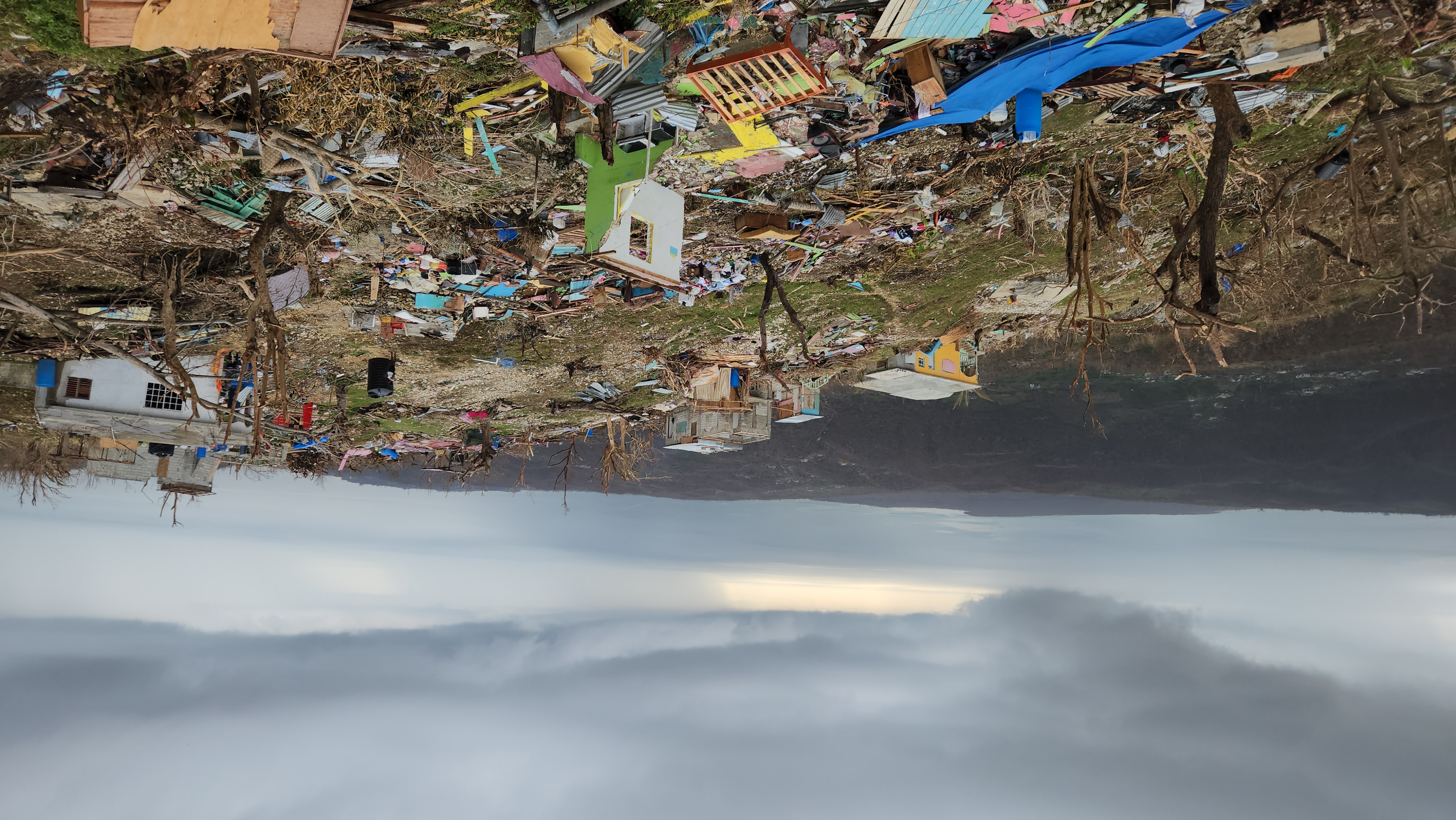
I'll never forget what I saw when I first returned to Westmoreland after Hurricane Melissa.
I had seen the reports and heard about the destruction. But nothing quite prepared me for what I encountered in Beeston Spring, a community that is close to my heart because of my own roots there.
It was not just that roofs were gone, some of the houses that families had called home for years were completely destroyed. Personal belongings lay scattered, and people were trying to figure out where to begin.
Some of the scenes were almost unbelievable.
But what touched me most wasn't simply the destruction. It was the people. Their stories, their uncertainty, and somehow, even amid all that devastation, their faith and determination. I shared those scenes with you, my viewers, and the response that followed was something I'll never forget.
Now, exactly one year after Hurricane Melissa struck Jamaica, I've gone back to find out how those families are doing.
And what I discovered was both encouraging and heartbreaking.
New! Take a piece of Jamaica with you💃!
Savour the memories! Now you can get your authentic Jamaican souvenir items, as well as traditional Jamaican herbs, spices and housewares on our popular e-store. Click Here to learn more.
And, if you ever need a trustworthy and knowledgeable local guide, consider booking a private tour with us!
What Happened When Hurricane Melissa Hit Jamaica?
On Tuesday, October 28, 2025, Hurricane Melissa made landfall near New Hope in Westmoreland as a Category 5 hurricane, with estimated maximum sustained winds of 185 mph (295 km/h).
It was the strongest hurricane landfall recorded in Jamaica's history and among the most powerful Atlantic hurricane landfalls on record.
The destruction was particularly severe across western Jamaica. Powerful winds ripped roofs from buildings, while torrential rain and flooding damaged homes, roads, farms, businesses and critical infrastructure. Westmoreland, St. Elizabeth, St. James, Trelawny and several other parishes suffered significant impacts.
And the scale was enormous. I found some numbers from the International Federation of Red Cross and Red Crescent Societies (IFRC), and they recorded thta approximately 1.6 million Jamaicans were affected in some way.
But statistics can only tell us so much, to understand what Melissa really meant, we have to look at the lives behind those numbers.
Hurricane Melissa in Jamaica: Quick Facts
Hurricane Melissa in Jamaica: Quick Facts
| Date of landfall | October 28, 2025 |
|---|---|
| Landfall location | Near New Hope, Westmoreland |
| Category | Category 5 |
| Maximum sustained winds | 185 mph (295 km/h) |
| Population affected | Approximately 1.6 million |
| Hard-hit parishes | Westmoreland, St. Elizabeth, St. James and Trelawny |
Sources: National Hurricane Center, Jamaica Information Service and IFRC.
What I Saw in Westmoreland After Hurricane Melissa
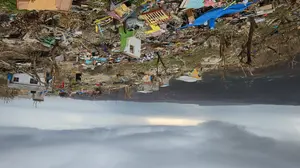
When I first travelled into Left Hall and Beeston Spring after the hurricane, the devastation was difficult to comprehend; most of the board houses were completely destroyed.
And the hardest part of this for me was realizing that these weren't simply buildings. they represented years of hard work, sacrifice and memories for the families. And for some families, practically everything they owned was inside those walls.
I met residents who were still coming to terms with their losses. Others were already trying to salvage materials and figure out how to put something over their heads.
Believe me, it was tearful.
I recorded and shared what I saw because I wanted people, especially our Jamaican family overseas, to understand what had happened to these communities. Here is it below.. embedded

But one of the most beautiful things to come out of that terrible experience was the generosity of people who responded.
Jamaicans overseas, friends of Jamaica and viewers from different parts of the world reached out with prayers, encouragement and financial support. We were able to turn that generosity into practical assistance.
We purchased and distributed plywood and zinc to help residents repair or built some temporary structures. We also supported the construction of two small houses and distributed almost 100 solar lanterns, providing some much-needed light to families struggling without electricity.
Another initiative close to my heart was our community documentation day, when I got fellow Justices Of The Peace and the Registrar General's Department to partner with me to help them with passport and birth certificate applications.
I remain deeply grateful to everyone who contributed; some gave money, others shared our videos, and many offered prayers and encouragement.
Watch our relief efforts:
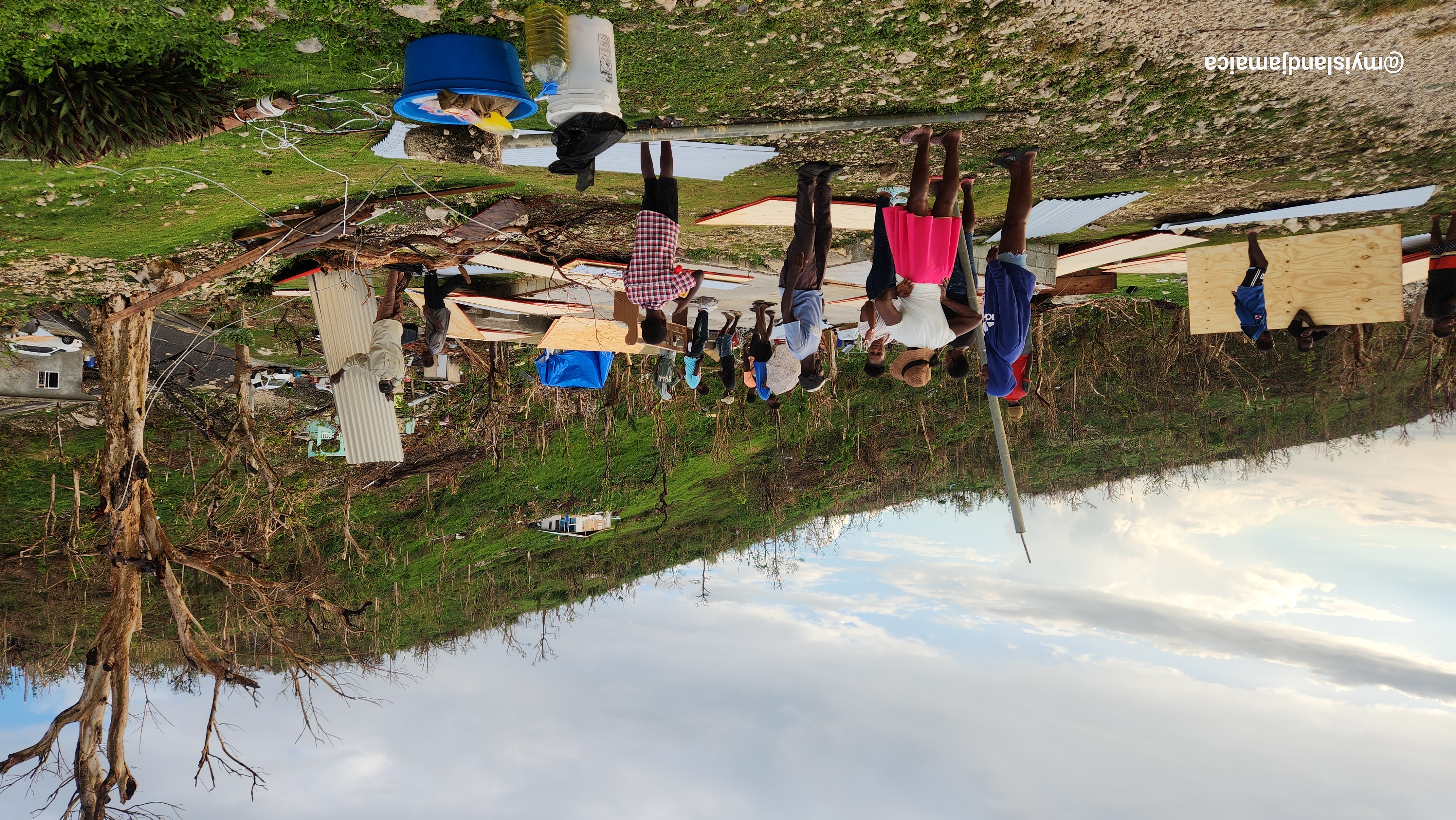
One Year Later in Westmoreland: Progress, Gratitude and Unfinished Recovery
As the first anniversary approached, I found myself wondering about the people I had met. After the attention had gone, the immediate emergency passed and the headlines faded, what had happened to those families?
So, I asked my grand uncle Melvin to accompany me and I went back.
And there was some encouraging news; a few residents had made progress. Some had repaired their roofs or rebuilt parts of their homes. Others expressed genuine gratitude for assistance they had received along the way. It was good to see that.
But not everyone had the same story; in fact the majority of them still didn't make any meaningul progress. One encounter that particularly touched me was with Mass Govie.
When I asked how he was getting along, he told me that he hadn't received assistance from anyone! According to him, the only help he had received was the three sheets of zinc and three sheets of plywood we had given him during our earlier relief efforts.
He explained that he had borrowed additional materials from another resident and used what he had to put together a temporary structure. I was grateful that our contribution had helped him. But at the same time, it was painful to realise how much more he still needed.
And Govie wasn't the only person with those circumstances, many of them, off camera, shared the same sentiment with me. That's one of the biggest lessons I took away from my return visit.
Catherine Hall, St. James: The Flooding Fear Remains
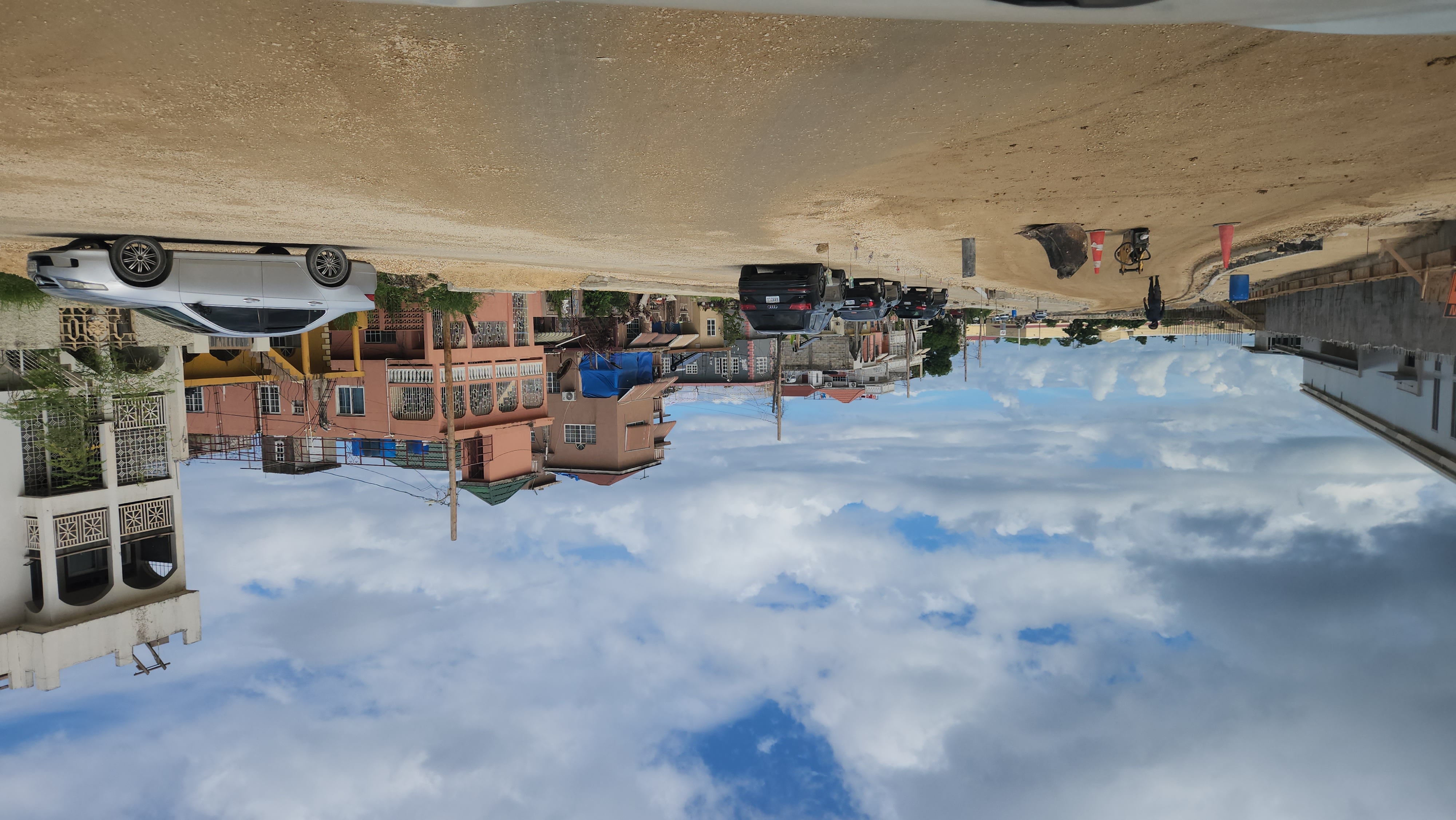
I also took the opportunity to visit Catherine Hall in St. James, where residents experienced a different kind of devastation. Here, flooding was the major part of the story.
Water entered homes, damaged belongings and left families with memories that have not simply disappeared with the floodwaters. And something Tamara told me really stayed with me.
She said they fear whenever it rains.
For most of us here in Jamaica, rain is part of everyday life. We might complain about the inconvenience, especially when we have somewhere to go. But imagine hearing the rain on your roof and immediately wondering whether your home is about to flood again.
Then there was Ms Polly.
Not only has she, and according to her, most persons in Catherine hall has not gotten any assistance at all, she told me that her grandson gets jittery whenever it rains because he remembers the flooding, believe me, that one really touched me.
Clearly the fear, the anxiety and the uncertainty is still there, even after the cleanup.
I read that the Red Cross reported providing mental health and psychosocial support to more than 10,100 adults and children during its first year of Hurricane Melissa response but perhaps that effort needs to be wider - and ongoing.
How Much Has Jamaica Recovered from Hurricane Melissa?
So one year later, there has been meaningful progress across Jamaica; many homes have been repaired, communities have begun rebuilding, and essential services such as electricity and water have largely been restored.
The Jamaica Red Cross and its international partners reported assisting more than 91,000 people by October 27, 2026. But still there is another side to that picture that many of haven't seen.
The same anniversary report noted that thousands of families remained displaced or were still living in partially damaged homes. It also highlighted the continuing difficulties faced by farmers, fishers and small-business operators whose livelihoods were disrupted.
So while the emergency phase may have ended, recovery remains a major work in progress.
And that is exactly what I witnessed! Some families are rebuilding and looking ahead. But others, like Mass Govie, are still trying to secure something as basic as adequate shelter.
Meanwhile, there are families in places like Catherine Hall who are dealing with the emotional consequences that cannot be measured simply by counting repaired buildings.
📺Watch My Hurricane Melissa One-Year Anniversary Documentary
I didn't want this anniversary to be just another reminder of how destructive Hurricane Melissa was, rather, I wanted to return to the communities, sit with the residents and hear directly from them.
- How had their lives changed?
- What assistance had they received?
- What challenges remained?
- And what were their hopes for the future?
That's why I produced this special documentary:
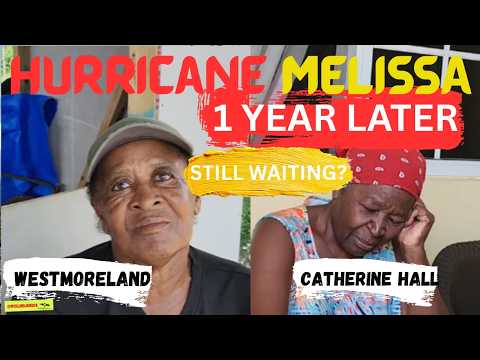
You'll hear from residents in Westmoreland and Catherine Hall, including people who are thankful for the progress they've made and others who are still struggling.
I sincerely hope you'll take the time to watch it, because these aren't just hurricane stories, these are people's lives.
If you're moved by what you've read or seen in the documentary, there are ways you can help. Our My Island Jamaica Foundation continues to support community needs, including disaster recovery. You can also contribute through our Hurricane Melissa GoFundMe campaign.
Some residents featured in the documentary have shared contact information for people who wish to assist them directly. Please refer to the video's description for the details they have authorised us to publish.
And if you're not in a position to contribute financially, you can still help by sharing their stories, you never know who might see them and be moved to make a difference.
I've always believed in the strength and resilience of the Jamaican people, and Hurricane Melissa certainly reminded me of that. I saw people helping neighbours, sharing what little they had and finding the courage to begin again. I also witnessed extraordinary generosity from people who weren't directly affected, but couldn't bear to stand by and do nothing.
But there's something else I've come to appreciate after speaking with them, and it is this: Resilience doesn't mean someone isn't struggling. It doesn't mean they're not worried, exhausted or uncertain about tomorrow. And it certainly doesn't mean they no longer need assistance. That's what I saw both in Westmoreland and Catherine Hall.
And that's what I hope you'll remember.
One year after Hurricane Melissa in Jamaica, we have much to be thankful for. There has been progress, and many people have shown remarkable courage.
But there are still families who need our attention. In whatever way we can, let's support those who are still struggling, and above all, let's not forget them.
Thank you for walking this journey with me.
Regards,
Wellesley
P.S. If there's one thing I'd love you to do after reading this, it's to watch my one-year anniversary documentary. You'll hear the residents tell their own stories, including the challenges they still face. And please share it with someone who loves Jamaica, let's help them get the attention that they really deserve - one year later.
References & Works Cited for Hurricane Melissa In Jamaica
- National Hurricane Center. “Category 5 Melissa Makes Landfall in Jamaica.” National Oceanic and Atmospheric Administration, 28 Oct. 2025. https://www.nhc.noaa.gov/archive/2025/al13/al132025.update.10281700.shtml.
- Jamaica Information Service. “Hurricane Melissa Makes Landfall in New Hope, Westmoreland.” 28 Oct. 2025. https://jis.gov.jm/hurricane-melissa-makes-landfall-in-new-hope-westmoreland/.
- United Nations Economic Commission for Latin America and the Caribbean. Assessment of the Effects and Impacts of Hurricane Melissa in Jamaica. United Nations, 2026. https://jamaica.un.org/en/316582-assessment-effects-and-impacts-hurricane-melissa-jamaica.
- International Federation of Red Cross and Red Crescent Societies. “Hurricane Melissa, One Year On: Jamaica Red Cross Assists 91,000 People in a Record-Breaking Response While Humanitarian Needs Persist.” 27 Oct. 2026. https://www.ifrc.org/press-release/hurricane-melissa-one-year-jamaica-red-cross-assists-91000-people-record-breaking.
- National Hurricane Center. Tropical Cyclone Report: Hurricane Melissa (AL132025). National Oceanic and Atmospheric Administration, 25 Feb. 2026. https://www.nhc.noaa.gov/data/tcr/AL132025_Melissa.pdf.
New! Get My Latest Book👇🏿
 |
You asked, I've answered! You no longer need to save for months or years, to enjoy paradise! I spilled the beans! sharing my top tips on finding cozy accommodations and secret gems, only the way a native could! Click Here to pick it up on my e-store and start saving now! |
See The Best Of Jamaica - In Videos!
 |
My channel reaches over 140,000 subscribers worldwide and has leveraged over 11 million views, sharing, what I call 'The Real Jamaica'. Subscribe today and join our family of viewers. |

Read More ...
New! Experience The REAL Jamaica!
Book Your Private Tour here and experience Jamaica the way we (locals) do!
P.S. Didn't find what you were looking for?
Still need help?
Click Here to try our dependable and effective Site Search tool. It works!
Or, simply click here and here, to browse my library of over 500 questions and answers! Chances are someone already asked (and got an answer to) your question.






Featured Video!
Travelling To Jamaica?
Read this BEFORE you go
👇🏿
New Here?
I recommend you START HERE to enjoy the best of this website!
New! For Authentic Jamaican products, from my very own hands, visit my Etsy store here.
Recent Articles


-
Hurricane Melissa in Jamaica: One Year Later
Oct 28, 26 01:30 PM
 Hurricane Melissa in Jamaica, one year later: my firsthand look at the devastation, relief efforts and families still struggling to recover.
-
Ocean Coral Spring Jamaica | Our Stay & Honest Review — Recommended
Oct 26, 26 03:38 PM
 Our ocean coral spring Jamaica stay included a rooftop Jacuzzi, lazy river, good food and friendly staff. See why we'd happily return.
-
Patois Phrases in Jamaica | What Jamaicans Really Say
Oct 23, 26 11:14 PM
 Learn common patois phrases in Jamaica, what they really mean and when to use them, from greetings and food to everyday Jamaican expressions.
-
Packing List for Jamaica | What to Bring & What to Leave Home
Oct 23, 26 12:48 AM
 Use this packing list for Jamaica to know what clothes, shoes, documents, beach gear and essentials to bring -and what you can safely leave at home.
-
Travel Budget Planner for Jamaica: How Much Will Your Trip Cost?
Oct 21, 26 04:13 PM
Use this travel budget planner for Jamaica to estimate flights, hotels, food, transport, attractions and spending money for your vacation.


About The Author
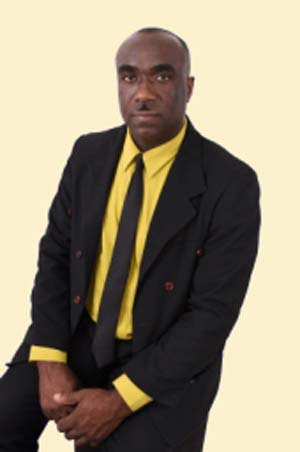
A patriotic Jamaican who adores its culture, Wellesley has been using this medium to share what he calls 'the uniqueness of Jamaica with the world' since April 2007.
To date, he serves over 9,300 unique readers / viewers per day (and over 1.1millon page views monthly)
His efforts have earned this site featured positions in local publications, including the Jamaica Gleaner's Hospitality Jamaica, Carlong Publishers, as well as recognition from numerous prestigious international agencies and universities. Read more about him here.
He invites you to explore his books and subscribe to this site to stay updated on all the latest here on site.
You are also welcome to check out his unique Jamaican products on his e-store.
If you are on social media, here are the links to follow his latest posts: