Love Jamaica? Get 3 FREE Gifts! Join my free newsletter for Jamaica stories, travel tips & more! GET MY FREE GIFTS!
Common Patois Phrases in Jamaica?
Here’s What We Really Say!
Sharing Is Caring! Share this awesome content with your friends now.

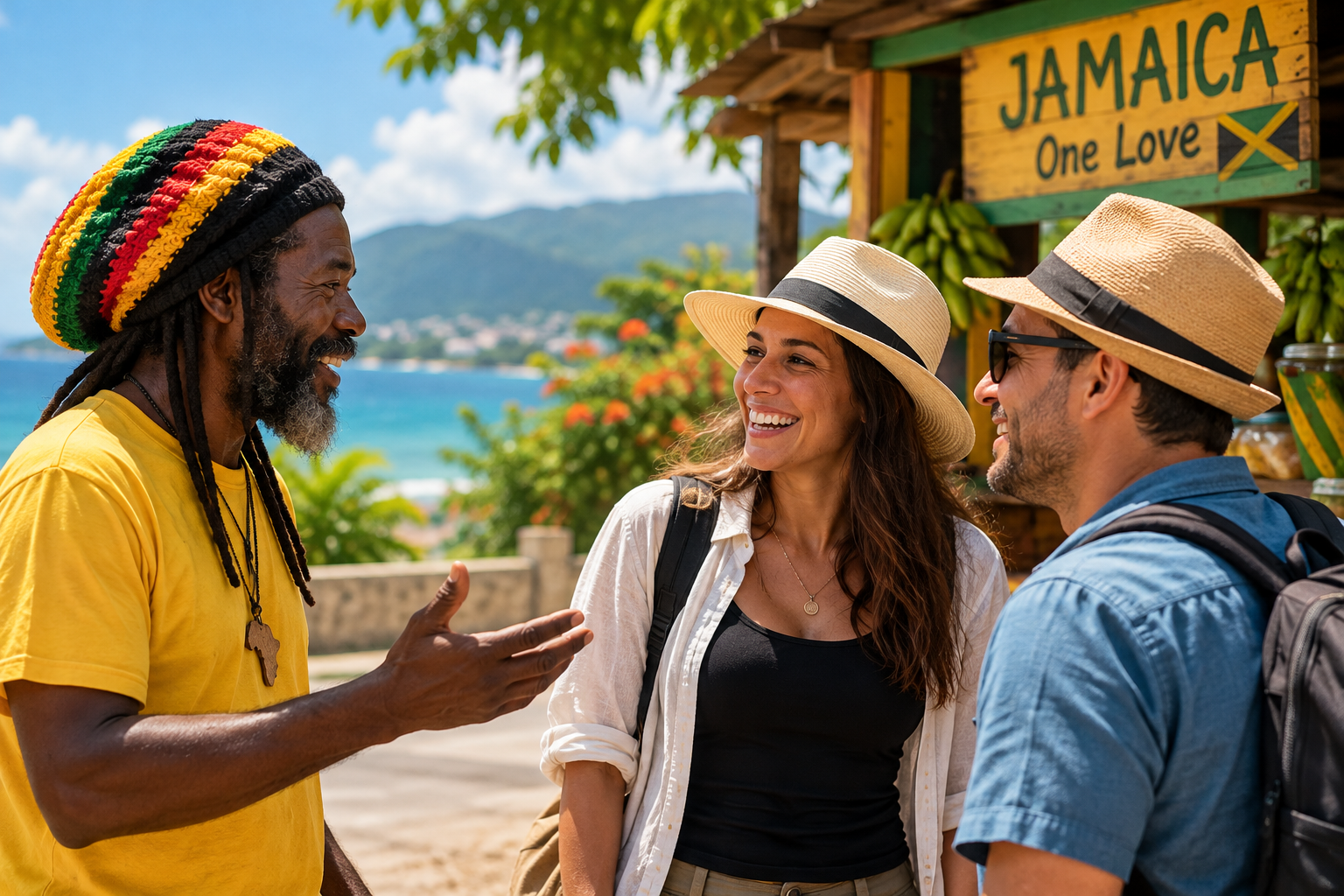
“Wha gwaan?”
Or, as you might also hear: “Wha a gwaan?” Or even, “Wha a galang?”
If you spend any amount of time here, chances are you'll hear one of these patois phrases in Jamaica fairly quickly. They are essentially asking, “What's going on?” or, more casually, “What's up?” And yes, I use them all the time without giving it a second thought.
But learning Jamaican Patois is about more than memorising a few colourful expressions, the context matters.
I've heard visitors use perfectly legitimate Jamaican phrases in situations where they just don't quite fit, and it can come across a little awkward.
So rather than give you 100 expressions you'll probably never use, let me share some of the patois phrases in Jamaica you're actually likely to hear, what they mean and, importantly, when we use them.
First, Is It Patois, Patwa or Jamaican?
You'll hear all three.
English is our official language, but Jamaican - commonly called Patois or Patwa - is spoken extensively in everyday life. It developed over centuries, with strong African and English influences along with other languages that formed part of Jamaica's history.
And don't become too concerned if you see the same phrase spelled differently.
For example, you may see:
Wha gwaan?
Wah gwaan?
Wha' gwaan?
You're dealing with a language that, in everyday use, has often been written according to how people hear and pronounce it.
More important than spelling every expression exactly the same way is understanding what the speaker actually means.
Common Patois Phrases In Jamaica You'll Hear
Jamaican Patois Greetings
- Wha gwaan? / Wha a gwaan?
Meaning: What's going on? / What's up?
This is easily one of our best-known greetings. You might walk up to a friend and simply say: “Wha gwaan?” It isn't necessarily a request for a detailed report; very often, it simply means hello. - Weh yuh seh?
Meaning: What are you saying? / What's up?
Again, don't take this too literally. If somebody greets you with “Weh yuh seh?”, they usually aren't asking you to repeat something. It can simply be another casual way of asking how you're doing. - Yuh good?
Meaning: Are you okay? / Everything alright?
A simple and very common check-in. Depending on the situation, it could either be a greeting or a genuine question about whether you're alright. - Mi deh yah
Meaning: I'm here / I'm doing alright.
This is a common response to a greeting such as Wha gwaan? Sometimes you'll hear: “Mi deh yah, yuh nuh.” It doesn't literally tell you very much, but culturally it can say plenty: I'm here, I'm managing, I'm alright. - Bless up
Meaning: Greetings / respect / good wishes.
You may hear this when people meet, leave or simply acknowledge each other. - Respect
Meaning: Thank you / appreciation / acknowledgement. A Jamaican may simply say: “Respect.” It can mean thanks, appreciation or simply recognition of what you said or did.
Saying Goodbye Jamaican Style - Likkle more
Meaning: See you later. This is one of my favourites because it doesn't sound as final as goodbye. “Likkle more.” In other words, we'll catch up again later. - Walk good
Meaning: Take care / travel safely. If somebody tells you “Walk good”, they aren't necessarily telling you to improve your walking😁! It's a warm way of saying goodbye and wishing you well on your way. - Mi gone
Meaning: I'm leaving / I'm off. Simple, direct and very Jamaican.
Everyday Patois Phrases in Jamaica - Mi soon come
Meaning: I'll be back / I'll return shortly. Now this one needs a little cultural explanation. “Soon” can be flexible. Sometimes mi soon come genuinely means I'll be right back. Other times... well, you might want to get comfortable! The context and the person saying it matter. - Nuh problem
Meaning: No problem. Exactly what it sounds like. You'll hear this constantly. - Seen / Zeen
Meaning: I understand / okay / agreed. If you're explaining something and a Jamaican responds: “Zeen.” They're essentially saying, I understand, okay or got you. - A suh it go
Meaning: That's how it goes. This can express acceptance of a situation, particularly one we can't do much about. Sometimes there is almost a whole philosophy of life packed into those four words. - Tek time
Meaning: Take your time / be careful / slow down. This can change slightly depending on the situation. Someone might say “Tek time pon di road”, meaning be careful on the road. - Hold on deh
Meaning: Wait a moment / hold on. Pretty straightforward. - Come yah
Meaning: Come here. You'll hear this everywhere — including from parents to children! - Gwaan
Meaning: Go on / continue / proceed. Again, the exact meaning depends on context. “Gwaan!” might mean continue. But “Gwaan from yah!” can be something quite different! Context, context, context.
Useful Patois Around Food - Mi hungry
Meaning: I'm hungry. One of the easiest phrases to learn — and potentially one of the most useful while you're here. - Mek wi nyam
Meaning: Let's eat. Nyam means to eat. And if somebody tells you: “Come nyam.” That's usually an invitation worth accepting! - Mi waan...
Meaning: I want... For example: “Mi waan one patty.” You'll understand waan very quickly once you start listening to everyday Jamaican conversation.
Getting Around Jamaica - Weh di ___ deh?
Meaning: Where is the ___? For example: “Weh di beach deh?” Where is the beach? - Weh yuh a go?
Meaning: Where are you going? You may hear this from a taxi driver trying to determine your destination. - Carry mi go...
Meaning: Take me to... For example: “Carry mi go town.” That means take me into town. - One stop, driver
Meaning: Let me off here. If you're travelling in some forms of public transportation, particularly a route taxi or bus, you may hear passengers use this to indicate they want to get off.
A Few More Expressions Worth Knowing - Mi nuh know
Meaning: I don't know. - Big up yuhself
Meaning: Respect / well done / give yourself credit. Big up is used to show recognition or appreciation. - Everyting criss
Meaning: Everything is good / everything is alright. Criss can describe something that is good, neat or in excellent condition. - Nuff
Meaning: Plenty / a lot. Someone can have nuff food, nuff money or nuff things to do. But be careful — calling somebody “nuff” can also suggest that they're overly inquisitive or interfering! - Pickney
Meaning: Child. “Di pickney dem” means the children. - Cho!
Now this one is harder to translate because sometimes an expression is more about feeling than vocabulary. “Cho!” can convey annoyance, impatience, disbelief or dismissal. You'll understand it better after hearing a Jamaican use it than from any dictionary definition.
Should Visitors Speak Jamaican Patois?
Certainly — if it comes naturally. But here's where I'd give visitors one little word of advice.
Don't force it. There is absolutely nothing wrong with saying Wha gwaan?, Respect, Likkle more or another Jamaican expression you've picked up while you're here, most Jamaicans won't mind at all. But trying to turn every sentence into Patois, exaggerating a Jamaican accent or using expressions without understanding the context can sound awkward very quickly.
I'd much rather you understand what we are saying first.
Is Jamaican Patois Just “Broken English”?
Oh No! And thanks for asking...I was waiting for this question😊
In fact, that description seriously understates what Jamaican is. Our language developed out of Jamaica's history and the interaction of several linguistic influences, particularly African languages and English. It also has patterns, vocabulary and grammatical structures of its own.
More importantly, Patois has become an important expression of Jamaican identity and culture.
People such as the late Louise Bennett-Coverley - our beloved Miss Lou (pictured with me below) did tremendous work in helping Jamaicans embrace our language rather than regard it as something to be ashamed of.
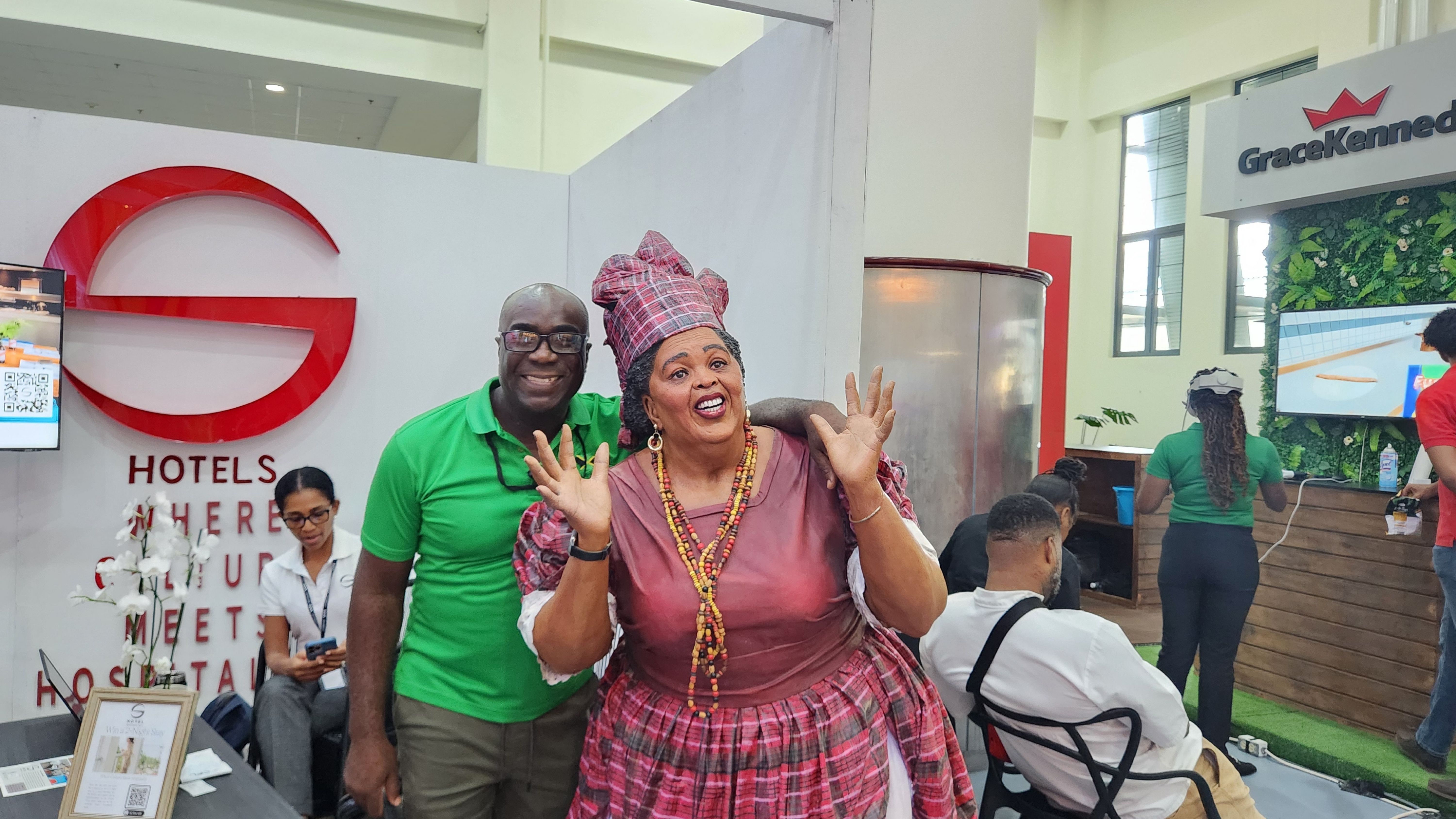
Just before you go though.. if there's one tip I'd leave you with, it's this: Listen.
You'll quickly discover that the same expression can sound different depending on who is speaking, where in Jamaica they're from, and what's happening in the conversation; that is part of the beauty of it
So when next you arrive and somebody greets you with: “Wha a gwaan?” You don't need an elaborate Patois response. A simple: “Mi deh yah” will do just fine.
Or you could simply smile and say: “I'm good!”
Trust me, we'll understand you either way.
Regards,
Wellesley
P.S. If you're coming to Jamaica soon, my Packing List for Jamaica is another useful guide to check before you travel — including a few things visitors surprisingly should not pack.
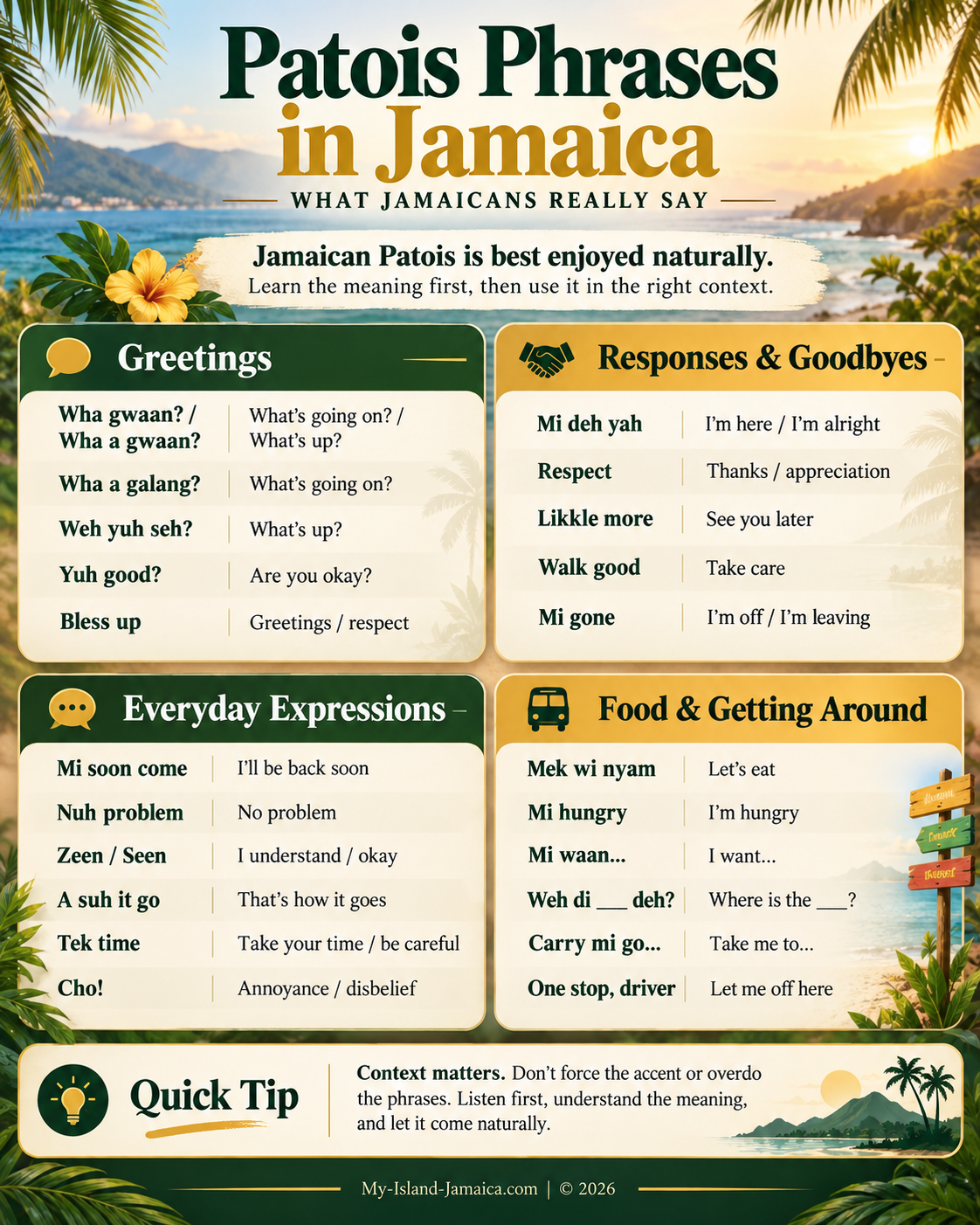
P.P.S. And I have a bonus for you, a little printable infographic; see below. Feel free to print and take it with you- if you think you might need it.
You might like these
Jamaican phrases - Real Examples (with a bit of history)
While English is the official language of Jamaica, Patois is spoken much more frequently and comfortably, hence the most common Jamaican phrases are almost exclusively in Patois.
The Colonial History of Jamaica | The Pieces We Tend Not To Talk About
You should know (I hope) a bit about Jamaica's independence, and surely post independence, but what do you know of the colonial history of Jamaica? Read more.
The Language of Jamaica
Language of Jamaica - What you need to know!
References & Works Cited for Patois Phrases In Jamaica
- Jamaica Tourist Board. “Jamaican Patois.” Visit Jamaica, Jamaica Tourist Board.
- The University of the West Indies. Research material referencing Jamaican vernacular usage, including the customary greeting “Wha' a Gwaan?” UWI.
- Jamaican Patwah. “Wah Gwaan.” JamaicanPatwah.com.
References
New! Get My Latest Book👇🏿
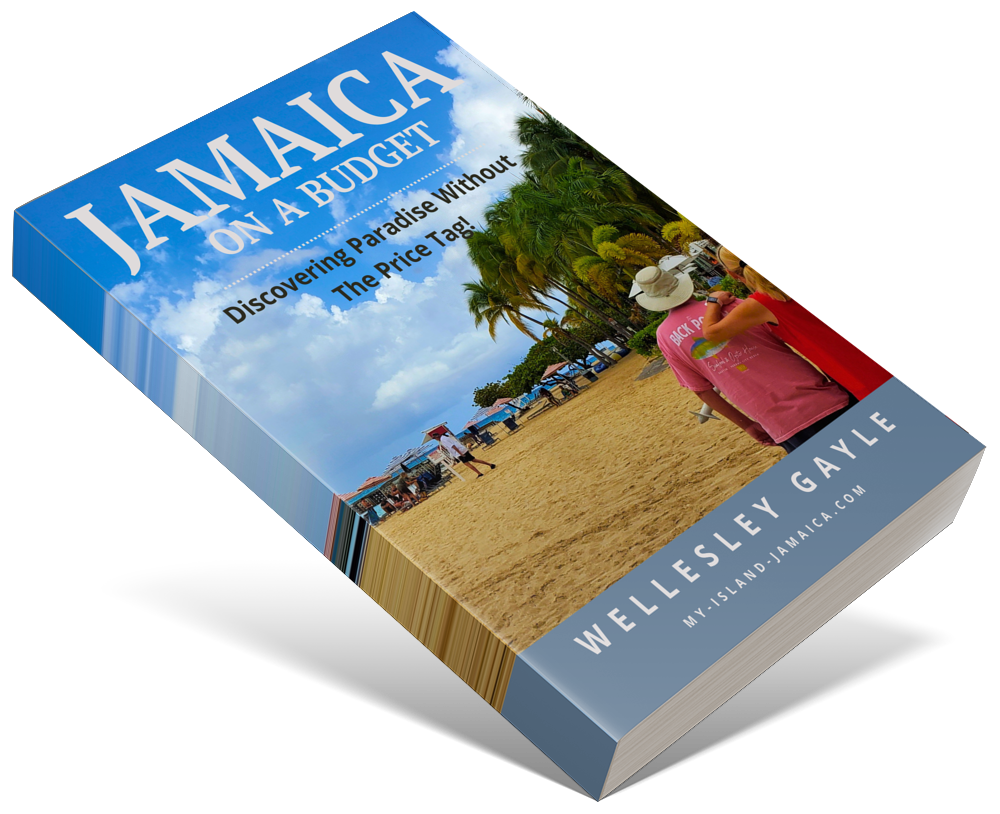 |
You asked, I've answered! You no longer need to save for months or years, to enjoy paradise! I spilled the beans! sharing my top tips on finding cozy accommodations and secret gems, only the way a native could! Click Here to pick it up on my e-store and start saving now! |
See The Best Of Jamaica - In Videos!
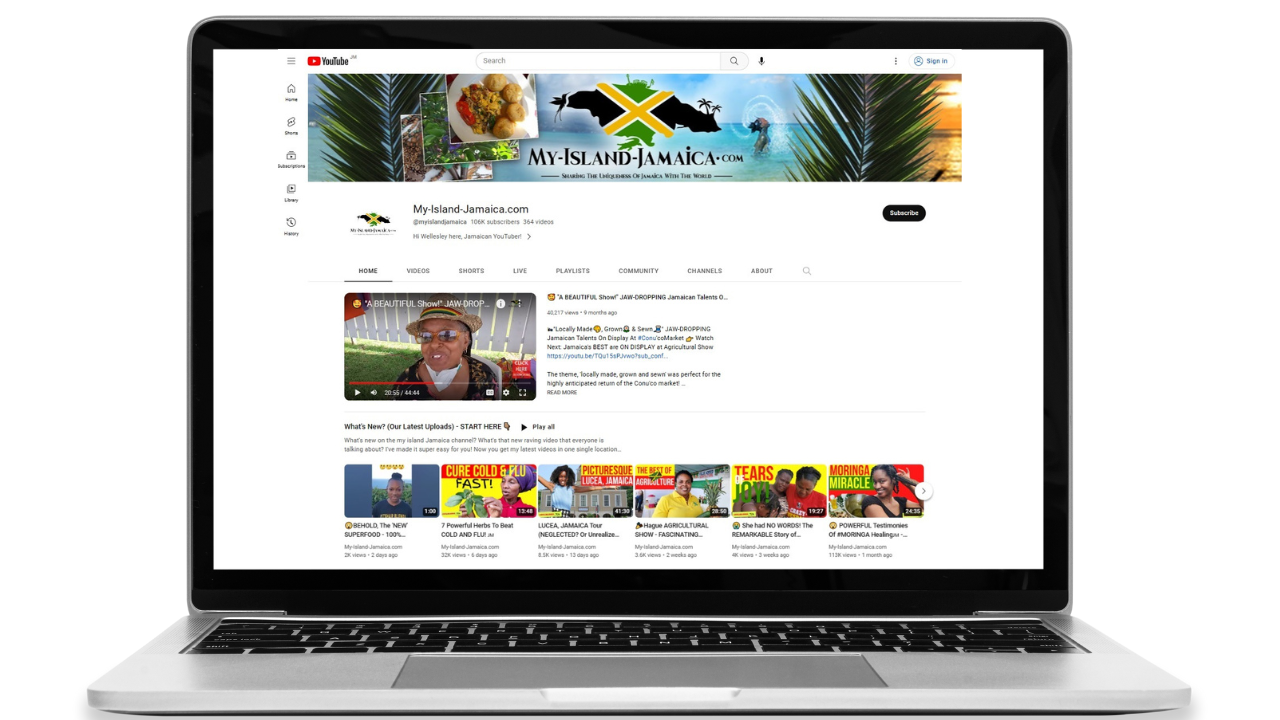 |
My channel reaches over 220,000 subscribers worldwide and has leveraged over 11 million views, sharing, what I call 'The Real Jamaica'. Subscribe today and join our family of viewers. |

Read More ...
New! Experience The REAL Jamaica!
Book Your Private Tour here and experience Jamaica the way we (locals) do!
P.S. Didn't find what you were looking for?
Still need help?
Click Here to try our dependable and effective Site Search tool. It works!
Or, simply click here and here, to browse my library of over 500 questions and answers! Chances are someone already asked (and got an answer to) your question.

Looking for Something Jamaican?
Fresh From My Island Jamaica


-
Soon Come Couriers — Jamaican Parcel Delivery
Soon Come Couriers is a Jamaican door-to-door parcel delivery service based in Kingston. We collect documents, parcels and customer orders from a pickup -
Across Jamaica by Minibus - Mitch's Unforgettable Adventures
What happens when you explore Jamaica beyond the usual tourist attractions?Well, according to my friend and reader Mitch Eyers, you might find yourself -
He Came to Jamaica and Found Friends Who Became Family!
 Have you ever met someone on vacation who eventually became like family?Well, another avid My Island Jamaica reader Andrew Ziegler has a story that
-
The Real Jamaica - Morant Bay, St. Thomas
 Greetings, everyone!My name is Lora, and I've been fortunate enough to spend many wonderful holidays in Morant Bay, St. Thomas, Jamaica.Over the years,



Jamaica Through My Lens
Stories, places, people & more
From My Island to You
A Little Jamaica,
On Me!
Love Jamaica? Join my free newsletter, where I share stories, tips and discoveries from right here on the island.
Plus, I'll send you 3 FREE gifts: a Jamaica Travel Starter Pack, 101 Intriguing Facts and 11 Jamaican Dessert Recipes!
Get My 3 Free Gifts →Free to join. Unsubscribe anytime.
Planning a Trip to Jamaica?
My practical guide to exploring Jamaica safely and confidently.
About The Author

A patriotic Jamaican who adores its culture, Wellesley has been using this medium to, according to him, Discover the Jamaica I know and love', since April 2007.
To date, he serves over 9,300 unique readers / viewers per day (and over 1.1millon page views monthly)
His efforts have earned this site featured positions in local publications, including the Jamaica Gleaner's Hospitality Jamaica, Carlong Publishers, as well as recognition from numerous prestigious international agencies and universities. Read more about him here.
He invites you to explore his books and subscribe to this site to stay updated on all the latest here on site.
You are also welcome to check out his unique Jamaican products on his e-store.
If you are on social media, here are the links to follow his latest posts: