Love Jamaica? Get 3 FREE Gifts! Join my free newsletter for Jamaica stories, travel tips & more! GET MY FREE GIFTS!
Proverbs in Jamaica
What Our Elders Knew That We Still Need Today!
Sharing Is Caring! Share this awesome content with your friends now.

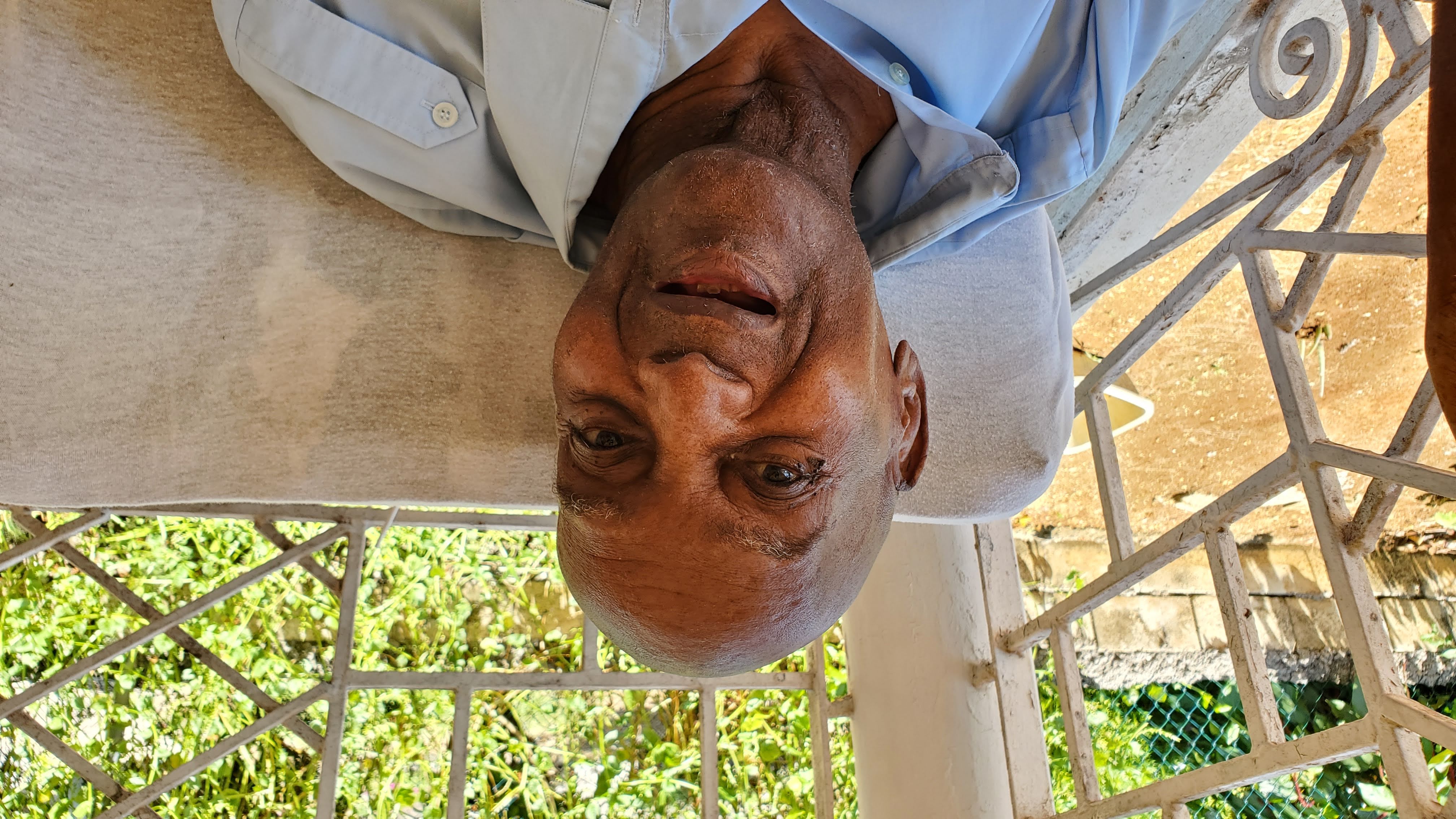
You know, some of the best advice you'll ever receive here in Jamaica might come from someone talking about a donkey, a hungry man, a pair of shoes or even a bowl of food.
Sounds strange, doesn't it?
But that's the beauty of our old-time proverbs.
A few carefully chosen words can teach you something about patience, friendship, pride or the way people behave. And very often, the person giving you the advice doesn't need to explain a thing.
If you understand the proverb, you get the message.
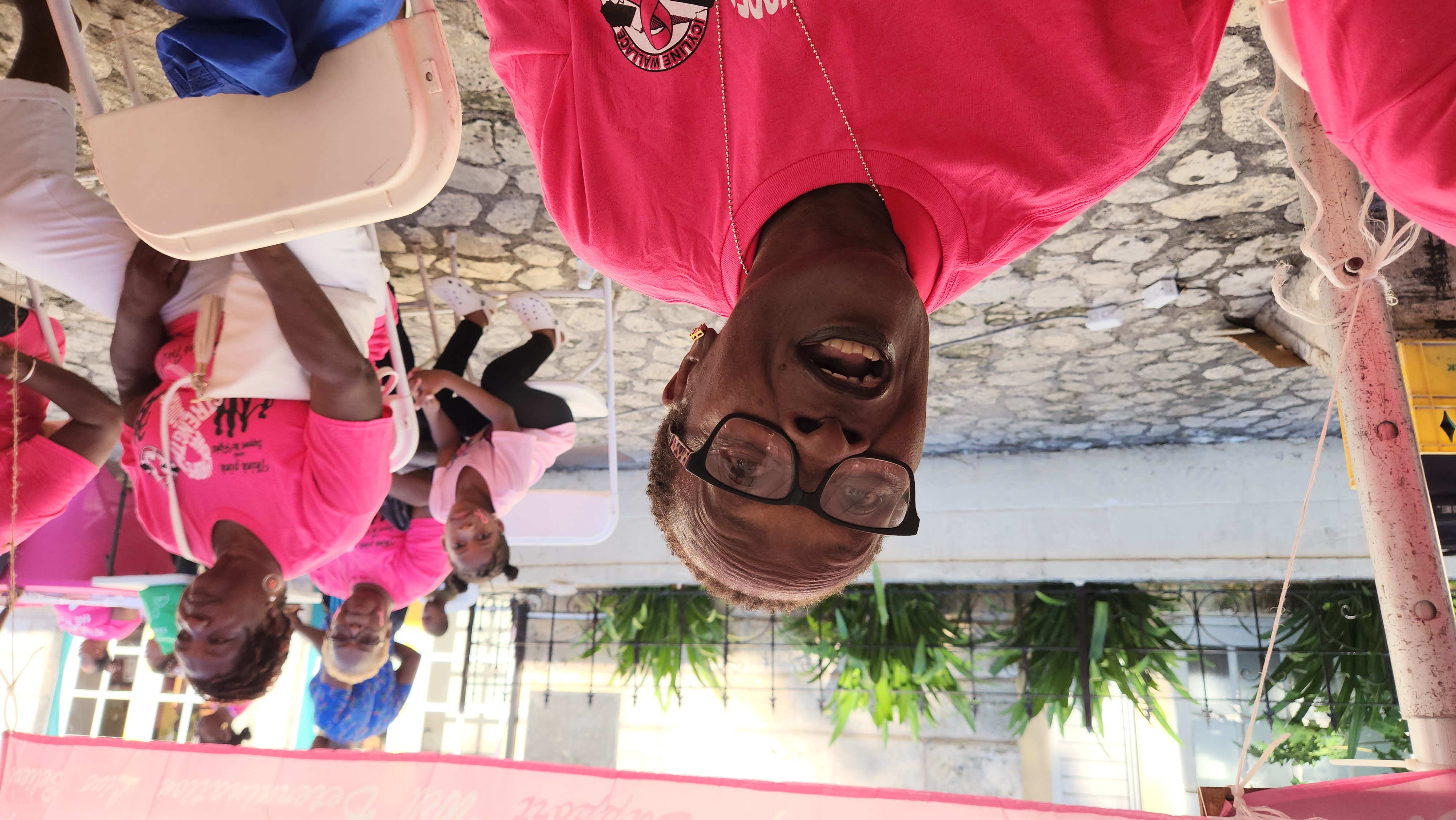
Proverbs in jamaica are traditional sayings that pass along lessons about life, usually through comparisons, humour and everyday experiences. Many have been handed down through generations, particularly through spoken language.
Now, I've already shared a collection of popular Jamaican sayings and their meanings, including favourites such as "One-one coco full basket" and "Chicken merry, hawk deh near."
This time, though, I want to dig a little deeper.
I'd like for us to look at some traditional proverbs that reveal how our elders understood people, problems and life itself. Some you may recognise immediately. Others may have you thinking for a moment.
Where Did Jamaica Proverbs Come From?
Our proverbs didn't all originate in one place.
Jamaica's history brought together African and European cultural influences, and our people developed expressions that reflected their own circumstances and experiences.
According to the JIS (Jamaica Information Service), Jamaican cultural scholar Olive Senior identified parallels between many of our proverbs and those of the Asante people of West Africa, as well as European traditions. And of course, others developed locally.
That helps explain why you might recognise the message behind a Jamaican proverb even if you've never heard the actual words before.
The lesson may be familiar, but the Jamaican way of telling it is something else!
If you just think about the things that appear in our proverbs: animals, rivers, farming, food, money and ordinary household objects. These were familiar parts of everyday life, so they made useful comparisons when explaining human behaviour.
And that brings me to some particularly interesting examples.
12 Traditional Proverbs in Jamaica and What They Teach Us
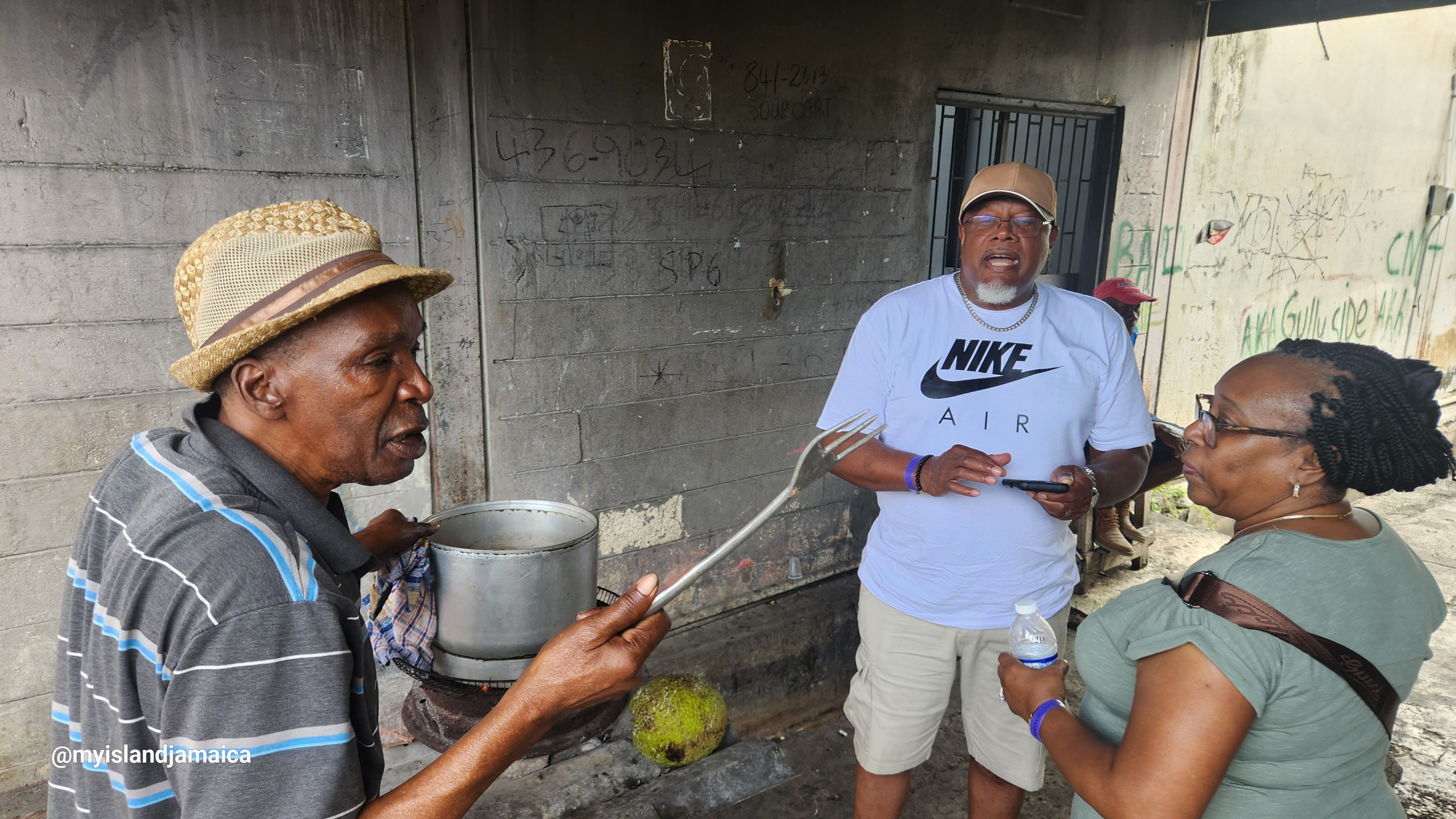 Jamaican sharing local proverbs with guests | Proverbs In Jamaica
Lessons about people and human behaviour
- "Finger neber say look here, him say look yonder"
English meaning: A finger doesn't point towards itself; it points at something else.
The lesson: People often notice other people's faults more readily than their own.
Now, this one is quite clever; imagine someone who is always criticising others but hardly ever acknowledges their own shortcomings.
They can tell you everything that's wrong with their neighbour, coworker or family member. But ask them about their own behaviour, and suddenly the conversation becomes uncomfortable. That's when this proverb fits nicely. It's our Jamaican way os saying that before pointing fingers at somebody else, we should examine ourselves too. And yes, that includes all of us. - "Peacock hide him foot when him hear 'bout him tail"
English meaning: The peacock hides its feet when people admire its beautiful tail.
The lesson: Pride can make people reluctant to acknowledge their weaknesses.
Think of a peacock showing off those magnificent feathers. Everybody is admiring its beauty, but the bird would rather you didn't pay too much attention to its less impressive features. We humans can behave that way too. Someone might be happy to discuss their achievements, qualifications or possessions, but become defensive when a weakness is mentioned. There's nothing wrong with being proud of what you've accomplished, just remember that nobody has everything going perfectly for them. - "Yu shake man han, but yu noh shake im hawt"
English meaning: You can shake someone's hand, but you cannot shake their heart.
The lesson: A friendly appearance doesn't necessarily tell you what someone is thinking or feeling.
This is one I find particularly meaningful. You can greet somebody warmly, exchange a pleasant conversation and even share a laugh. But does that mean you know what's truly in their heart? Not necessarily. The person may genuinely like you. They may be troubled by something you know nothing about. Or perhaps they're simply being polite. The proverb reminds us not to assume we completely understand someone merely because our interactions are pleasant.
It's not an invitation to distrust everybody. Rather, it's a reminder to allow time and experience to reveal character. - "Hungry hungry and full full no trabel same pass"
English meaning: The hungry person and the person with a full stomach do not travel the same road.
The lesson: People living under different circumstances may experience life very differently. Now, here's a proverb with real depth.
It's easy for somebody who has enough food, money and security to tell a struggling person what they should do. But advice that sounds simple to one person may be difficult for another to follow. For example, someone might say, "Just save more money."
Fair enough. But what if the person they're advising is barely covering basic living expenses? The same solution doesn't fit every circumstance. For me, this proverb is a reminder to show a little more understanding before judging somebody else's decisions.
We don't all travel the same road.
Lessons about patience, preparation and good judgment - "No wait till drum beat before you grine you axe"
English meaning: Don't wait until the drum starts beating before sharpening your axe.
The lesson: Prepare yourself before an opportunity or challenge arrives.
I like this one because it is so practical. Let's say you have an important opportunity coming up, but you haven't prepared for it. Or perhaps there's a job you would love to get, a business you'd like to start, or a skill you've been meaning to learn. Its basically saying that iIf you wait until the opportunity arrives before doing anything, you may already be behind.
That's the message here; make your preparations while you have the chance. Then, when the time comes, you're ready to move. - "Poun' ah fret cyaan pay ownse ah dett"
English meaning: A pound of worrying cannot pay an ounce of debt.
The lesson: Worrying alone doesn't solve a problem.
Oh, this is a good one! Suppose you owe somebody money, and the payment deadline is approaching. You spend the entire day worrying about it. You worry in the morning, worry in the afternoon, and probably even lose sleep over it. But here's the question: has all that worrying paid even one dollar of the debt?
Absolutely Not! Of course, financial difficulties are serious, and sometimes the solutions aren't easy. But this proverb encourages us to direct our energy towards what we can actually do, rather than allowing worry to consume us.
And actually, that's useful advice in many situations, not just in matters of money. - "Stranger no know where de deep water in de pass"
English meaning: A stranger doesn't know which part of the crossing has deep water.
The lesson: Be cautious when entering unfamiliar territory.
Let's say someone is trying to cross a river they've never visited before. From the riverbank, the water might look shallow enough. But a person who knows the crossing understands where the dangerous sections are. The message here is that familiarity and experience matter.
So before making an important decision, particularly in an unfamiliar situation, it might be helpful to seek reliable information.
And again, that applies just as much to business and relationships as it does to crossing a river😊 - "Every day da fishing day, but every day no fe catch fish"
English meaning: You can go fishing every day, but you won't catch fish every day.
The lesson: Effort doesn't always produce immediate results.
If you've ever tried fishing, you can appreciate this example. You prepare your equipment, find your spot and put in the time. But some days the fish simply aren't biting. But does that mean you should give up fishing altogether?
Not necessarily It's much the same with other worthwhile pursuits. You may be working hard towards something, doing what you reasonably can, and still not getting the results you hoped for. This proverb reminds us that progress isn't always immediate or predictable, sometimes you need patience and sometimes you need to change your approach. And one disappointing day doesn't tell the whole story.
Lessons about kindness, cooperation and responsibility
- "Bowl go, packy come"
English meaning: A bowl goes out, and a calabash bowl comes back.
The lesson: Kindness and generosity can encourage kindness in return.
Now this proverb gives us a glimpse into traditional Jamaican community life. There was a custom of sending dinner to neighbours, sometimes in a bowl carried by a child. The container might eventually return with something from the receiving household.
A packy refers here to a calabash used as a container. But what I like about this proverb is the picture of neighbours sharing what they have. It doesn't have to be an elaborate exchange, and it certainly doesn't mean you should only help people when you expect something back. What is does it to remind us how small acts of generosity can strengthen relationships. - "Wan finga cyaan kill louse"
English meaning: One finger alone cannot kill a louse.
The lesson: Some tasks require cooperation.
This is yet another powerful illustration. The key lesson here is that one finger by itself is very limited in what it can accomplish but if we combine it with another then 'all of a sudden' the task becomes possible. The truth is that sometimes make life more difficult by insisting that we must do everything ourselves. Yet there are occasions when sharing the work, asking for assistance or combining our abilities produces a much better result.
So whether it's a family project, community effort or business responsibility, cooperation/teamwork can make a significant difference. - "When man belly full, him bruk pot"
English meaning: When a man's stomach is full, he breaks the cooking pot.
The lesson: People sometimes forget or disregard what helped them once their needs have been satisfied.
So, a man is hungry, someone prepares a lovely meal for him. He eats until he's satisfied. And then, instead of appreciating the cooking pot that helped provide the meal, he breaks it.
Doesn't make much sense, does it? But the proverb isn't really about food, it's about ingratitude. There are people who receives help, benefit from an opportunity or depend on somebody's generosity, only to disregard that person once their immediate need has passed.
Perhaps a lesson for us too is that wee should appreciate the people and opportunities that have helped us along the way. - "Alligator lay egg, but him no fowl"
English meaning: An alligator lays eggs, but that doesn't make it a chicken.
The lesson: Don't judge or classify something based on one characteristic alone.
Now here's an interesting one to finish with. Both an alligator and a chicken lay eggs (and now you know that alligator actually lays eggs😉)
But nobody would seriously argue that they are the same kind of animal. The proverb reminds us that sharing one feature doesn't mean two things are identical.
We can apply that lesson to people, situations and ideas. Perhaps two individuals have something in common, but their experiences, intentions or personalities are quite different. It's always wise to look at the bigger picture before jumping to conclusions.
Certainly another lesson we could all use from time to time.
Are Proverbs In Jamaica Written The Same Way?
No, and that's something worth understanding.
Many of our traditional proverbs have been passed along orally, and Jamaican Patwa has different, very different, approaches to spelling.
For example, you might see neber written as never, or finga written as finger.
So don't become too concerned if you encounter a version that looks slightly different from the one I've used here. Its the meaning and context are what matter most.
And if you're interested in the expressions we use in ordinary conversations in addition to the proverbs in Jamaica, have a look at my guide to everyday Patois phrases in Jamaica.
Do Jamaicans Still Use These Old-Time Proverbs?
Yes, although usage varies. Some proverbs remain widely recognisable, while others are more likely to appear in older collections, family storytelling or discussions of Jamaican heritage.
But don't assume that every Jamaican uses all these expressions regularly, or that every young Jamaican will recognise them, however the underlying lessons remain relevant. People still struggle with pride, money, relationships, difficult decisions and the temptation to judge others too quickly.
And that's why I believe these traditional expressions are worth remembering.
Before I Go...
Now, there's a Jamaican proverb for almost every situation you can imagine. Some will make you smile while others will make you uncomfortable, especially when the message hits a little too close to home!
Now, I'd love to hear from you.
Is there a proverb in Jamaica you remember hearing from your parents, grandparents or another older relative?
Perhaps it's one I haven't mentioned here. Share it in the comments, along with what it means to you. I'd enjoy hearing it, and it's one more way we can help keep this wonderful part of our Jamaican heritage alive.
Regards,
Wellesley
P.S. If you enjoyed these traditional life lessons, you'll also appreciate my collection of 30 classic Jamaican quotes and proverbs. I've organized them around themes such as leadership, success, family and friendship.
You might like these
Jamaican phrases - Real Examples (with a bit of history)
While English is the official language of Jamaica, Patois is spoken much more frequently and comfortably, hence the most common Jamaican phrases are almost exclusively in Patois.
The Colonial History of Jamaica | The Pieces We Tend Not To Talk About
You should know (I hope) a bit about Jamaica's independence, and surely post independence, but what do you know of the colonial history of Jamaica? Read more.
The Language of Jamaica
Language of Jamaica - What you need to know!

References & Works Cited for Proverbs In Jamaica
- National Library of Jamaica. “Jamaican Proverbs.” National Library of Jamaica. Official collection of Jamaican proverbs. Accessed 5 Nov. 2026.
- Jamaica Information Service. “Proverbs Meet Their Match.” Jamaica Information Service. Jamaican proverbs and cultural tradition. Accessed 5 Nov. 2026.
- Senior, Olive. A–Z of Jamaican Heritage. Heinemann Educational Books (Caribbean), 1983. Referenced in the Jamaica Information Service's discussion of Jamaican proverbs.
New! Get My Latest Book👇🏿
 |
You asked, I've answered! You no longer need to save for months or years, to enjoy paradise! I spilled the beans! sharing my top tips on finding cozy accommodations and secret gems, only the way a native could! Click Here to pick it up on my e-store and start saving now! |
See The Best Of Jamaica - In Videos!
 |
My channel reaches over 220,000 subscribers worldwide and has leveraged over 11 million views, sharing, what I call 'The Real Jamaica'. Subscribe today and join our family of viewers. |

Read More ...
New! Experience The REAL Jamaica!
Book Your Private Tour here and experience Jamaica the way we (locals) do!
P.S. Didn't find what you were looking for?
Still need help?
Click Here to try our dependable and effective Site Search tool. It works!
Or, simply click here and here, to browse my library of over 500 questions and answers! Chances are someone already asked (and got an answer to) your question.

Looking for Something Jamaican?
Fresh From My Island Jamaica


-
Proverbs in Jamaica | Old-Time Wisdom & Life Lessons
 Traditional proverbs in jamaica, their meanings, cultural roots and the old-time wisdom Jamaicans have passed down for generations.
-
Jamaica Genealogy - Here's How to Trace Your Family Roots
 Explore Jamaica Genealogy with practical steps to find birth records, trace Jamaican ancestors and uncover your family history, even from overseas.
-
Old-Time Jamaican Traditions We Grew Up With
Remember Old-Time Jamaican Traditions, from grandparents' sayings and childhood games to bush teas, Sunday dinners and the customs we treasure. -
BEST Vacation in Jamaica - ever! Here How To Choose The Best Spots
 Looking to vacation in Jamaica? Not sure of the best vacation spots? No problem, I have some great recommendations for you - depending on your taste.





Jamaica Through My Lens
Stories, places, people & more
From My Island to You
A Little Jamaica,
On Me!

Love Jamaica? Join my free newsletter, where I share stories, tips and discoveries from right here on the island.
Plus, I'll send you 3 FREE gifts: a Jamaica Travel Starter Pack, 101 Intriguing Facts and 11 Jamaican Dessert Recipes!
Get My 3 Free Gifts →Free to join. Unsubscribe anytime.

Planning a Trip to Jamaica?
My practical guide to exploring Jamaica safely and confidently.
About The Author

A patriotic Jamaican who adores its culture, Wellesley has been using this medium to share what he calls 'the uniqueness of Jamaica with the world' since April 2007.
To date, he serves over 9,300 unique readers / viewers per day (and over 1.1millon page views monthly)
His efforts have earned this site featured positions in local publications, including the Jamaica Gleaner's Hospitality Jamaica, Carlong Publishers, as well as recognition from numerous prestigious international agencies and universities. Read more about him here.
He invites you to explore his books and subscribe to this site to stay updated on all the latest here on site.
You are also welcome to check out his unique Jamaican products on his e-store.
If you are on social media, here are the links to follow his latest posts: