Subscribe for all my updates and don't miss a thing! Sign me up!
What Is Dog Blood Herb in Jamaica?
Meet Our Famous “Fertility Bush”
Sharing Is Caring! Share this awesome content with your friends now.


 What Is Dog Blood Herb In Jamaica
If you hear someone in Jamaica talking about Dog Blood, don't worry—they're not talking about anything from a dog! They are referring to a well-known Jamaican bush herb called Rivina humilis, a plant that has developed quite a reputation in our traditional herbal culture, particularly among women.
In fact, Dog Blood is also widely called the fertility bush, and that name alone tells you a lot about how highly regarded it is in Jamaican folk medicine.
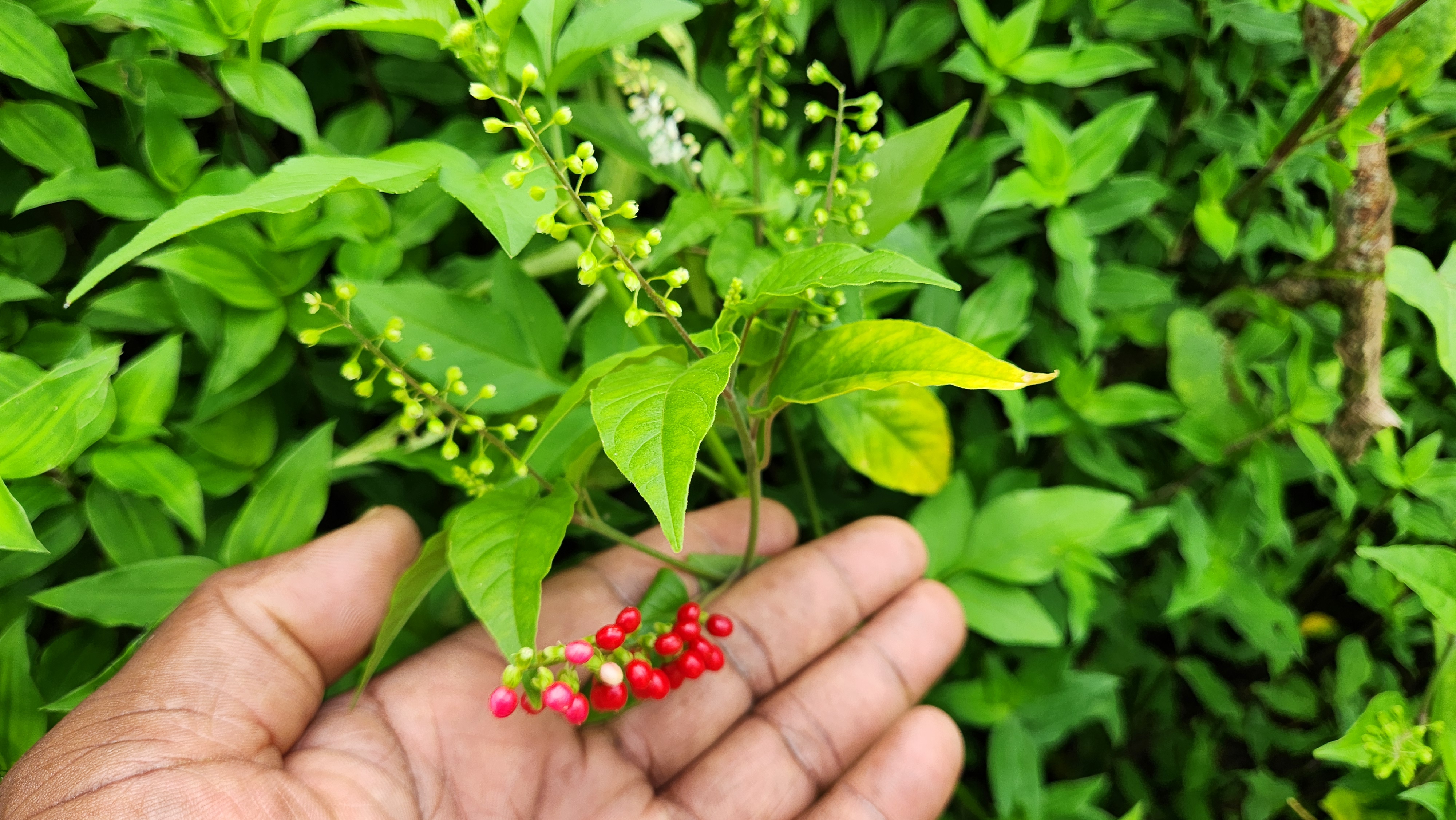
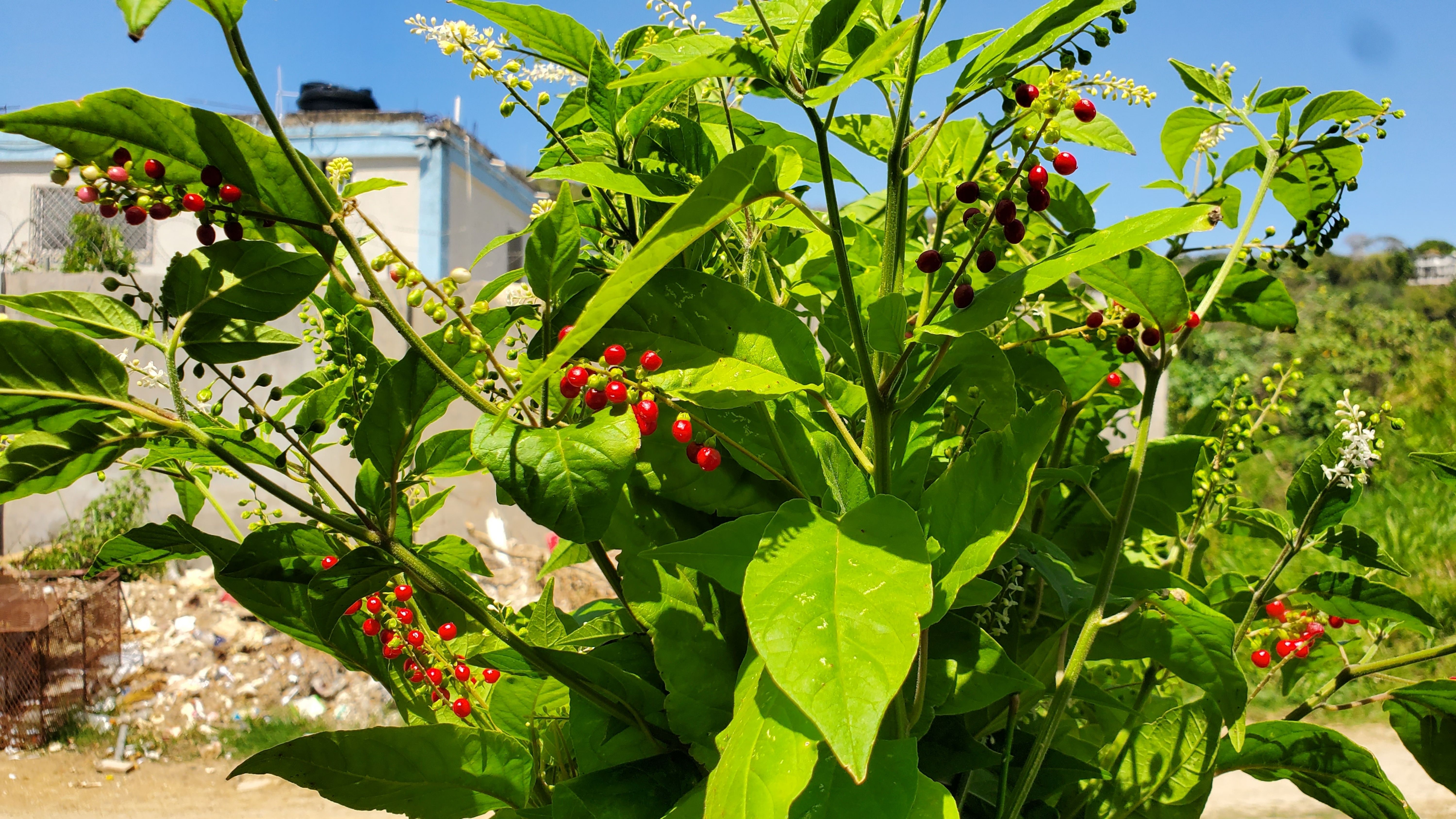
But there is something else about this plant that immediately catches your attention: those little bright-red berries.
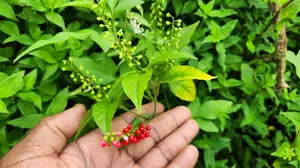
I have a few Dog Blood plants growing right here in my yard now, and let me tell you—the berries really do look like little drops of blood!
New! Take a piece of Jamaica with you💃!
Savour the memories! Now you can get your authentic Jamaican souvenir items, as well as traditional Jamaican herbs, spices and housewares on our popular e-store. Click Here to learn more.
And, if you ever need a trustworthy and knowledgeable local guide, consider booking a private tour with us!
So, What Is Dog Blood Herb in Jamaica?
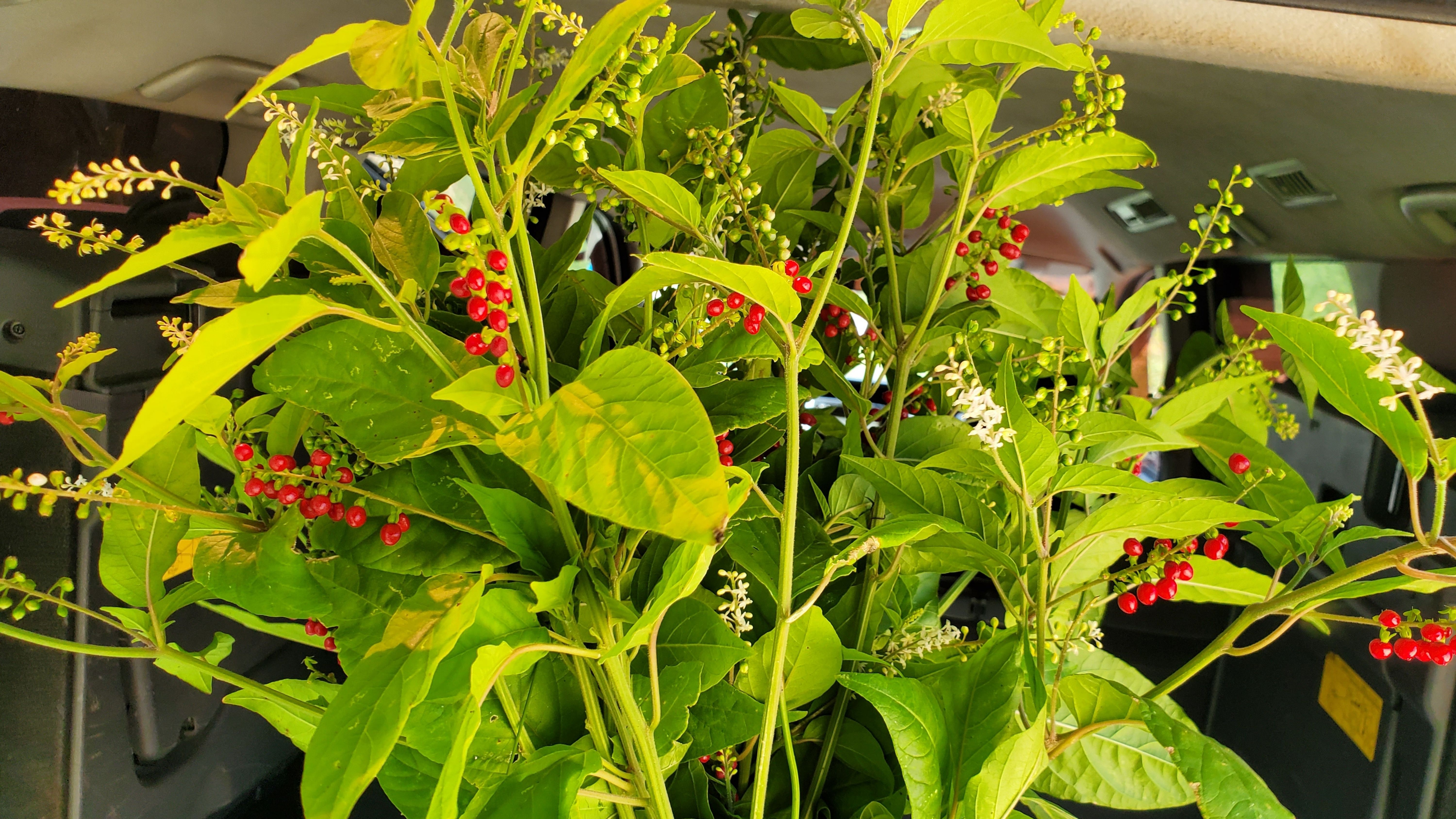
Dog Blood is the Jamaican common name for Rivina humilis, a perennial herb or small subshrub native to tropical and subtropical parts of the Americas, including Jamaica. Kew's Plants of the World Online confirms Jamaica as part of its native range.
You may also hear it called:
- Dog Blood Bush
- Fertility Bush
- Bloodberry
- Pigeonberry
- Baby Pepper
- Rouge Plant
Interestingly, Kew's medicinal plant database even records “dog blood” as one of the common names associated with Rivina humilis.
The plant generally has soft green leaves, slender stems and small whitish or pinkish flowers. Those flowers are eventually followed by the little berries that turn a brilliant red as they ripen. Botanical descriptions put the berries at only around 3–4 mm across.
And once you've seen a mature Dog Blood bush loaded with those red berries, it becomes much easier to understand how it got its Jamaican name.
Why Is It Called Dog Blood?
I have heard different explanations over the years, but for me, seeing the plant growing settles the question rather quickly.
The ripe berries contain a deep red pigment, and when you squeeze or crush them, that colour can look remarkably like blood. In fact, the plant is also known internationally as bloodberry and rouge plant, names that similarly point to those striking red fruits. Hazba Medical Center
Trust me, the first time you see a bunch of those berries up close, you will understand!
But there's an important point here - don't assume the berries are edible just because they look attractive. Singapore's National Parks Board identifies the fruits as toxic to humans, and other botanical sources similarly warn against eating them.
Dog Blood and Fertility in Jamaica
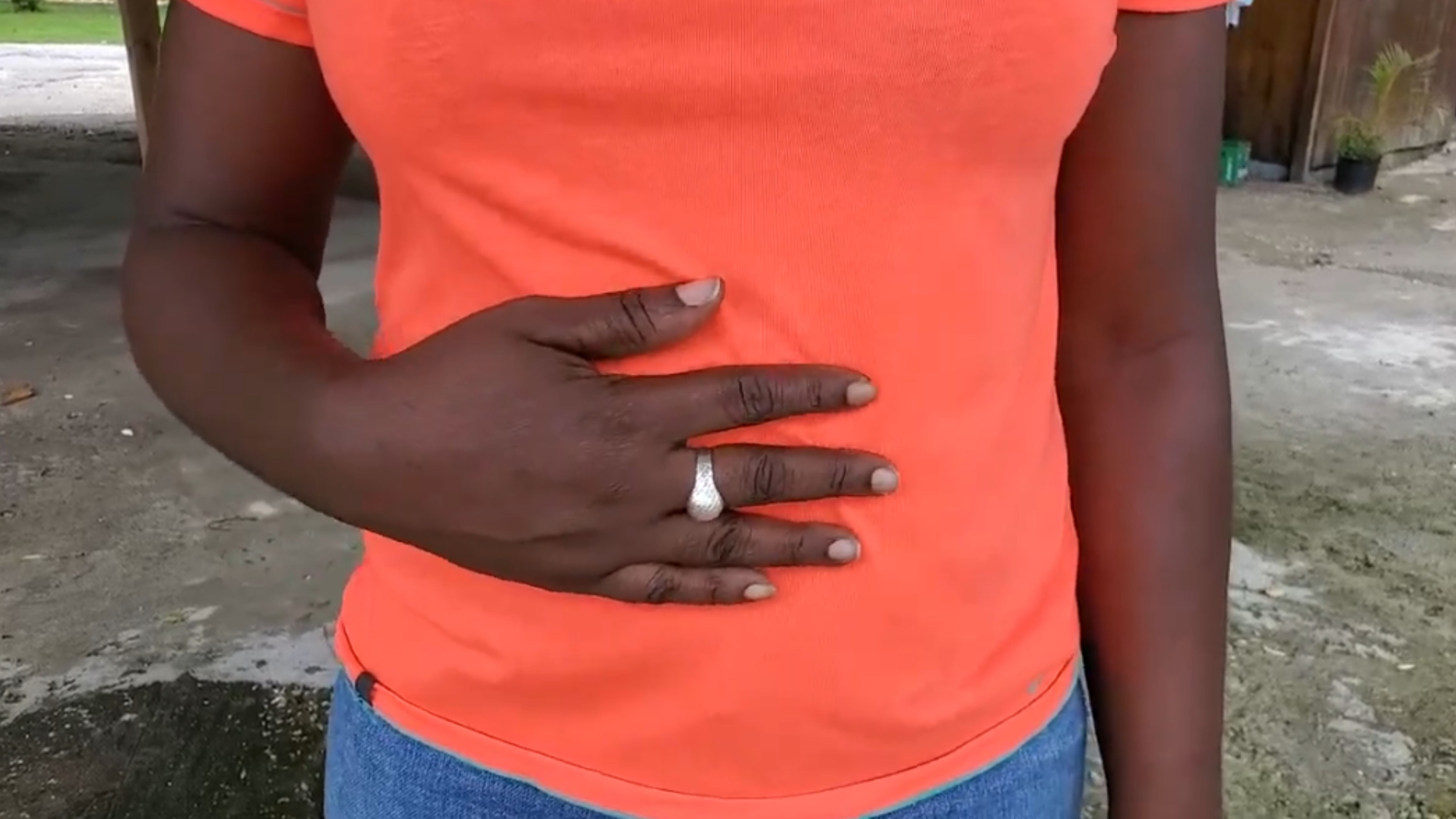
Now we get to the real reason most people are searching for this herb - you probably included🤗
Here in Jamaica, Dog Blood has perhaps become best known as a women's herb, particularly in traditional preparations associated with fertility and reproductive wellness.
For generations, herbalists and ordinary Jamaicans have spoken about using Dog Blood traditionally for things such as:
- menstrual discomfort
- irregular menstruation
- traditional “womb cleansing”
- reproductive wellness
- preparations used by women hoping to conceive
- what people traditionally describe as “blocked tubes”
This reputation is so strong that “fertility bush” has practically become another name for the plant. In fact, a close friend of mine, who had challenges getting pregnant, indicated to me that this was one of the herbs she got as part of a roots tonic that helped her; she now has three children, the first one (the girl) made her a grandmother recently!
And local Jamaican media have documented these traditional practices for years!
However, medical professionals have also stressed an important distinction: although these uses are deeply established in traditional culture, controlled clinical trials have not yet proven them.
And by the way, a while back, I travelled to St. Mary where I did a special feature on Dog Blood with Maline - another herbal enthusiast like myself. And that experience really helped me appreciate just how much interest surrounds this plant here.
We looked at the plant itself, how it grows, how Jamaicans traditionally prepare it and, of course, why it has become so strongly associated with women's reproductive health.
You can watch that feature here:

What stood out to me there - and from seeing the plant elsewhere - is that Dog Blood seems particularly happy in cooler, moist and somewhat shaded locations.
That observation lines up reasonably well with botanical sources. Rivina humilis is frequently found in shady thickets and other sheltered places and can thrive in moist soils and semi-shaded conditions. And yes, after all that travelling and searching, I now have a few Dog Blood plants growing in my own yard!
That's one of the things I enjoy about exploring our herbs. Eventually, some of them find their way home with me. I just wished I had the space to have them all!
But Is Dog Blood Only for Women?
Here is where things get interesting!
Dog Blood is overwhelmingly spoken about in Jamaica as a female herb. Even much of the Jamaican literature and folklore surrounding it focuses on women.
But one morning I was out walking and had pulled a few pieces of Dog Blood. A Rastaman saw what I had and immediately remarked that Dog Blood was “good fi man to!”
In particular, he mentioned its traditional use for backaches. For me, that made sense too because, really, it is an anti-inflammatory herb, and inflammation affects all genders, doesn't it?
I found his remark quite eye-opening too because it was another reminder that Jamaican herbal knowledge doesn't always fit neatly into the little categories we sometimes put it in. That oral tradition is one of the things that makes Jamaican bush medicine so interesting.
It doesn't mean every traditional claim has been scientifically verified, though, but those stories are still an important part of our cultural knowledge and worth recording; and I've been around long enough to see many of them proven - including ones like the guinea hen and soursop leaf.
How Is Dog Blood Traditionally Used in Jamaica?
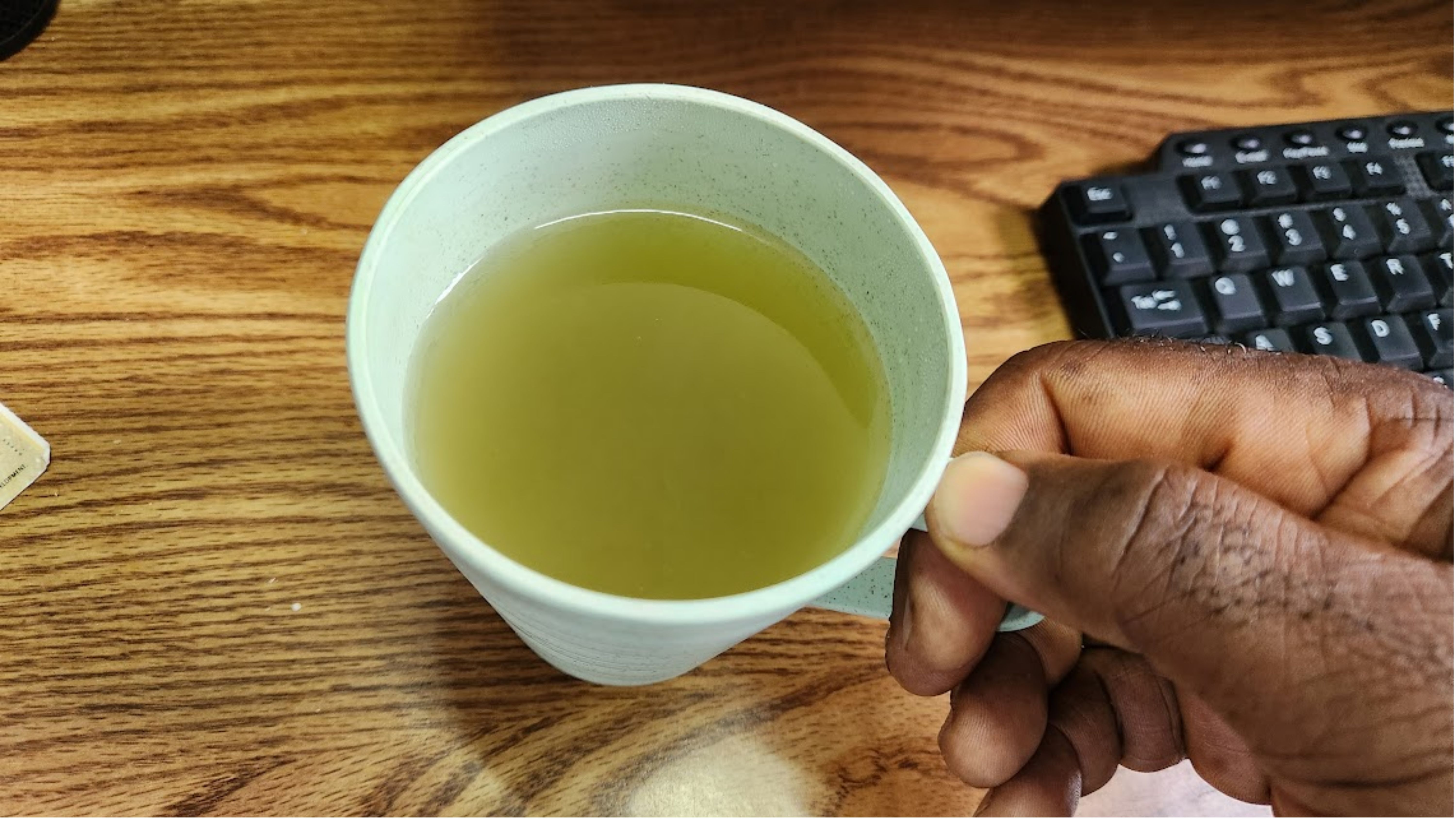
The traditional method you'll hear most often is preparing parts of the plant as a bush tea.
Depending on the herbalist or family tradition, the leaves, stems and sometimes other parts of the plant may be used. You'll hear people talk about steeping the herb, others about gently boiling it, and others combining it with other bush preparations.
And this is another area where I prefer not to tell somebody that there is one universal Jamaican recipe. Because really, there isn't.
Bush medicine in Jamaica was traditionally passed from one generation to another, and preparation methods can vary significantly from one community or herbalist to another.
By the way, because Dog Blood has such a strong association with fertility and reproductive health, anyone considering using it specifically for a medical or fertility problem should discuss that with an appropriate healthcare professional though, especially if they're pregnant, taking medication, undergoing fertility treatment or dealing with an undiagnosed reproductive condition.
In fact, Jamaican obstetrician/gynaecologist Dr Sharmaine Mitchell has similarly cautioned that fertility problems should be properly investigated rather than relying on Dog Blood tea without medical evaluation. Sometimes, the issue is not even the female - so that makes sense!
Can Dog Blood Really Help You Get Pregnant?
This is probably the biggest question of them all.
And the most accurate answer is:
Dog Blood has a very strong traditional reputation for fertility in Jamaica. There are countless testimonials and generations of traditional use behind the herb; I mentioned one above, so that cultural history should not simply be dismissed, even if science has not proven that as yet.
But at the same time, it is only prudent for us to remember that infertility can also have many different causes involving either partner, so simply taking a bush tea without knowing the root cause could delay appropriate diagnosis or treatment.
Dog Blood Is Not Jamaican Dogwood
Here's another important distinction, especially if you're searching online; Dog Blood (Rivina humilis) is not Jamaican dogwood.
Jamaican dogwood is actually a completely different plant! Similar common names can cause all sorts of confusion with Jamaican herbs, and some places/ communities have different names for the same plant - which is precisely why I encourage people to learn the botanical name whenever possible.
For Dog Blood, remember: Rivina humilis. That one name can save you a lot of confusion.
Where Does Dog Blood Grow?
Dog Blood isn't unique to Jamaica. Its natural range extends across tropical and subtropical America, including much of the Caribbean, Central America and South America. Kew (referenced below) specifically lists Jamaica within its native distribution.
Here in Jamaica, however, it has acquired its own distinctive cultural identity through generations of bush medicine.
The plant seems to favour sheltered areas with some moisture, although it can tolerate a surprisingly wide variety of conditions. From my own observations, the healthiest plants I've come across seem to particularly enjoy that cooler, moist environment; places like kempshot and Kensington seem to have it in abundance.
And once established, those little clusters of blood-red berries make it difficult to mistake for almost anything else.
A Quick Word of Caution
Dog Blood has an important place in our traditional herbal practice, but traditional use should not be mistaken for proven diagnosis and treatment of infertility, fibroids, blocked Fallopian tubes or other medical conditions. Too many people attempt to self-diagnose and start taking herbal medications without qualified advice. My recommendation is always to get advice from a qualified professional first.
Also, the attractive red berries should not be eaten; botanical authorities identify the fruit as toxic to humans.
Regards,
WG
P.S. I currently carry dog blood on my estore (in loose herbs, ground and even tea bags), be sure to stop by and have a look!
P.P.S. I have a comprehensive guide to Jamaican herbs in my 101 medicinal herbs of Jamaica, be sure to take a quick look at it here.
You might like these
Plants in Jamaica - 5 Marvels To Discover About The Flora Of Jamaica
Plants in Jamaica - Learn more about the beautiful and exciting flora of Jamaica
Beautiful Jamaican Caper - The Lovely Flower, The 'Perfect' Plant!
The beautiful Jamaican caper flower; the 'perfect' plant.
Jamaican Thyme - Its Uses & Health Benefits
The many uses and benefits of Jamaican thyme

References & Works Cited for What Is Dog Blood Herb In Jamaica
1. Royal Botanic Gardens, Kew. “Rivina humilis L.” Plants of the World Online, 2026. Plants of the World Online
2. Royal Botanic Gardens, Kew. “Plant Name Details for Rivina humilis.” Medicinal Plant Names Services, 2026. Medicinal Plant Names Services
3. Hill, Suzanne. “Dog Blood Bush: The Baby Wonder Herb?” Jamaica Observer, 7 Oct. 2024. Jamaica Observer
4. Mitchell, Sharmaine. “Can I Take Dog Blood Bush for Fertility?” Jamaica Observer, 28 Feb. 2021. Jamaica Observer
5. National Parks Board Singapore. “Rivina humilis.” Flora & Fauna Web, updated 29 Jan. 2026. Default
6. U.S. Geological Survey. “Rivina humilis.” Plants of Louisiana. WARC Apps
7. Gayle, Wellesley. “This Fertility Bush Is Creating Waves in Jamaica! #RivinaHumilis.” My-Island-Jamaica, YouTube, 14 Sept. 2024. youtube.com
New! Get My Latest Book👇🏿
 |
You asked, I've answered! You no longer need to save for months or years, to enjoy paradise! I spilled the beans! sharing my top tips on finding cozy accommodations and secret gems, only the way a native could! Click Here to pick it up on my e-store and start saving now! |
See The Best Of Jamaica - In Videos!
 |
My channel reaches over 140,000 subscribers worldwide and has leveraged over 11 million views, sharing, what I call 'The Real Jamaica'. Subscribe today and join our family of viewers. |

Read More ...
New! Experience The REAL Jamaica!
Book Your Private Tour here and experience Jamaica the way we (locals) do!
P.S. Didn't find what you were looking for?
Still need help?
Click Here to try our dependable and effective Site Search tool. It works!
Or, simply click here and here, to browse my library of over 500 questions and answers! Chances are someone already asked (and got an answer to) your question.






Featured Video!

Travelling To Jamaica?
Read this BEFORE you go
👇🏿

New Here?
I recommend you START HERE to enjoy the best of this website!
New! For Authentic Jamaican products, from my very own hands, visit my Etsy store here.
Recent Articles


-
What Is Dog Blood Herb in Jamaica? Meet the Famous Fertility Bush
Oct 14, 26 10:19 PM
 Learn what is dog blood herb in jamaica, why we call Rivina humilis the fertility bush, how Jamaicans traditionally use it and what science actually says.
 -
What Is Search Mi Heart In Jamaica? The Herb Explained
Oct 13, 26 04:17 PM
 What is Search Mi Heart in Jamaica? Learn about this traditional Jamaican herb, its distinctive taste, folk uses and my own experience with it.
 -
Keeping Fried Festival Crisp: Simple Tricks That Work
Oct 12, 26 04:40 PM
Keeping Fried Festival Crisp is easy with a few simple tricks. Learn how to cool, store, transport and reheat Jamaican festival without turning it soggy. -
Best Time to Visit Jamaica: A Local's Honest Advice
Oct 11, 26 08:03 PM
Best Time to Visit Jamaica? Get a local's take on weather, prices, Christmas, summer deals, rainy season and choosing the right time for your trip. -
Packing for a Waterfall Day in Jamaica: What Should You Bring?
Oct 10, 26 09:50 PM
 Packing for a Waterfall Day in Jamaica? Here's what to bring for the falls, swimming, photos and a fun, comfortable day with family and friends.





About The Author

A patriotic Jamaican who adores its culture, Wellesley has been using this medium to share what he calls 'the uniqueness of Jamaica with the world' since April 2007.
To date, he serves over 9,300 unique readers / viewers per day (and over 1.1millon page views monthly)
His efforts have earned this site featured positions in local publications, including the Jamaica Gleaner's Hospitality Jamaica, Carlong Publishers, as well as recognition from numerous prestigious international agencies and universities. Read more about him here.
He invites you to explore his books and subscribe to this site to stay updated on all the latest here on site.
You are also welcome to check out his unique Jamaican products on his e-store.
If you are on social media, here are the links to follow his latest posts:
You are also invited to join his exclusive JAMHearts community where like-minded Jamaican enthusiasts discuss all things Jamaican.
Didn't Find What You Are Seeking?
Do a quick site search here: