Love Jamaica? Get 3 FREE Gifts! Join my free newsletter for Jamaica stories, travel tips & more! GET MY FREE GIFTS!
How To Tell If Breadfruit Is Ready to Roast? Here's What I Look For!
Sharing Is Caring! Share this awesome content with your friends now.

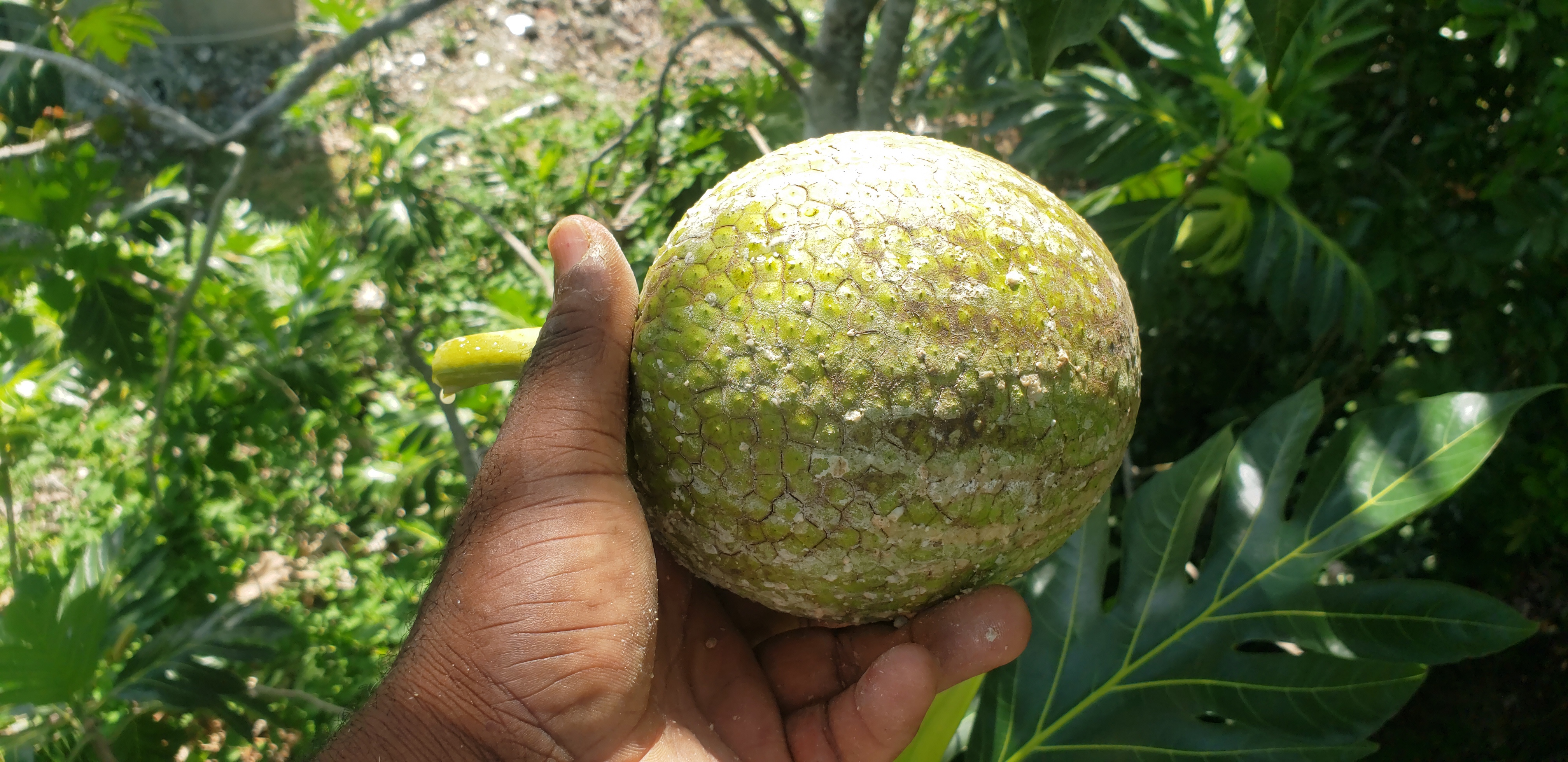
You know, there's something special about a properly roasted Jamaican breadfruit, especially when you pair it with some ackee and saltfish, steamed fish, and my favourite - a nice slice of ripe pear (Americans say avocado)!
But here's the thing; not every breadfruit you see on the tree is ready for roasting. So, how to tell if breadfruit is ready to roast?
For me, there are two things I look for first
- a slightly yellowish colour rather than a bright green appearance,
- and dried sap on the skin.
Those are usually my biggest clues that the breadfruit is what we Jamaicans call fit. But there are a couple of other signs worth knowing, too. But here's something else; I actually prefer mine when it's just about to “turn”, as we say here in Jamaica. I'll explain why in a moment.
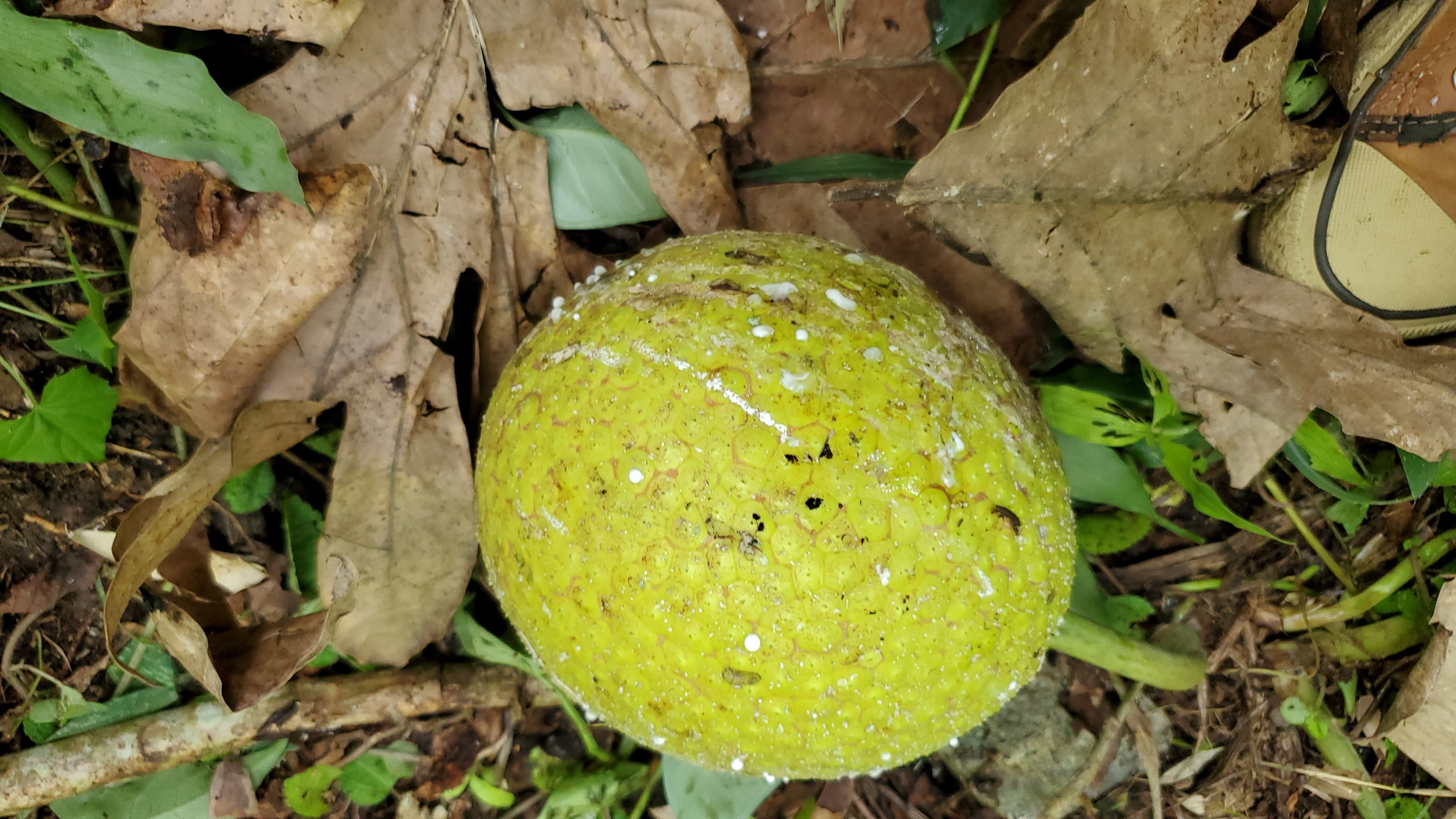
- Look for a Slightly Yellowish Colour
This is probably the first thing I notice. A young breadfruit is usually quite green. As it matures however, the skin may develop a yellowish-green appearance. And I'm not saying the entire breadfruit should be yellow! I'm talking about that subtle change from the bright green of a younger fruit to a more mature-looking, slightly yellowish colour. And yes, different breadfruit varieties can look a little different, so the colour alone isn't everything. But for me, it's a very useful starting point. - Check for Dried Sap on the Skin
This is my second biggest clue. Have you ever noticed those little dried, whitish or brownish sap marks on a breadfruit? I actually look for them! As breadfruit matures, small amounts of its natural latex may appear on the skin and dry there. And I've found that a breadfruit with more of those dried sap marks, along with the right colour, is often a good candidate for roasting. Interestingly, the National Tropical Botanical Garden identifies dried sap and slight brown cracking around the skin segments as signs of mature breadfruit, but as experience breadfruit lovers, we knew that all along😊 - It Should Still Feel Firm
Now, this is important; We (Jamaicans) generally want a breadfruit that's mature but not overripe. It should still have some firmness.If it's extremely hard and showing other signs of immaturity, it may not have developed the texture you're looking for.
However, if it's very soft or mushy, it's probably gone beyond the stage you'd normally choose for roasting.
But here's the thing, I don't necessarily want mine rock-hard either.In fact, my personal favourite is a breadfruit that's just beginning to soften slightly. And that brings me to something I really wanted to share with you. - My Favourite Stage? Just When The Breadfruit “Turns”!
- Notice the Skin Texture
Here's another clue worth checking.
Now, here's a little something I've learned over the years.
While a properly mature, firm breadfruit is excellent for roasting, I actually have a preference for one that's just about “turn,” as we say here in Jamaica.
By that, I mean it's fully mature and just approaching the ripe stage. It might even feel a tiny bit softer than a regular fit breadfruit, but certainly not soft or mushy. In fact, sometimes, we'll pick a mature breadfruit and leave it to rest for a day or two until it gets to that stage.
And let me tell you, when you roast one like that, the flesh is usually a little softer, slightly sweeter, and absolutely heavenly! Especially if it's what we call "yellow heart" breadfruit!
Oh yes! For me, that's one of the nicest breadfruits you can roast.
Of course, it's a matter of preference. Some people like theirs firmer and starchier, while others, like me and my cousin Brent, enjoy that slightly softer, sweeter result.
If you grew up in Jamaica like me, you'll probably know exactly what I mean
As some breadfruit varieties mature, those raised sections on the skin become flatter and less pointed. You might also notice small brownish cracks or markings between the segments.
These changes can help indicate maturity, although they vary among different varieties. And that's exactly why I'd never depend on just one sign.
For me, it's the combination of colour, dried sap, firmness and overall appearance that helps me make the decision.
What Happens if You Roast Breadfruit Too Early?
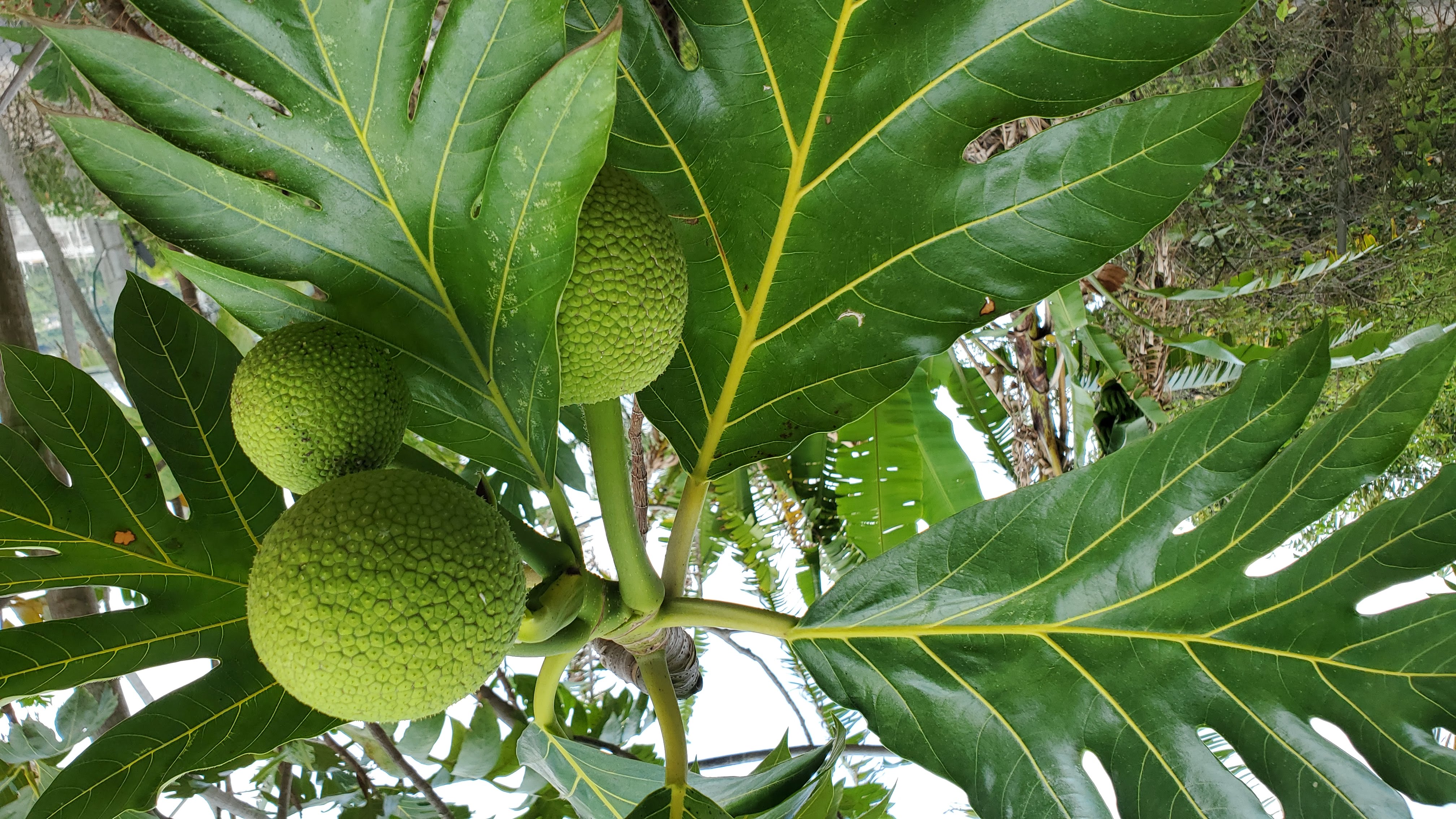
Well, you might be a little disappointed with the result. A breadfruit that hasn't developed properly (see above) may not give you that lovely starchy texture and flavour we're accustomed to.
Immature breadfruit can be prepared in other ways, including boiling, but it's not usually our first choice for roasting.
But remember, if you leave a mature breadfruit too long, it may become overly soft and sweet for the traditional roasted breadfruit many of us prefer.
It's really about catching it at the right stage - in my case, just when it 'turns'😋
In fact, even better, how about me sharing this...
Quick Checklist: Is Your Breadfruit Fit for Roasting?
| What to Check | What to Look For |
|---|---|
| Colour | Slightly yellowish-green, rather than bright green |
| Sap | Visible dried sap or latex marks |
| Firmness | Mature and fairly firm, perhaps with a slight give just before turning |
| Skin texture | Flatter segments and sometimes small brown markings |
| Condition | No obvious rot or serious damage |
Remember though, these signs can vary with the breadfruit variety, so look at the fruit as a whole.
And if you're letting a mature breadfruit rest at room temperature before roasting, check it regularly. I wouldn't leave it sitting around for days without paying attention to how quickly it's changing.
🌿 Did You Know🤔?
Yellow Heart and White Heart Breadfruit Aren't Quite the Same
Here in Jamaica, you'll hear us talk about yellow heart and white heart breadfruit. As the names suggest, the flesh can differ in colour, but there may also be differences in texture and flavour depending on the variety and maturity.
And while both can be enjoyable, I have a particular love for yellow heart, especially when it's just about to turn. Roast that properly, and its nicer than fresh bread!
And What About Breadfruit Flour?
Now, here's another interesting use for this versatile Jamaican favourite. Did you know breadfruit can also be dried and ground into flour? In fact, I did a feature with Ms Watkins showing how breadfruit flour is made, and it was fascinating seeing the process.
If you're interested, take a look at my Breadfruit Flour article, along with the video demonstration on YouTube.
So, How Do You Know When Your Breadfruit Is Ready?
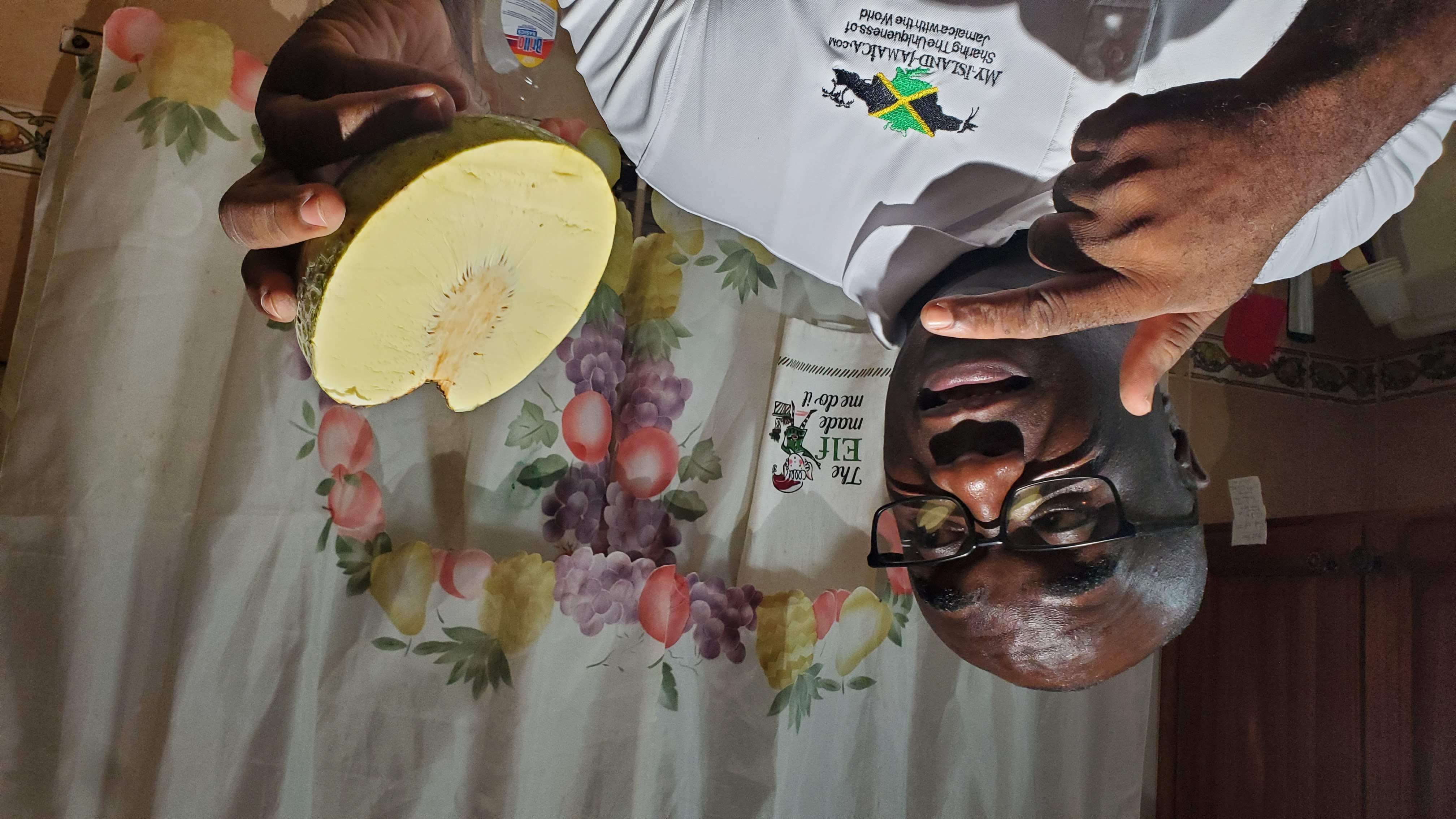
For me, it comes down to my experience - developed from a few reliable clues; I look for that slightly yellowish appearance and the dried sap. I check the firmness, too. And whenever possible, I prefer mine just about 'turning', particularly if it's yellow heart breadfruit.
What about you though? How do you tell when a breadfruit is fit for roasting?
Perhaps there's another little trick you learned from your parents or grandparents?
I'd genuinely love to hear it!
Regards,
Wellesley
P.S. If you love breadfruit as much as I do, you might also enjoy my article on how healthy breadfruit is and other common breadfruit questions.
You might like these
Best Jamaican Jerk Chicken Recipe - Mouth Watering!
Here is a quick and easy, yet delectable Jamaican jerk chicken recipe.
Free Jamaican Recipes! Yes Traditional Jamaican Recipes totally free
Yep, completely free Jamaican recipes for you to use. Just go ahead and use them, you can thank me later :-)
Delicious Jamaican Banana Bread Recipe
You've tasted it? Or probably heard about it right? Well, here's the delectable Jamaican banana bread recipe, free of charge. Go for it - but remember you'll have to share it when complete. Just kidding :-) Enjoy.

References & Works Cited For How To Tell If Breadfruit Is Ready To Roast
- Agro-Investment Corporation. Breadfruit Investment Profile. Government of Jamaica, 2024. https://www.agroinvest.gov.jm/wp-content/uploads/2024/07/Breadfruit-Investment-2024-SPAD.pdf.
- National Tropical Botanical Garden. "When to Harvest." Breadfruit Institute. https://ntbg.org/food/table/.
- University of Hawai‘i at Mānoa. Breadfruit: Postharvest Quality-Maintenance Guidelines. College of Tropical Agriculture and Human Resources, 2014.
- "Folk Nomenclature and Traditional Knowledge of Breadfruit Diversity in Four Anglophone Caribbean Countries." Plants, 2022. https://pmc.ncbi.nlm.nih.gov/articles/PMC9650817/.
The personal preferences and selection methods described in this article are based on my experience here in Jamaica.
New! Get My Latest Book👇🏿
 |
You asked, I've answered! You no longer need to save for months or years, to enjoy paradise! I spilled the beans! sharing my top tips on finding cozy accommodations and secret gems, only the way a native could! Click Here to pick it up on my e-store and start saving now! |
See The Best Of Jamaica - In Videos!
 |
My channel reaches over 220,000 subscribers worldwide and has leveraged over 11 million views, sharing, what I call 'The Real Jamaica'. Subscribe today and join our family of viewers. |

Read More ...
New! Experience The REAL Jamaica!
Book Your Private Tour here and experience Jamaica the way we (locals) do!
P.S. Didn't find what you were looking for?
Still need help?
Click Here to try our dependable and effective Site Search tool. It works!
Or, simply click here and here, to browse my library of over 500 questions and answers! Chances are someone already asked (and got an answer to) your question.

Looking for Something Jamaican?
Fresh From My Island Jamaica


-
How to Tell if Breadfruit Is Ready to Roast - By A Jamaican
 Here's how to tell if Breadfruit Is Ready to Roast - with practical Jamaican tips on colour, texture, sap and choosing a properly mature fruit.
-
Proverbs in Jamaica | Old-Time Wisdom & Life Lessons
 Traditional proverbs in jamaica, their meanings, cultural roots and the old-time wisdom Jamaicans have passed down for generations.
-
Jamaica Genealogy - Here's How to Trace Your Family Roots
 Explore Jamaica Genealogy with practical steps to find birth records, trace Jamaican ancestors and uncover your family history, even from overseas.
-
Old-Time Jamaican Traditions We Grew Up With
Remember Old-Time Jamaican Traditions, from grandparents' sayings and childhood games to bush teas, Sunday dinners and the customs we treasure.



Jamaica Through My Lens
Stories, places, people & more
From My Island to You
A Little Jamaica,
On Me!

Love Jamaica? Join my free newsletter, where I share stories, tips and discoveries from right here on the island.
Plus, I'll send you 3 FREE gifts: a Jamaica Travel Starter Pack, 101 Intriguing Facts and 11 Jamaican Dessert Recipes!
Get My 3 Free Gifts →Free to join. Unsubscribe anytime.

Planning a Trip to Jamaica?
My practical guide to exploring Jamaica safely and confidently.
About The Author

A patriotic Jamaican who adores its culture, Wellesley has been using this medium to share what he calls 'the uniqueness of Jamaica with the world' since April 2007.
To date, he serves over 9,300 unique readers / viewers per day (and over 1.1millon page views monthly)
His efforts have earned this site featured positions in local publications, including the Jamaica Gleaner's Hospitality Jamaica, Carlong Publishers, as well as recognition from numerous prestigious international agencies and universities. Read more about him here.
He invites you to explore his books and subscribe to this site to stay updated on all the latest here on site.
You are also welcome to check out his unique Jamaican products on his e-store.
If you are on social media, here are the links to follow his latest posts: