Subscribe for all my updates and don't miss a thing! Sign me up!
The Economy of Jamaica
An Overview
Sharing Is Caring! Share this awesome content with your friends now.


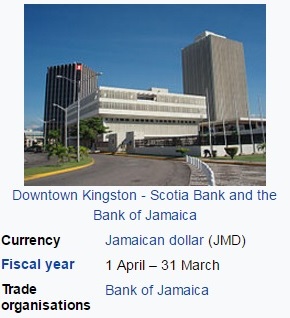
The economy of Jamaica is heavily dependent on services, which currently accounts for more than 70% of GDP. The country continues to derive most of its foreign exchange from tourism, remittances, and bauxite/alumina.
Remittances and tourism each account for 30% of GDP, while bauxite/alumina exports make up roughly 5% of GDP. The bauxite/alumina sector was most affected by the global downturn while the tourism industry and remittance flow remained resilient.
New! Take a piece of Jamaica with you💃!
Savour the memories! Now you can get your authentic Jamaican souvenir items, as well as traditional Jamaican herbs, spices and housewares on our popular e-store. Click Here to learn more.
And, if you ever need a trustworthy and knowledgeable local guide, consider booking a private tour with us!
The major industries are currently tourism, bauxite/alumina, agricultural-processing, light manufactures, rum, cement, metal, paper, chemical products and telecommunications.
Tourism
In 2015, 2015 exceeded the 2 millionth marker to reach a record of 2,123,042, which was 2.1% above the 2,080,181 arrivals recorded in 2014. This figure represents 42,861 more stopovers than in 2014 and despite some yearly fluctuations.
That accounted for gross visitor expenditure of approximately US$2.402 billion. This represents an increase of 7.0% against the estimated US$2.244 billion earned in 2014.
Over 1.5 million visitors arrived to Jamaica's coasts in 2021, exceeding projections. Over $2.095 billion was spent by these tourists while they were on the island, which benefited regional companies and tourism partners.
Agriculture
The major agricultural products produced currently by Jamaica are sugarcane, bananas, coffee, citrus, yams, ackees, vegetables; poultry, goats, milk and shellfish.
What Do We Export vs Import?
Alumina, bauxite, sugar, rum, coffee, yams, beverages, chemicals, apparel and mineral fuels are currently the major items exported.
Food and other consumer goods, industrial supplies, fuel, parts and accessories of capital goods, machinery and transport equipment, construction materials are currently the major imported items.
Wanna guess where we import from?
America is Jamaica's biggest import partner, around 42 percent of total imports. Venezuela, Trinidad and Tobago, China, Brazil, Japan, Canada, the UK, and Mexico are further import trading partners.
The Following Is The World's Bank Current Context of the Economy Of Jamaica
For decades, Jamaica has struggled with low growth, high public debt and many external shocks that further weakened the economy.
Over the last 30 years, real per capita GDP increased at an average of just one percent per year, making Jamaica one of the slowest growing developing countries in the world. The government steadily accumulated debt, which reached 145 percent of GDP in 2012.
To stabilize the economy, reduce debt and unlock growth, the Government of Jamaica (GoJ) embarked on a comprehensive and ambitious program of reforms for which has garnered national and international support.
As part of a comprehensive package, the , the World Bank and the Inter-American Development Bank (IDB) are each lending US$510 million, and the International Monetary Fund (IMF) is lending US$932 million through a four-year program under its Extended Fund Facility.
In addition, the International Finance Corporation (IFC) and Multilateral Investment Guarantee Agency (MIGA) will continue to support private sector development.
A change in administration after national elections in February 2016 brought further consolidation of government efforts with a dedicated Ministry of Economic Growth and Job Creation, headed by the Prime Minister and advised by a high level Economic Growth Council.
The reform program is beginning to bear fruit: Institutional reforms and measures to improve the environment for the private sector have started to restore confidence in the economy of Jamaica.
In the 2016 Doing Business report Jamaica ranked for a second year in a row among the top ten improvers worldwide.
According to the 2016 DB methodology, Jamaica jumped 7 places, moving from 71 in 2015 (back calculation based on new methodology) to 64. The country’s credit rating has improved, and Jamaican bonds trade at a premium in international markets.
In 2015, when investors were moving out of emerging market debt, the GoJ issued a US$2 billion Eurobond that enabled it to retire US$2.9 billion of PetroCaribe debt. Prudent macroeconomic policies and careful liability management reduced total government debt to 128 percent of GDP by the end of fiscal year 2015/16.
During the past three years economic growth rates have been steadily rising, although remaining lower than what is needed for eradicating poverty and boosting shared prosperity.
The World Bank forecasts GDP growth accelerating to 1.7 percent in 2016 and to over 2 percent in 2017, aided by improving growth in the U.S., low oil prices, and reforms of investment climate. The country continues to be confronted by serious social issues that predominantly affect youth, such as high levels of crime and violence and high unemployment.
Jamaica, which had seen its poverty rate drop almost 20 percent over two decades, saw it increase by eight percent in a few years after the onset of the global economic crisis in 2008.
The Statistics Institute of Jamaica estimates the unemployment rate in Jamaica at 13.7 percent (April 2016). The unemployment rate for youth is considerably higher at 29.2 percent, and the average unemployment rate for women is almost double that for men: 18.6 versus 9.6 percent.
You are welcome to read more on their website here.
For more detailed information on the economy of Jamaica, including GDP, distribution of income, current account balance, debt, taxes, lending rates, unemployment rates please visit IndexMundi.com.
You might like these
Frequently Asked Questions on Jamaica (FAQs)
A compilation of some of the most frequently asked questions on Jamaica. Who knows - your own question may just be answered here!
Jamaica White Pages Directory - Here's The Official Link
Now more user-friendly and easier to use! Here is your Jamaica white pages directory - by LIME
A Listing Of Jamaican Laws - All The Laws Of Jamaica - Online!
They said ignorance of the law is now excuse. But you'll never be caught in that. Here's a listing of the Jamaican laws! Don't say you never knew :-)


Sharing IS Caring! Please help me get the message out by sharing this article with your friends on social media (links below). Thnx ;-)
If you found this page useful, please consider subscribing to my weekly newsletter, to get even more.
It tells you each week about the new information that I have added, including new developments and great stories from lovers of Jamaica!
Return to How does Jamaica make Money from Economy of Jamaica
Return to My Island Jamaica Homepage from Economy Of Jamaica
References & Sources For Economy of Jamaica
- https://mfaft.gov.jm/trade-overview/#:~:text=Jamaica's%20main%20export%20partners%20are,the%20European%20Union%20(EU).
- https://ca.travelpulse.com/news/destinations/jamaica-beats-forecast-for-2021-visitors-spend.html#:~:text=Jamaica%20welcomed%20more%20than%201.5,local%20businesses%20and%20tourism%20stakeholders.
New! Get My Latest Book👇🏿
 |
You asked, I've answered! You no longer need to save for months or years, to enjoy paradise! I spilled the beans! sharing my top tips on finding cozy accommodations and secret gems, only the way a native could! Click Here to pick it up on my e-store and start saving now! |
See The Best Of Jamaica - In Videos!
 |
My channel reaches over 140,000 subscribers worldwide and has leveraged over 11 million views, sharing, what I call 'The Real Jamaica'. Subscribe today and join our family of viewers. |

Read More ...
New! Experience The REAL Jamaica!
Book Your Private Tour here and experience Jamaica the way we (locals) do!
P.S. Didn't find what you were looking for?
Still need help?
Click Here to try our dependable and effective Site Search tool. It works!
Or, simply click here and here, to browse my library of over 500 questions and answers! Chances are someone already asked (and got an answer to) your question.





Featured Video!

Travelling To Jamaica?
Read this BEFORE you go
👇🏿

New Here?
I recommend you START HERE to enjoy the best of this website!
New! For Authentic Jamaican products, from my very own hands, visit my Etsy store here.
Recent Articles


-
Semi-Contract (Epazote) in Jamaica: Uses, Benefits and Safety
Mar 27, 26 02:58 PM
 Discover how Semi-Contract (Epazote) is used in Jamaica, what it’s traditionally known for, how to use it safely, and which form makes the most sense to buy.
 -
Tamarind in Jamaica: Leaves, Pods, Seeds and Health Benefits
Mar 26, 26 12:00 AM
 Explore tamarind in Jamaica—leaf tea, fruit pulp, seeds, traditional uses, and practical wellness benefits, plus the best forms to use.
 -
Why do Jamaicans eat bun and cheese for Easter? | Jamaican Easter Traditions
Mar 19, 26 12:45 PM
By Kesha Stewart | Associate Writer See Also: What do Jamaicans do for Easter? Most Jamaicans consider certain things mandatory for the perfect Easter -
Culantro (Spirit Weed): Jamaica’s Powerful Healing Herb
Feb 15, 26 03:18 PM
Discover culantro (Spirit Weed) health benefits, traditional Jamaican uses, tea preparation, and research on Eryngium foetidum. -
Jamaican Colic Mint - The Backyard Herb Trusted For Generations
Jan 16, 26 04:52 PM
 If you grew up in Jamaica, chances are you’ve seen Colic Mint growing quietly somewhere nearby, along a fence or at the edge of a yard.



About The Author

A patriotic Jamaican who adores its culture, Wellesley has been using this medium to share what he calls 'the uniqueness of Jamaica with the world' since April 2007.
To date, he serves over 9,300 unique readers / viewers per day (and over 1.1millon page views monthly)
His efforts have earned this site featured positions in local publications, including the Jamaica Gleaner's Hospitality Jamaica, Carlong Publishers, as well as recognition from numerous prestigious international agencies and universities. Read more about him here.
He invites you to explore his books and subscribe to this site to stay updated on all the latest here on site.
You are also welcome to check out his unique Jamaican products on his e-store.
If you are on social media, here are the links to follow his latest posts:
You are also invited to join his exclusive JAMHearts community where like-minded Jamaican enthusiasts discuss all things Jamaican.
Didn't Find What You Are Seeking?
Do a quick site search here:
New! Comments
Have your say about what you just read! Leave me a comment in the box below.