Subscribe for all my updates and don't miss a thing! Sign me up!
What are jamaicas natural resorces
by john
(eh)
QUESTION:
I am doing a school research project and i need some natural resources.
ANSWER: June-05-2009 by Wellesley Gayle
Hi John,
Jamaica has many types of mineral deposits however the primary one is bauxite.
In fact, by 1998, Jamaica was the third-leading producer of bauxite and alumina, with 12.6 million tons of bauxite, accounting for 10.4% of world production & 3.46 million tons of alumina, accounting for 7.4% of world production.
Mining and quarrying contributed 4.1% to GDP in 1999. Bauxite and alumina formed 55.2% of exports in 1999 and is the second-leading money earner after tourism. Jamaica has reserved of over 2 billion tonnes and is expected to last 100 years. Bauxite is found in the central parishes of St.Elizabeth, Manchester, Clarendon, St.Catherine, St.Ann & Trelawny.
Jamaica has deposits of several million tons of gypsum on the southern slopes of the Blue Mountains. we produced 330,441 tons of gypsum and some of this was used in the local cement industry and the manufacturing of building materials.
Other minerals present in Jamaica include marble, limestone and silica and ores of copper, lead, zinc, manganese and iron. Some of these are worked in small quantities.
Gold was also found, and a mining operation was set up in Pennants, Clarendon in 2001.
Petroleum has been sought but so far none has been found.
I hope that helped.
Stay in touch John.
Related Pages:
Jamaican Facts.
Jamaica's Economy
User Forums
Our Blog Page.
References: wikipedia.org & TheGleaner
Jamaican Industries
by KiKi
(Jamaica)
Question
What are Jamaica's major industries?
Answer
Hi KiKi,
Our major industries would probably be tourism and bauxite. Of course there is the also agriculture, which captures the ailing sugar industry, coffee, banana,citrus,ginger etc, and manufacturing, but without a doubt, tourism is the major player at this time.
Take a look at this page for a little more, https://www.my-island-jamaica.com/economy_of_jamaica.html
All the best in your studies Kiki.
Rivers in Jamaica
by SM
(USA)
Question:
How many rivers are there in Jamaica?
Answer: Oct-28-2008 by W. Gayle
Hi SM,
The exact number is not known but we have well over 100 I learnt, although many are unexplored and not navigable.
The height of the mountains causes them to run swiftly in deep beds, and their courses are sometimes broken by waterfalls.
The Black River is the largest (widest) river in Jamaica. It is 73 kilometers long, and for 28 kilometers from its mouth it is navigable for small vessels.
Today, there is an increased interest in rafting and other watersport activities with our rivers, and therefore, some of the once unexplored rivers are now used for these purposes.
For the most part though, the rivers in Jamaica are still used for irrigation and domestic purposes particularly by the rural folks.
The Rio Minho, by the way, is the longest river in Jamaica. It rises close to the mainland's geographic centre, flowing generally south-southwest, reaching the Caribbean Sea at Carlisle Bay in the central south coast, to the west of the island's southern nmost point, Portland Point.
The town of May Pen, Clarendon lies on the banks of the it.
The complete article here >>
My Geography Project
by Ankur
(Canada)
My Geography Project
QUESTION:
Hi I am a student in Canada.
I found your website very helpful in completing my geography project. However I have one request. Will you be able post up info about the climate, agriculture, rivers, and landforms of Jamaica?
I would be really thankful if you could do that for me. Thanks
ANSWER: Feb-21-2009 by Wellesley Gayle
Hi Ankur,
Glad to know that the website was helpful to you.
Much of that information is already on the site though.
Please take a look at the Jamaican climate and rivers in Jamaica pages.
I don't have a dedicated page on landform but this page will provide you some good direction.
Also, I don't have much on agriculture as yet either but you might want to take a peek at the economy of Jamaica page for some insightful information.
Regards
Where is Stanton Harcourt in Jamaica?
by Beth
(United Kingdom)
QUESTION:
I am searching for someone to help me find out about a community in Jamaica called Stanton Harcourt.
I teach in a small village in the UK also called Stanton Harcourt and feel sure that there must be some historic connection between the 2 communities. Any ideas?
ANSWER: June-08-2009 by Wellesley Gayle
Hi Beth,
Yes there is indeed a a place in Jamaica called Stanton Harcourt.
It is located in the parish of Portland. It is nearer to the capital area, Port Antonio.
According to Google Maps, it's geographical coordinates are 18° 8' 0" North and 76° 27' 0" West.
Here are some links showing references to Stanton Harcourt- in Map and article.
Hope that helps.
Stay in touch Beth.
Related Pages:
Famous Places in Jamaica
Historical Sites In Jamaica
Exciting Places to Visit in Jamaica
Spanish Names of Jamaican Places
Our Jamaica Blog
And even more...Search Here
Population of Port Royal
by Shawniqua
(Jamaica, NY, United States)
Question:
What is the population port royal as it satnds today and its size?
Anwser: Jan-27-2009 by Wellesley Gayle
Hi Shawniqua,
Thanks for your question.
I did some quick research for you and found where three independent sources were showing three different data.
One showing 'over 1300', another showing 1800 and Wikipedia saying just over 2000.
I would suggest you go with Wikipedia, especially since the others are not even dated.
In relation to it's size, well according to Michael Pawson and David Buisseret in their book PORT ROYAL, JAMAICA, It was reduced in area from about 60 to 25 or so acres.
For more, I would suggest you visit my Port Royal Page.
Stay in touch!
Jamaica Bridges
by Lisa
(Kingston)
Question:
Why am I not seeing pictures of historical bridges & there names?
Answer: 9/28/2008 by Wellesley Gayle
Hi Lisa,
Sorry I don't have pictures of, nor mention much, of bridges in Jamaica on this site.
I would love to my friend, but there is oh so much about Jamaica that I doubt I will ever be able to capture a fraction my friend.
Now that you ask the question though, I did some quick research and found some info for you!
I found two Bridges!
In fact the only two Bridges that are designated heritage/historical sites.
They are:
- The Flat Bridge
In Bog Walk, St. Catherine and - The Historic Cast Iron Bridge
in Spanish Town- also in St. Catherine.
I suggest you visit these pages on the Jamaica National Heritage Trust website for more on:
- Flat Bridge
- The Cast Iron Bridge.. the oldest of it's kind in the western hemisphere.
If you are interested in more intriguing Jamaican facts, visit this page
what are some push factors in jamaica?
by Sarah Ludlow
QUESTION:
What are some push factors in Jamaica?
Push factors are factors, such as unemployment, lack of freedom of speech, political or religious persecutions that make a person want to leave his/her country and move to a new one. (in this case Canada)
That's the information my teacher gave us and i cant find anything. please help me out for this project I'm doing. thanks P.S need info ASAP :)
ANSWER: April-27-2009 by Wellesley Gayle
Hi Sarah,
In my opinion, you would need to identify the major ones and elaborate on each.
Deteriorating economic and social conditions, high unemployment and little hope for improvement of living conditions would be right up there.
In fact, in a study done by Jennifer Kelly and Dan Cui from the University of Alberta, Canada (2007), they stated that (in reference to teachers, for example) 'Push factors are varied, consisting of political, social and psychological ramifications, but without doubt the economic situation in Jamaica generated some of the strongest push factors...At first glance, the push factor that propels Jamaicans to immigrate to Canada is the economic opportunities to improve their living conditions. (Full Report).
Also, speaking at "Diplomatic-Corporate Dialogue for Development" in 2008, Her Excellency Dr. Paulette Bethel, Ambassador and Permanent Representative of the Commonwealth of the Bahamas to the United Nations, stated that 'Modern day globalisation and its attendant innovations have given rise to a third classification called "network" factors, which include the free flow of information, improved global communication, and faster and lower transportation costs. While these network factors are not necessarily a direct cause of migration, they do facilitate it'.
The main push factors for nurses are perhaps the inadequate remuneration and benefits, unfavourable working conditions, lack of management and leadership, and insufficient career perspectives.
Other general push factors include the search for higher education and perhaps the increased levels of crime and violence here.
Remember you'll take a couple and elaborate on.
Remember also that the 'pull' factors are completely different, and would include a strong Canadian economy and changes in their legislation.
All the best Sarah. Stay in touch.
Related Pages:
Wealth and Poverty in Jamaica
Marcus Garvey - National Hero.
Jamaican Travel Stories
The Food Stamp Programme
Our Jamaica Blog.
questions about jamaica
by Emerald
(wilmington,de dover)
QUESTION:
What is there in Jamaica and what do you do there? What animals are there in Jamaica? Where do you come from?
ANSWER: April-28-2009 by Wellesley Gayle
Hi Emerald,
This must be the question of the day :-)
It seems you want to know everything about Jamaica. This website incidentally has all that I think you need.
Simply go back to the homepage and follow the links from there.
You may also start with the facts page then move on to the culture page.
Also, do consider utilizing the free search tool that allows you to look for something specific on this website.
I hope that helps.
Related Pages:
Jamaican Travel Stories
Pictures from Jamaica
Facts about Jamaica
Where is Jamaica.
New! Get My Latest Book👇🏿
 |
You asked, I've answered! You no longer need to save for months or years, to enjoy paradise! I spilled the beans! sharing my top tips on finding cozy accommodations and secret gems, only the way a native could! Click Here to pick it up on my e-store and start saving now! |
See The Best Of Jamaica - In Videos!
 |
My channel reaches over 140,000 subscribers worldwide and has leveraged over 11 million views, sharing, what I call 'The Real Jamaica'. Subscribe today and join our family of viewers. |

Read More ...
New! Experience The REAL Jamaica!
Book Your Private Tour here and experience Jamaica the way we (locals) do!
P.S. Didn't find what you were looking for?
Still need help?
Click Here to try our dependable and effective Site Search tool. It works!
Or, simply click here and here, to browse my library of over 500 questions and answers! Chances are someone already asked (and got an answer to) your question.






NEW!
Join the growing list of well-thinking, Jamaica-Loving folks in our vibrant Private Community
👇🏿

Featured Video!

Travelling To Jamaica?
Read this BEFORE you go
👇🏿
New Here?
I recommend you START HERE to enjoy the best of this website!
New! For Authentic Jamaican products, from my very own hands, visit my Etsy store here.
Recent Articles


-
How Much Is Property Tax In Jamaica?
Apr 25, 24 08:46 PM
 Purchasing your own land is a major accomplishment but the thought of paying property tax can be daunting. How much is property tax in Jamaica by the way?
 -
How To Apply For An H2B Visa In Jamaica?
Apr 25, 24 02:07 PM
 For many Jamaican locals and H2B visa is the key to their dreams. Ready to take on that journey? This is how to apply for an H2B visa in Jamaica.
 -
Medical Scholarships in Jamaica
Apr 23, 24 04:21 PM
 Pursuing a career in medicine is a noble aspiration, however it is quite expensive. These medical scholarships in Jamaica helps to ease the financial burden.
 -
Why Do People Like Jamaica So Much?
Apr 23, 24 03:00 PM
 Jamaica is one of the top vacation destinations in the Caribbean, which may have you wondering, why do people like Jamaica so much?
 -
How To Become A Realtor In Jamaica?
Apr 20, 24 12:09 PM
Are you eyeing the real estate business but not sure how to become a realtor in Jamaica? This is all you need to know to get started.



About The Author

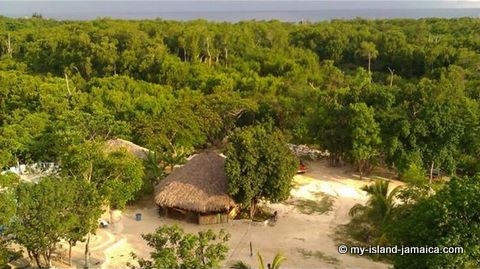
A patriotic Jamaican who adores its culture, Wellesley has been using this medium to share what he calls 'the uniqueness of Jamaica with the world' since April 2007.
To date, he serves over 9,300 unique readers / viewers per day (and over 1.1millon page views monthly)
His efforts have earned this site featured positions in local publications, including the Jamaica Gleaner's Hospitality Jamaica, Carlong Publishers, as well as recognition from numerous prestigious international agencies and universities. Read more about him here.
He invites you to subscribe to this site to stay updated on all the latest and check out his unique Jamaican products on his e-store.
If you are on social media, here are the links to follow his latest posts:
You are also invited to join his exclusive JAMHearts community where like-minded Jamaican enthusiasts discuss all things Jamaican.
Didn't Find What You Are Seeking?
Do a quick site search here: